


































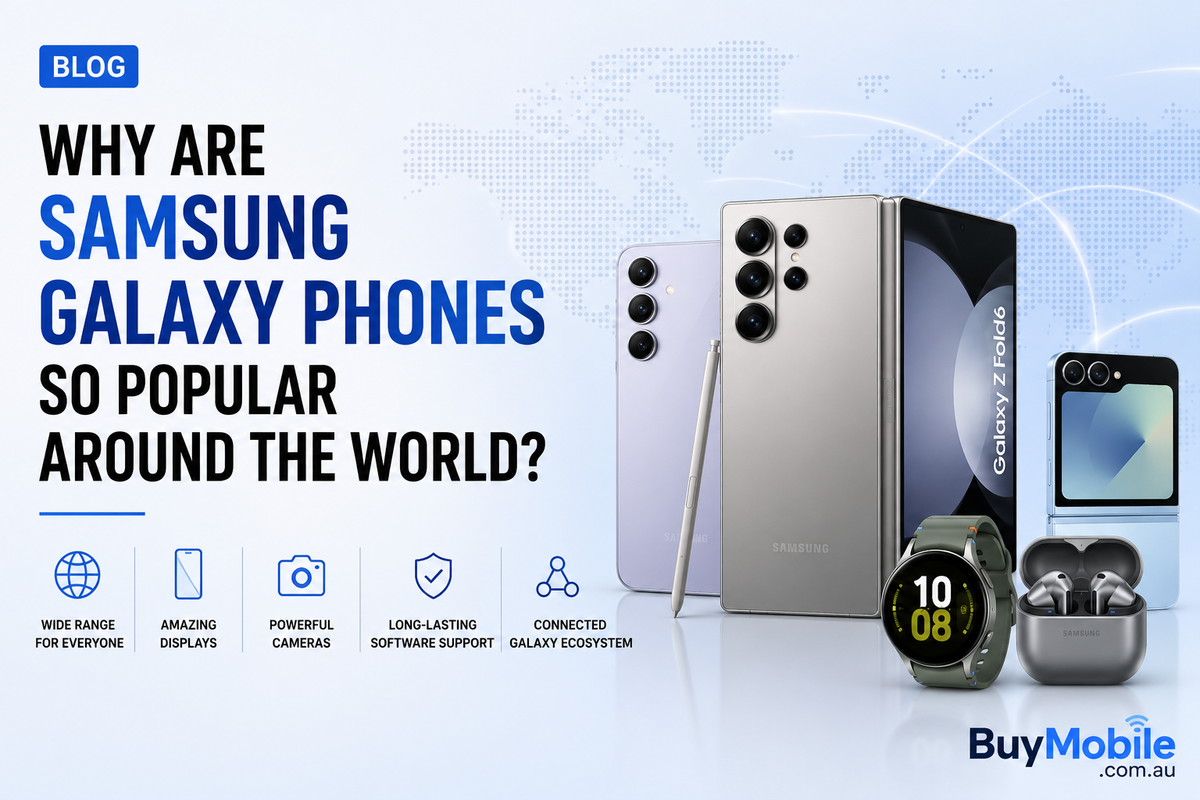
Walk into a smartphone shop almost anywhere in the world and there is a good chance you will see Samsung Galaxy phones prominently displayed. From affordable models designed for everyday communication to premium Galaxy S devices and futuristic foldables, Samsung has built one of the most recognisable smartphone families in the industry.But popularity on this scale does not come from one successful phone.Samsung has spent years developing a Galaxy ecosystem that appeals to very different types of users. Some people want an inexpensive phone for calls, messaging and social media. Others want powerful cameras, premium displays, gaming performance or productivity features.Samsung attempts to serve almost all of them.So, why have Samsung Galaxy phones become so popular around the world?
There Is a Galaxy Phone for Almost Every Budget
One of Samsung's biggest strengths is the size of its smartphone range.Not everyone wants or needs an expensive flagship. Samsung understands this and offers Galaxy devices across multiple price categories.The Galaxy A series is particularly important because it brings the Samsung experience to people who may not want to pay flagship prices. Depending on the model and market, buyers can find large displays, multiple cameras, 5G connectivity, substantial batteries and useful software features at more accessible prices.At the opposite end are premium Galaxy S models designed for customers who want Samsung's latest mobile technology.Then there are Galaxy Z foldables for buyers interested in something different from the conventional smartphone format.This broad selection allows Samsung to reach customers with very different budgets without requiring them to leave the Galaxy brand.
Samsung Displays Have Built a Strong Reputation
Displays are another major part of the Galaxy identity.Samsung has extensive experience with OLED display technology, and AMOLED screens have become closely associated with its smartphones.Bright colours, deep blacks and strong contrast can make everything from photographs to streaming video look impressive. Higher-end Galaxy phones can add features such as high refresh rates and strong outdoor brightness.But good displays are no longer limited entirely to the most expensive models.Samsung has gradually brought features such as AMOLED panels and smoother refresh rates to more affordable Galaxy devices. That means someone buying a mid-range phone can still receive a display experience that feels modern.Because the screen is the part of a smartphone you interact with constantly, improvements here are easy for ordinary customers to notice.
Android With a Distinct Samsung Experience
Samsung phones run Android, but Samsung adds its own software experience through One UI.That distinction is important.One UI provides Samsung's interface design alongside additional features, customisation options and integration with other Galaxy products. Users can change themes, customise the home screen, adjust the lock screen and personalise many aspects of the experience.Samsung also adds tools designed for productivity and multitasking.On compatible devices, features such as split-screen apps and Samsung DeX can expand what a smartphone can do beyond basic mobile tasks.The result is that Samsung can benefit from Android's enormous application ecosystem while still creating an experience that feels recognisably Galaxy.
Long Software Support Makes a Difference
Smartphones are expensive purchases, and more people are keeping them for several years.Software support therefore matters increasingly when choosing a new device.Samsung has significantly expanded its update commitments across many recent Galaxy products. Selected premium devices receive lengthy generations of Android operating system upgrades and security updates, while a number of more affordable Galaxy models also offer multi-year support.Longer support can improve the overall value of a smartphone.A device may still have perfectly capable hardware after three or four years. Continuing to receive software and security updates makes it easier for owners to keep using it rather than feeling pressured to upgrade simply because support has ended.This is particularly valuable for families and everyday users who want a dependable phone rather than replacing their device every year.
Samsung Cameras Appeal to Everyday Users
Camera quality has become one of the biggest reasons people upgrade smartphones.Samsung knows this.Galaxy phones commonly combine several cameras designed for different situations. Depending on the model, these may include main, ultra-wide, telephoto and macro cameras.Premium Galaxy Ultra models have particularly emphasised zoom and high-resolution photography.However, specifications are only one part of smartphone photography.Samsung also uses computational photography and software processing to automatically improve images. Features designed for night photography, portraits, stabilisation and AI-assisted editing can help users produce attractive photographs without understanding traditional photography settings.For most people, that convenience is more important than having professional camera controls.Take the phone out, press the shutter and receive an image ready to share.That simplicity has broad appeal.
Galaxy AI Has Added Another Reason to Upgrade
Artificial intelligence is becoming an increasingly important part of modern smartphones, and Samsung has made Galaxy AI a major part of its recent premium-device strategy.AI-assisted tools can help with tasks such as photo editing, translation, searching, writing and summarising information, although the exact features available vary between devices, languages and regions.The interesting part is how AI can make existing smartphone functions easier rather than simply adding another application.Removing an unwanted object from a photograph, translating a conversation or finding information about something visible on the screen can reduce the number of steps required to complete a task.As smartphone hardware becomes increasingly powerful across many brands, software intelligence provides another way for Samsung to differentiate the Galaxy experience.
Samsung Offers Something Different With Foldables
Most smartphones still follow essentially the same physical design: a rectangular touchscreen.Samsung's Galaxy Z series challenges that convention.Galaxy Z Flip devices can fold into a more compact form, while Galaxy Z Fold models open to reveal a larger tablet-style display.Foldables are not necessarily the right choice for everyone, but they give Samsung an important advantage in variety.Someone who wants a traditional premium smartphone can choose a Galaxy S model. Someone who wants a compact foldable can consider a Galaxy Z Flip. A user interested in large-screen multitasking can look towards a Galaxy Z Fold.This willingness to experiment keeps the Galaxy brand associated with new smartphone ideas rather than only conventional upgrades.
The Galaxy Ecosystem Encourages Users to Stay
Samsung is no longer selling smartphones in isolation.Galaxy Watches, Galaxy Buds and Galaxy tablets can work alongside Galaxy phones, while Samsung also has televisions and other connected products.This creates an ecosystem.A Galaxy Watch can deliver notifications and fitness information. Galaxy Buds can integrate with compatible Galaxy devices for audio. A Galaxy tablet can become another screen for work or entertainment.Individually, these connections may seem like small conveniences.Together, they make switching away from the ecosystem less attractive once someone owns several Samsung products.The phone becomes the centre of a broader collection of connected devices.
Availability Is a Major Advantage
A great smartphone cannot become globally popular if customers cannot easily buy it.Samsung has an enormous international retail presence.Galaxy phones are sold through mobile carriers, electronics retailers, online stores and Samsung's own sales channels across many countries.This visibility matters enormously.A customer can often see a Galaxy device in a shop, compare it with competitors and receive local support after purchasing it. Carriers may also offer Samsung phones through monthly payment plans, making more expensive models easier to access.Samsung's brand recognition further reduces uncertainty for shoppers who may not follow smartphone technology closely.
Familiarity Builds Customer Loyalty
There is also a simple reason many people continue buying Galaxy phones: familiarity.If someone has used Samsung phones for several years, they already understand the interface, settings and general behaviour.Moving from one Galaxy phone to another can therefore feel easier than changing brands.Samsung also provides tools that can simplify transferring content from an old device to a new Galaxy phone.For technology enthusiasts, learning a different interface may be interesting. For many ordinary consumers, however, familiarity is valuable.People often want their new phone to feel improved without requiring them to relearn everything.
Samsung Covers Both Practicality and Innovation
Perhaps the strongest explanation for Samsung's global popularity is its ability to operate at several levels simultaneously.The company sells practical affordable smartphones while also developing expensive flagship devices. It offers familiar traditional phones while investing heavily in foldables. It focuses on hardware such as displays and cameras while also expanding software, AI and ecosystem features.Few customers need all of these things.The advantage is that different customers can find different reasons to choose Galaxy.A student may care about price and battery life. A photographer may prioritise cameras. A business user might value security and productivity. A technology enthusiast may want a foldable. An existing Samsung customer may simply want a familiar upgrade.Samsung can potentially serve all of them.