


































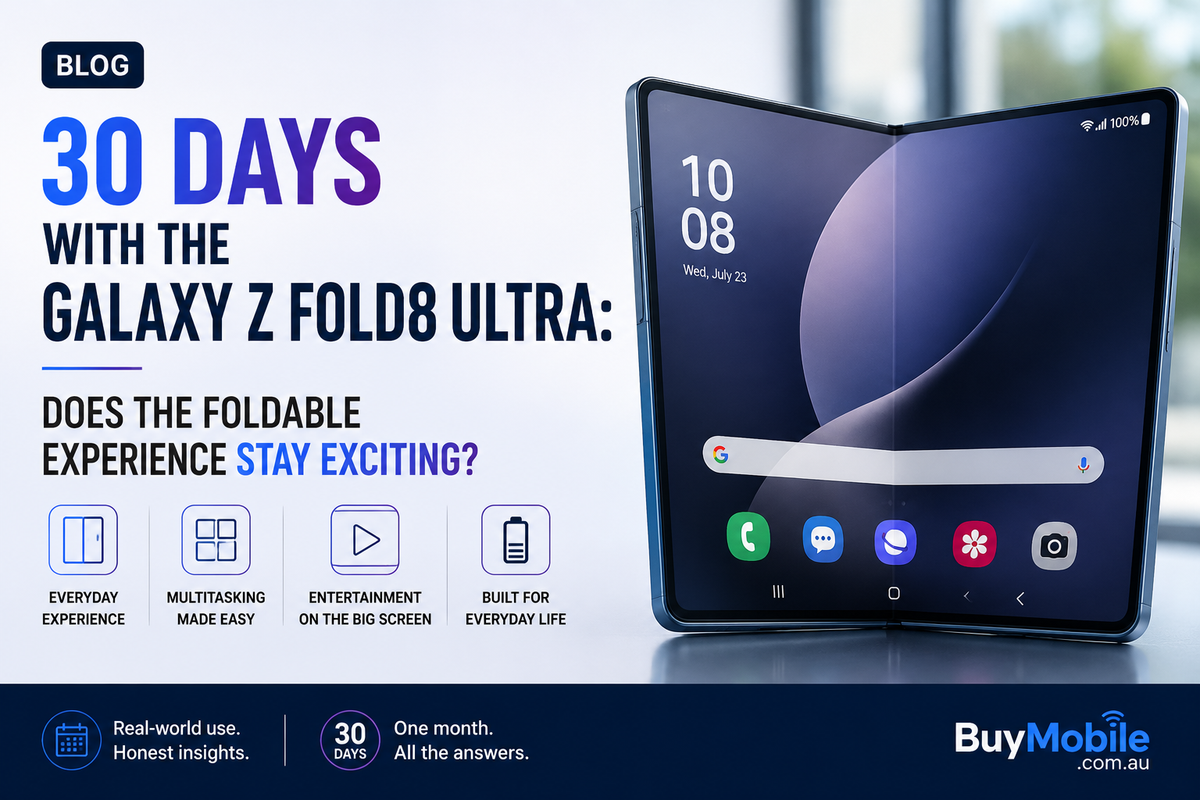
A foldable smartphone can make an impressive first impression. Opening a phone and watching a conventional mobile screen transform into a tablet-sized workspace still feels futuristic. But first impressions do not tell you what it is actually like to live with a foldable every day.After 30 days with a device like the Samsung Galaxy Z Fold8 Ultra, the important question changes. You stop asking whether folding a smartphone is exciting and start asking whether the design genuinely improves your daily routine.Does the novelty disappear after a few weeks, or does the foldable format become something you would struggle to give up?
The First Week Is About Opening the Phone
During the first few days, the temptation is to unfold the Galaxy Z Fold8 Ultra constantly.You check an email and open it. You browse a website and open it. You receive a photo and immediately want to see it on the larger display.Part of this behaviour comes from novelty, but the larger screen quickly reveals why foldables are different from ordinary smartphones.Websites have more room. Photos are easier to inspect. Documents feel less cramped. Maps can show a wider area. Reading long articles becomes more comfortable because there is more space around the content.The Fold initially encourages you to rediscover applications you have been using for years.The apps have not necessarily changed. The space available to use them has.
By Week Two, You Stop Unfolding It for Everything
An interesting change happens once the excitement begins settling down.You realise that not every task needs the large inner display.Checking a notification, replying to a short message, controlling music or quickly searching for something can be easier from the outer screen. Opening the device for every interaction eventually becomes unnecessary.This is when the Fold starts feeling less like a technology demonstration and more like a practical smartphone.The outer display handles quick interactions. The inner display comes out when additional space actually provides an advantage.That distinction becomes natural surprisingly quickly.You might answer a message while the phone is closed and then unfold it when someone sends a document. You might search for a restaurant on the outer screen before opening the device to examine the location on a larger map.Instead of thinking about folding, you simply choose the screen that suits the task.
Multitasking Becomes One of the Hardest Features to Give Up
The biggest long-term advantage may not be watching videos or viewing photographs.It could be multitasking.Traditional smartphones are excellent at running many applications, but their narrow displays usually mean you experience those applications one at a time.A large foldable changes that.You can keep compatible apps visible together and reduce the amount of constant switching. An email can sit beside a calendar. Notes can remain visible while researching in a browser. A messaging conversation can stay open while you look at a map.These combinations might initially feel like features you are testing simply because the Fold can do them.After several weeks, however, they can become genuine habits.That is when returning to a conventional smartphone may begin to feel restrictive.It is not because the normal phone suddenly becomes slow or incapable. You simply become accustomed to seeing more information at once.
The Bigger Screen Changes How You Browse the Web
Smartphone websites are designed to fit narrow displays, but that does not mean a narrow screen is always the best way to consume information.The inner display can make browsing considerably more comfortable.Shopping is a good example.Product photographs become easier to inspect, specifications require less scrolling and comparing information feels more natural. The same advantage applies when researching travel, reading news or looking through lengthy guides.After 30 days, you may notice yourself opening the Fold automatically whenever a quick search turns into serious research.This behaviour shows where foldables can offer something genuinely different.The large display is not valuable simply because it is bigger. It is valuable because it reduces the compromises involved in doing traditionally desktop or tablet-oriented activities on a phone.
Entertainment Still Feels Special
The novelty of physically opening the Galaxy Z Fold8 Ultra may eventually fade, but the entertainment advantage is harder to dismiss.Watching YouTube, streaming shows, browsing photographs and playing compatible games can be more immersive on the inner screen.Video aspect ratios mean content will not always occupy every millimetre of the foldable display, so a larger screen does not automatically mean dramatically larger video in every situation.Still, having an expansive screen available inside a device you can fold and carry around remains convenient.Reading can be even more compelling.Ebooks, long articles, digital magazines and PDFs benefit from the additional room. If you previously used a separate tablet for casual reading around the house, you may find yourself reaching for it less often.
You Become More Aware of App Design
Thirty days with a foldable can also teach you something unexpected about Android applications.Some apps adapt beautifully to larger screens.They may show additional columns, reorganise controls or provide tablet-style interfaces that make better use of the available space.Others may simply stretch their standard smartphone interface.Once you start regularly using both outer and inner displays, these differences become much more obvious.Well-optimised apps make the Fold feel like a genuine hybrid between smartphone and tablet. Poorly optimised applications remind you that foldable hardware has evolved faster than some software experiences.This does not necessarily ruin the experience, but it becomes one of the realities of owning a large foldable.
Cameras Become More Interesting Because of the Form Factor
A foldable design can also change how you think about smartphone photography.The ability to position the device in different configurations creates opportunities that a traditional slab phone cannot reproduce as naturally.The displays can also play different roles depending on the camera mode and supported software features.For example, allowing the person being photographed to see themselves on an external display can make framing easier. Partially folding the phone can also provide additional positioning options for certain photographs or videos.After a month, these features stop feeling like demonstrations and begin becoming tools you remember to use when the situation suits them.That is an important transition.A feature becomes valuable when you use it because it solves a problem, not because you are trying to justify owning a foldable.
You Still Notice the Physical Compromises
Thirty days is also enough time for the less glamorous realities of foldable ownership to become apparent.A large foldable is mechanically more complicated than a conventional smartphone. There is a hinge, a flexible inner display and a body designed to transform between two physical configurations.Even as foldable engineering improves, you may remain more conscious of how you handle the device.The screen crease may also remain visible under certain lighting or viewing angles. Most users may gradually stop focusing on it during normal use, but it does not magically cease to exist simply because the novelty has worn off.The important question is whether these compromises interfere with what the larger display gives you.For someone who rarely uses the inner screen, they may be difficult to justify. For someone opening the Fold dozens of times throughout the day for productivity, reading and entertainment, the calculation can look very different.
Does It Replace a Tablet?
During the first week, you may think of the Fold as a smartphone with a very large screen.After a month, it can start feeling more like two device categories compressed into one.That does not mean it completely replaces a tablet.A dedicated tablet still provides a larger canvas and may be more comfortable for long sessions at home. Similarly, a laptop remains better for specialist software, heavy typing and more complicated desktop workflows.But the Fold can reduce how frequently you need those devices.You may stop carrying a tablet on short trips. You might review a document on the Fold instead of opening your laptop. A train journey can become an opportunity to catch up on work without unpacking another device.Convenience rather than complete replacement is where the form factor makes its strongest argument.
What Happens to the Excitement After 30 Days?
The excitement changes.During the first few days, the Galaxy Z Fold8 Ultra is exciting because it folds.After 30 days, the more meaningful excitement comes from knowing you can open it when a normal smartphone screen feels too restrictive.That difference matters.Technology that remains useful after the novelty disappears has a much stronger reason to exist.You stop showing people how the phone opens and start using the larger screen without thinking about it. Multitasking becomes normal. Reading becomes more comfortable. Maps feel more useful. Documents become easier to review. Entertainment becomes something you can enjoy without carrying a tablet.The folding action itself becomes less remarkable.What it enables becomes more important.