


































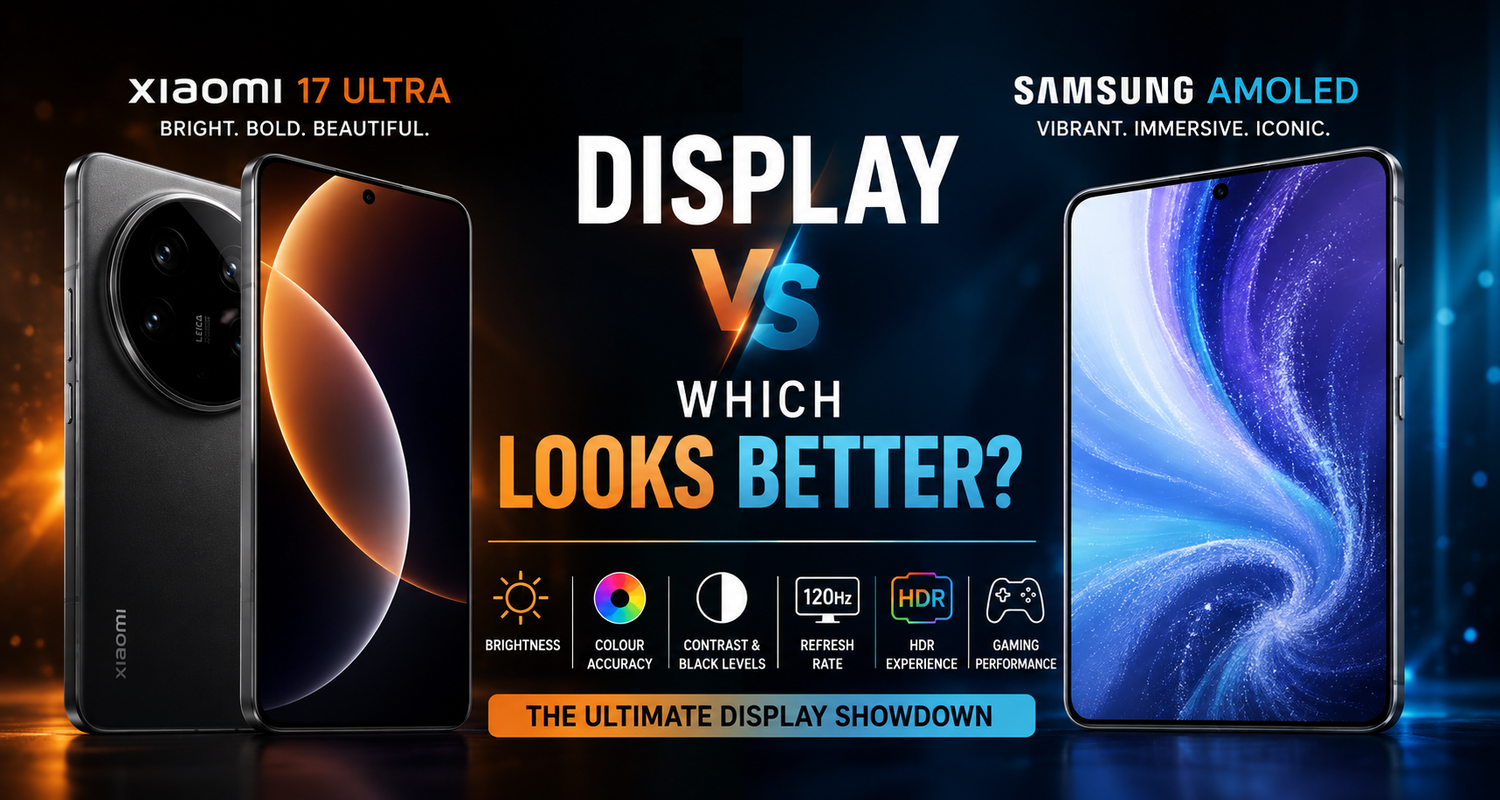
When buying a flagship smartphone, the display is often one of the most important deciding factors. Whether you're watching movies, editing photos, gaming, or simply scrolling through social media, the quality of the screen shapes your entire smartphone experience. Xiaomi has consistently pushed display technology forward with its Ultra series, while Samsung remains the industry leader in AMOLED panels, supplying displays for many of the world's premium smartphones.The Xiaomi 17 Ultra enters the market with an impressive display designed to rival Samsung's best AMOLED technology. But does it actually look better? Let's compare the Xiaomi 17 Ultra display with Samsung's flagship AMOLED panels to see which delivers the superior viewing experience.
Display Technology: Two Premium Approaches
Both Xiaomi and Samsung use advanced OLED technology that produces vibrant colours, deep blacks, and excellent contrast. However, each company tunes its displays differently.Samsung has spent years perfecting AMOLED technology, focusing on exceptional brightness, colour accuracy, and power efficiency. Its flagship displays are widely recognised as some of the best in the smartphone industry.The Xiaomi 17 Ultra, meanwhile, takes advantage of cutting-edge OLED technology with premium calibration, aiming to deliver realistic colours alongside flagship-level brightness and smooth performance.On paper, both displays promise an outstanding experience.
Brightness That Stands Out
Brightness is one of the most noticeable differences users experience in daily use.The Xiaomi 17 Ultra features an extremely bright display that remains easy to read under direct sunlight. Outdoor visibility is excellent, making navigation, photography, and messaging comfortable even on bright afternoons.Samsung's flagship AMOLED displays have long been praised for their exceptional peak brightness and HDR performance. Watching HDR movies or streaming high-quality video content feels vivid, with highlights appearing incredibly lifelike.In everyday use, both displays perform exceptionally well. Outdoor readability is excellent on each device, making either phone suitable for users who spend a lot of time outdoors.
Colour Accuracy
Colour reproduction is where personal preference often comes into play.Samsung traditionally delivers vibrant colours that immediately grab attention. Images appear rich, saturated, and highly dynamic, making movies and games feel visually striking.The Xiaomi 17 Ultra takes a more balanced approach by offering natural colour calibration while still allowing users to choose more vivid display modes if preferred.For photographers, designers, and content creators, Xiaomi's colour accuracy may prove more useful when editing images because colours appear closer to their original appearance.Samsung's tuning remains ideal for users who prefer a more dramatic viewing experience.
Deep Blacks and Excellent Contrast
OLED technology allows individual pixels to turn off completely, producing perfect black levels.Both Xiaomi and Samsung excel in this area.Watching movies with dark scenes feels cinematic because black backgrounds remain completely dark rather than appearing grey. High contrast also improves readability while making colours stand out more effectively.Whether viewing photos, watching Netflix, or reading eBooks, both displays provide outstanding contrast that enhances the overall viewing experience.In this category, there is little difference between the two.
Smooth Refresh Rate Performance
Modern flagship smartphones rely on high refresh rate displays for fluid interactions.The Xiaomi 17 Ultra offers an adaptive refresh rate that automatically adjusts depending on the content being viewed. Scrolling feels incredibly smooth, while gaming becomes more responsive and enjoyable.Samsung's AMOLED displays offer similar adaptive refresh technology, providing equally fluid animations and seamless navigation throughout the operating system.Whether browsing websites, scrolling social media, or playing fast-paced games, both smartphones deliver a premium level of responsiveness.
HDR Entertainment Experience
Streaming services increasingly support HDR content, making display quality more important than ever.The Xiaomi 17 Ultra produces vibrant HDR playback with impressive brightness and excellent shadow detail. Colours remain realistic while preserving fine details in both bright and dark scenes.Samsung continues to impress with cinematic HDR performance that enhances blockbuster movies, documentaries, and sports broadcasts.Both devices create an immersive entertainment experience, making it difficult to identify a clear winner for casual viewing.
Gaming Display Performance
Mobile gamers expect displays that respond quickly while maintaining smooth visuals.The Xiaomi 17 Ultra combines a fast refresh rate with responsive touch sampling, delivering precise control during competitive gaming.Samsung's flagship AMOLED displays perform equally well, offering minimal input delay, fluid animations, and excellent visibility even during fast-moving gameplay.Bright colours, high contrast, and smooth frame rates contribute to enjoyable gaming sessions on both smartphones.Gamers will find either display more than capable of handling demanding titles.
Eye Comfort During Long Sessions
Many users spend several hours each day looking at their smartphone display.The Xiaomi 17 Ultra includes advanced eye comfort features that reduce blue light and automatically adjust brightness depending on ambient lighting.Samsung also offers Eye Comfort Shield, adaptive brightness, and multiple display settings designed to reduce eye fatigue.Both manufacturers have invested heavily in improving long-term viewing comfort, making extended reading or streaming sessions easier on the eyes.
Display for Photography and Editing
For photographers and content creators, display accuracy matters.The Xiaomi 17 Ultra's natural colour calibration allows users to edit photos with greater confidence that colours will appear correctly across multiple devices.Samsung's AMOLED displays remain extremely accurate while offering slightly more saturated colours in their default configuration.Professional creators may appreciate Xiaomi's balanced approach, while everyday users often enjoy Samsung's vibrant presentation.
Software Optimisation
A great display depends not only on hardware but also on software optimisation.Xiaomi's HyperOS offers several display customisation options, including colour profiles, refresh rate controls, reading mode, and adaptive brightness settings.Samsung's One UI provides similar flexibility, allowing users to switch between vivid and natural display modes while adjusting white balance and eye protection features.Both companies give users excellent control over how their display looks.
Which Display Looks Better?
Choosing a winner depends largely on personal preference.If you enjoy vibrant colours, dramatic contrast, and an eye-catching visual experience, Samsung's AMOLED display remains one of the strongest options available.If you prefer natural colour reproduction, exceptional brightness, and accurate image rendering for photography and professional work, the Xiaomi 17 Ultra offers a highly compelling alternative.In everyday use, both displays rank among the very best in the smartphone industry, and most users will be impressed regardless of which device they choose.