



































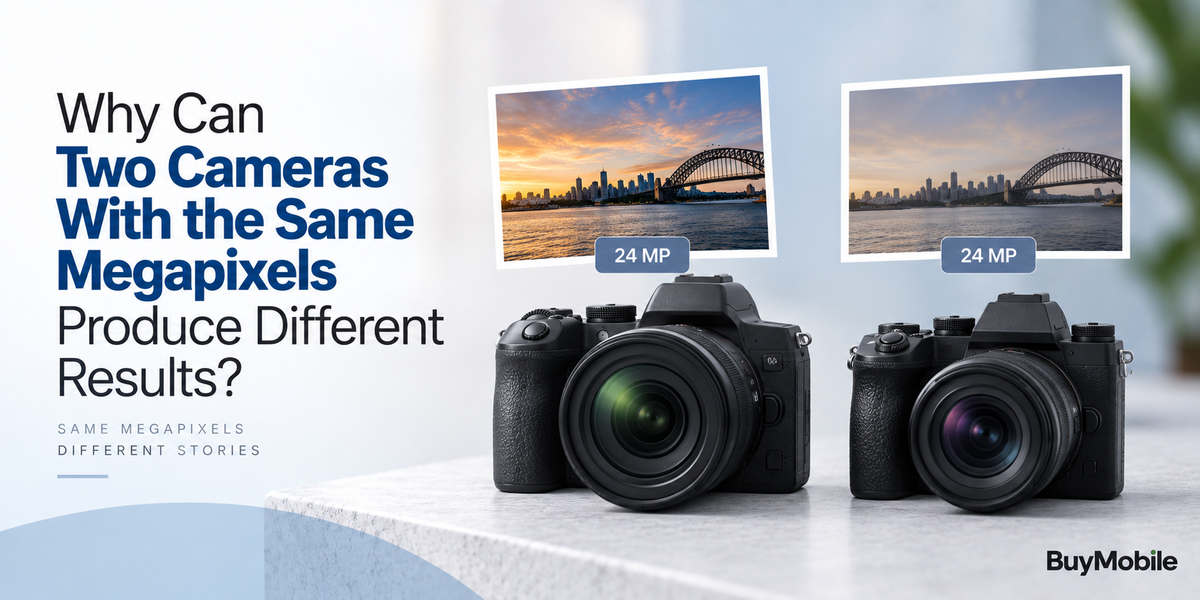
When comparing digital cameras, megapixels are often one of the first specifications people notice. If two cameras both have 24-megapixel sensors, it can be tempting to assume they should produce almost identical photographs.In reality, the results can look surprisingly different.One camera may produce cleaner images in low light, more natural colours, better highlights, sharper details and smoother background blur, even though both cameras have exactly the same megapixel count.That is because megapixels tell you only how many pixels are used to create an image. They do not tell you everything about the quality of those pixels, the sensor collecting the light, the lens focusing it or the processing happening after the shutter button is pressed.Understanding these differences can help you choose a camera based on actual photographic performance rather than one specification.
Megapixels Measure Resolution, Not Overall Image Quality
A megapixel represents approximately one million pixels.A 24-megapixel camera therefore produces an image containing roughly 24 million pixels. This gives you an idea of the image resolution and can help determine how much detail is available for cropping or producing large prints.However, megapixel count does not measure colour accuracy, dynamic range, autofocus performance, lens sharpness or low-light capability.Think of megapixels as pieces of a picture.Knowing how many pieces exist does not tell you how accurately each piece captures information.This is the first reason two cameras with identical megapixel counts can produce very different photographs.
Sensor Size Can Make a Major Difference
Sensor size is one of the most important factors.Imagine two 24-megapixel cameras. One uses a full-frame sensor, while another uses a considerably smaller sensor.Both produce approximately the same number of pixels, but those pixels need to fit within very different physical areas.A larger sensor generally has more surface area available to collect light. Depending on the sensor design and pixel density, this can provide advantages in areas such as low-light photography and dynamic range.This becomes especially noticeable when shooting indoors, at night or in other challenging lighting conditionsThe smaller-sensor camera might still produce excellent photographs, particularly in good light, but equal megapixel counts do not mean equal sensor performance.
Pixel Size Also Matters
Closely related to sensor size is pixel size.If the same number of pixels is spread across a larger sensor, individual photosites may have more physical area available than those packed onto a smaller sensor.Larger photosites can potentially collect more light during an exposure.Light is the raw information from which a digital photograph is created, so collecting it efficiently is extremely important.This is one reason a camera with fewer or equal megapixels can sometimes perform better in low light than a camera with a very high resolution packed into a smaller area.Modern sensor technology and image processing make the comparison more complicated than simply saying bigger pixels are always better, but pixel design remains an important part of image quality.
Not All Camera Sensors Use the Same Technology
Even when two cameras have similar sensor sizes and resolutions, their internal technology may differ.Camera sensors continue to evolve.Manufacturers can use different sensor architectures, readout technologies, microlens designs and electronic systems. Newer sensor designs may improve efficiency, reduce noise or read image information more quickly.Some cameras use backside-illuminated sensors, while others may use stacked designs intended to improve readout speed and performance.Therefore, comparing only resolution ignores a huge amount of engineering happening inside the sensor.Two 24-megapixel sensors introduced several years apart may perform very differently even though their image dimensions appear similar on a specification sheet.
The Lens Has a Huge Influence on Sharpness
A camera sensor can only record the image delivered to it by the lens.This makes lens quality extremely important.Suppose you place a high-quality prime lens on one 24-megapixel camera and a basic kit zoom on another 24-megapixel camera.The resulting images may have identical pixel dimensions, but the amount of visible fine detail could be quite different.A better lens may deliver stronger sharpness, contrast and control of optical imperfections.Lens performance can also vary across the frame. Some lenses are extremely sharp in the centre but become softer toward the corners.Chromatic aberration, distortion, flare and other optical characteristics can also affect the final image.Megapixels cannot compensate for poor-quality light reaching the sensor.
Image Processors Interpret the Sensor Data Differently
Pressing the shutter button does not simply copy information from the sensor directly onto the memory card.The camera's image processor plays an important role in transforming sensor data into a usable photograph, particularly when shooting JPEG or other processed formats.Different manufacturers have their own approaches to colour reproduction, sharpening, noise reduction and contrast.One camera may produce warmer skin tones, while another creates cooler colours.One might apply aggressive sharpening to make fine details appear more prominent. Another might prioritise smoother and more natural-looking textures.Noise reduction can also produce major differences.Strong noise reduction can make a high-ISO photograph look cleaner, but it may remove fine details. Less aggressive processing may retain more texture while leaving additional visible grain.Both cameras could have exactly the same megapixel count.
Dynamic Range Changes What You Can Recover
Dynamic range describes a camera's ability to capture information across bright and dark parts of a scene.Imagine photographing a landscape with a bright sky and deep shadows.A camera with strong dynamic range may preserve more information in both areas. This can be particularly useful when editing RAW files because you may be able to recover shadow and highlight details that initially appear hidden.Another camera with the same resolution may lose information in the brightest or darkest areas sooner.Both photographs might contain 24 million pixels, but the amount of useful tonal information stored inside those pixels can be different.For photographers who regularly edit RAW images, this can matter far more than a small difference in resolution.
High ISO Performance Can Be Completely Different
Low-light photography often exposes the limitations of comparing cameras purely by megapixels.When there is not enough light, photographers may increase ISO sensitivity.Higher ISO settings allow the camera to work in darker environments, but they can also make noise more visible and reduce image quality.Sensor efficiency, pixel characteristics, processing and noise-reduction algorithms all influence what the final photograph looks like.Two cameras set to ISO 6400 could therefore produce noticeably different results despite sharing the same megapixel count.One might retain clean colours and useful fine detail, while another could display stronger noise or lose texture through aggressive processing.
Colour Science Affects the Character of Photos
Colour is another reason images from different cameras can look different.Camera manufacturers develop their own colour profiles and processing approaches.This can influence skin tones, greens, blues, reds and overall contrast.The difference may be particularly obvious when comparing JPEG images directly from the camera.RAW files provide greater flexibility because photographers can adjust colours during editing, but the sensor and camera profile still influence the starting information.This is why photographers sometimes prefer the appearance of images from one camera brand even when another model offers similar technical specifications.
Autofocus Can Determine Whether Those Megapixels Are Useful
Resolution is not very valuable if your subject is out of focus.Autofocus performance therefore has a major effect on real-world image quality.A camera with sophisticated subject detection, eye autofocus and reliable tracking may consistently place focus exactly where you want it.Another camera with the same megapixel count might struggle with moving subjects or challenging lighting.On paper, both cameras capture the same resolution.In practice, the camera that achieves accurate focus more consistently may deliver far more usable sharp photographs.This becomes particularly important for sports, wildlife, children, pets and event photography.
Image Stabilisation Can Affect Real-World Detail
Camera shake is another factor.Even a small amount of movement during an exposure can reduce sharpness.Some cameras include in-body image stabilisation, while certain lenses provide optical stabilisation. These systems can help compensate for small movements when shooting handheld.A stabilised 24-megapixel camera may therefore produce a sharper handheld photograph in some situations than an unstabilised 24-megapixel camera.Once again, resolution has not changed. The camera's ability to make effective use of that resolution has.
RAW and JPEG Can Produce Very Different Comparisons
How you record your images also matters.JPEG photographs are processed inside the camera. Settings such as sharpening, colour profiles, contrast and noise reduction can substantially change their appearance.RAW files retain much more of the original sensor information and give photographers greater control during editing.If you compare JPEGs from two cameras, you may partly be comparing their manufacturers' processing decisions rather than just their sensors.A fair camera comparison therefore needs to consider the file format, lens, exposure, lighting and processing settings.When choosing your next camera, look beyond how many pixels it captures and consider how well the entire imaging system works together. That is where the real difference in image quality begins.