


































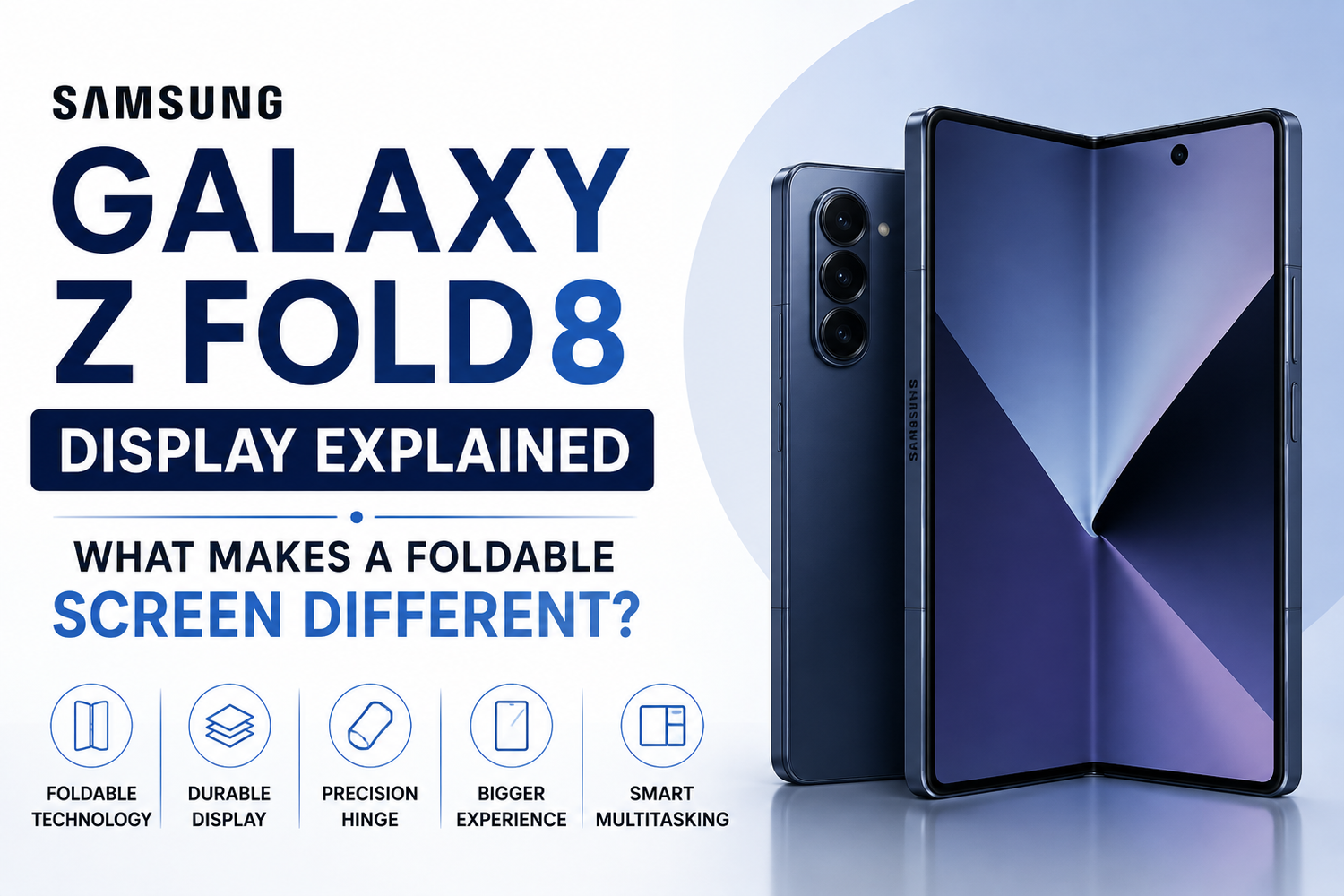
The Samsung Galaxy Z Fold8 represents a completely different approach to smartphone displays. Instead of giving you one rigid screen in a traditional rectangular body, the Galaxy Z Fold concept combines the convenience of a phone with a much larger display that becomes available when the device is unfolded.At first glance, the idea seems simple. Take a large screen and make it bend in the middle.In reality, creating a reliable foldable display is far more complicated. The screen materials, protective layers, hinge, internal structure and software all need to work together every time you open or close the device.So, what actually makes the Galaxy Z Fold8 display different from a conventional smartphone screen? Understanding the technology helps explain both the advantages and the compromises of modern foldable phones.
A Normal Smartphone Screen Is Designed to Stay Rigid
Most traditional smartphones use displays protected by rigid glass.That works extremely well because the screen never needs to change shape. Manufacturers can use strong cover glass to protect the OLED panel underneath while maintaining excellent clarity and touch responsiveness.A Galaxy Z Fold 8 device faces a completely different engineering problem.Its main display must repeatedly bend along the same area.Traditional thick smartphone glass cannot simply be folded in half. Samsung therefore needs a much more complex display structure that provides flexibility while still protecting the delicate OLED components underneath.This is the first major difference between a foldable and conventional smartphone display.The Fold's screen isn't simply a normal display with a hinge behind it.The display itself is engineered to flex.
Why OLED Technology Is Important
OLED technology is fundamental to modern foldable phones.Unlike traditional LCD displays that require a separate backlight, OLED pixels produce their own light. This allows manufacturers to create extremely thin display structures.That thinness makes flexible applications possible.The technology can be incorporated into a display stack designed to bend repeatedly while continuing to produce an image.OLED also provides the visual advantages people expect from premium smartphones, including deep blacks, strong contrast and vibrant colours.This means users don't have to choose between a folding screen and premium image quality.But making an OLED panel flexible doesn't solve every problem.Protecting it is considerably more difficult.
Ultra Thin Glass Changed Foldable Displays
One of Samsung's important developments in its foldable journey has been the use of Ultra Thin Glass, commonly called UTG.The name describes the basic idea.Instead of using the much thicker glass found on a conventional smartphone, foldable displays use extremely thin glass engineered to flex.However, UTG isn't exposed in exactly the same way as the cover glass on a conventional Galaxy phone.A foldable display uses multiple layers, including protective materials above the delicate display structure.These layers need to achieve several things simultaneously.They must remain flexible.They must maintain optical clarity.They must respond accurately to touch.And they need to survive repeated folding.Balancing those requirements is one reason foldable displays are so difficult to manufacture.
Why Does a Foldable Screen Have a Crease?
The crease is probably the most discussed characteristic of a foldable display.When a material repeatedly bends along the same line, the folding area experiences mechanical stress. The display layers and protective materials need to curve into the hinge every time the phone closes.This can create a visible or tactile crease.Whether you notice it depends on lighting, viewing angle and what is displayed on the screen.When looking directly at bright content, a crease may become less noticeable. Reflections across the display can make it easier to see.The important thing to understand is that the crease isn't simply a cosmetic mistake that manufacturers forgot to remove.It is connected to the physical challenge of repeatedly bending a multilayer display.Improving hinge geometry and display materials can make creases less distracting, but foldable engineering still needs to respect the laws of physics.
The Hinge Is Part of the Display System
It might seem strange to discuss the hinge when explaining a screen, but the two are closely connected.The hinge determines how the display bends when the phone closes.Instead of forcing the screen into an extremely sharp fold, modern foldable hinge designs aim to create a controlled curve inside the device.That helps reduce stress on the flexible display.The hinge also needs to keep both sides correctly aligned when the device is open.If the mechanism isn't precise, the large display won't feel like one continuous surface.Every time you unfold a Galaxy Z Fold, you're therefore using an entire mechanical system designed around protecting and supporting the screen.
Why Does the Fold8 Need Two Displays?
The Galaxy Z Fold format doesn't rely exclusively on its large folding display.There is also a cover screen on the outside.The reason is practical.Imagine needing to unfold a tablet-sized screen every time you wanted to check a message, answer a call or look at a notification.That would quickly become inconvenient.The cover display allows the Fold to function more like a conventional smartphone when closed.For quick tasks, you use the outside screen.When you need more room, you unfold the device.This ability to choose between two display sizes is one of the fundamental advantages of the Fold design.
The Large Screen Changes Multitasking
A larger display isn't useful simply because everything becomes bigger.The real advantage appears when software uses the additional space intelligently.On a Galaxy Z Fold device, the unfolded display can allow multiple applications to appear simultaneously.You might have an email open alongside a web browser.You could watch a video while checking messages.You might review a document while keeping another application accessible beside it.On a traditional smartphone, switching between applications is often necessary because screen space is limited.A foldable can reduce that constant switching.This is why the Fold series is frequently associated with productivity.The benefit isn't simply a bigger picture. It is having more usable digital workspace in your pocket.
Apps Need to Understand the Folding Screen
Hardware alone can't create a good foldable experience.Applications need to adapt to different screen sizes and orientations.An application might begin on the cover display while the phone is closed. When you unfold the device, it may need to expand intelligently onto the larger internal screen.Layouts can also change.A messaging application might display a conversation differently when additional width becomes available. Productivity applications can expose controls that would otherwise remain hidden.This adaptability is one of the biggest differences between foldables and ordinary smartphones.The physical device changes shape, so the software needs to respond.
Foldable Displays Require Different Expectations
A flexible display isn't identical to the rigid glass surface of a conventional flagship.That's important for first-time foldable buyers to understand.The inner display's layered construction means it may feel different when touched. The folding area can be noticeable. The screen also needs to be treated according to Samsung's handling guidance rather than assuming it behaves exactly like thick conventional cover glass.This doesn't automatically mean a foldable screen is impractical.It simply means the engineering priorities are different.A normal smartphone prioritises rigidity and protection.A foldable display must balance protection with the ability to bend thousands of times during everyday ownership.
Why Making Foldables Thinner Is So Difficult
Consumers naturally want foldable phones to become thinner and lighter.But reducing thickness creates another engineering challenge.The device needs space for the hinge, flexible display structure, batteries, cameras, processors and cooling hardware.Unlike a conventional smartphone, a book-style foldable also contains two physical halves that sit together when closed.Making the phone thinner therefore requires improvements throughout the entire device rather than simply reducing one component.Display engineering plays an important role because every fraction of thickness matters when two halves are folded together.This is why even small reductions in foldable thickness can represent significant engineering work.
Is a Foldable Screen Better Than a Normal Screen?
Neither design is automatically better.They solve different problems.A traditional smartphone display is simpler, rigid and generally easier to protect. It works extremely well for people who want a straightforward pocketable device.A Fold-style display prioritises versatility.It allows one device to provide a conventional smartphone experience when closed and something closer to a small tablet when opened.For reading, multitasking, viewing photographs, browsing websites and watching videos, the additional space can be extremely useful.But that versatility comes with greater mechanical complexity.The question isn't whether foldable technology is universally superior.It's whether the larger flexible workspace improves the way you use a smartphone.