



































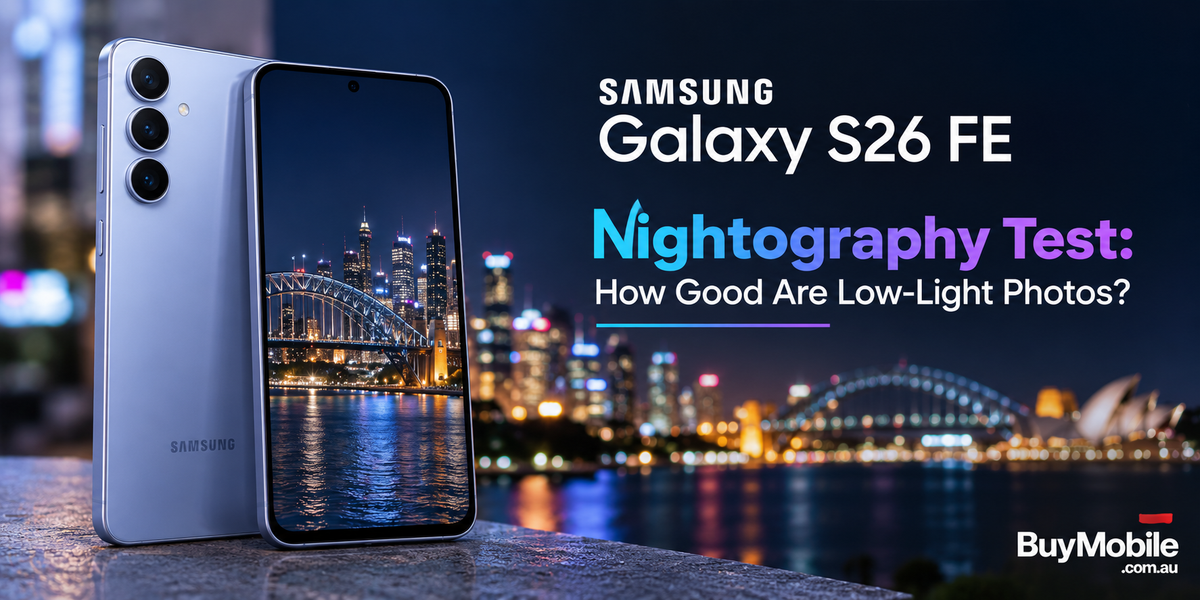
Taking great smartphone photos during the day is relatively easy. The real camera test begins after sunset, when streetlights, restaurant interiors, neon signs and dark skies force a phone to work much harder. Samsung has positioned Nightography as an important part of the Galaxy S26 FE camera experience, promising brighter, clearer low-light photos without losing the atmosphere of the scene.The Galaxy S26 FE uses a triple rear camera system consisting of a 50MP f/1.8 main camera with OIS, a 12MP ultrawide and an 8MP telephoto with 3x optical zoom and OIS. Samsung also uses its ProVisual Engine to improve image processing, including in low-light situations. But specifications only tell part of the story. How does Nightography actually perform when the lights go down?
How Good Is the Main Camera at Night?
The 50MP main camera is easily the strongest option when photographing at night.Its f/1.8 aperture helps collect more light, while optical image stabilisation helps compensate for small hand movements during longer exposures. Samsung's ProVisual Engine then processes the captured information to improve brightness, detail and noise control. Independent testing generally supports that description, although with some limitations. SamMobile found that the main camera retained useful detail in low light when automatic Night mode activated, but noted that some noise remained and sharpening could occasionally become aggressive. WIRED similarly found automatic Night Mode helpful, provided the phone was held steady. For everyday night photography, that makes the main camera the lens you should reach for first.
What Does Nightography Actually Do?
Nightography isn't simply about making a dark photograph extremely bright.Samsung says the Galaxy S26 FE's Nightography processing is designed to increase brightness and detail while reducing image noise, helping preserve the character of nighttime scenes. That's important because aggressive night processing can sometimes make a photograph captured at 10pm look strangely similar to one taken during daylight.Good low-light processing should instead reveal useful details while maintaining darker shadows, illuminated signs and the natural atmosphere of the environment.Real-world reviews suggest Samsung largely succeeds with the main camera, though results can vary by scene. One review found that regular night shots could appear relatively restrained, while manually selecting Night mode produced brighter results with more obvious processing.
How Does It Handle Streetlights and Neon Signs?
High-contrast scenes are some of the hardest situations for smartphone cameras.Imagine photographing a brightly illuminated restaurant sign surrounded by a dark street. The camera has to prevent the sign from becoming completely white while simultaneously extracting information from the shadows.This is where computational photography and dynamic-range processing become important.The Galaxy S26 FE's main camera generally maintains good dynamic range, and reviewers have reported that it handles artificial lighting reasonably well at night. One recent test found that the phone retained shadow information without making the entire photograph look unnaturally bright. That's useful for city photography where lights are often part of the image rather than simply a source of illumination.
Is Night Mode Better Than the Normal Camera Mode?
It depends on how dark the scene is.In a well-lit city centre, restaurant or shopping area, the automatic camera mode may already produce an attractive photograph. The Galaxy S26 FE can automatically bring Night mode processing into play when required.Move into a significantly darker environment and dedicated Night mode becomes more valuable.The trade-off is capture time. Night photography frequently requires you to hold the smartphone steady for longer while multiple frames are captured and processed.Movement during that process can reduce sharpness.If the phone asks you to remain still, give it an extra moment before moving your hands. That simple habit can noticeably improve low-light photographs.
What About the 12MP Ultrawide Camera?
This is where expectations need to be lowered.The 12MP ultrawide is useful during the day because its 123-degree field of view lets you capture landscapes, buildings, groups and other expansive scenes. At night, however, the main camera is clearly stronger.SamMobile observed more limitations from the ultrawide in low light, including differences in colour temperature compared with the main camera. Tech Advisor similarly found nighttime ultrawide images grainier and less impressive than those from the primary camera. That doesn't make the ultrawide unusable.If you're photographing a brightly illuminated building or city square and need the wider perspective, it can still be useful. But when image quality matters more than field of view, use the main camera.
How Good Is the 3x Telephoto at Night?
The dedicated 8MP telephoto provides 3x optical zoom and includes OIS. Samsung also supports digital zoom up to 30x. During daylight, having genuine optical zoom is a valuable advantage.At night, the smaller telephoto sensor has less light to work with, and quality drops faster. Reviews have consistently found the main camera preferable in challenging lighting. SamMobile recommends remaining around 3x in low light rather than pushing the zoom further, while Tech Advisor found nighttime telephoto images noticeably grainier. So although seeing "30x zoom" in the camera interface is tempting, nighttime isn't the ideal situation to test its limits.Stick close to 3x when you need additional reach.
What About Night Portraits?
Night portraits present an interesting challenge because the camera needs to expose the person's face correctly while keeping the background attractive.The Galaxy S26 FE's processing can help balance illuminated backgrounds and darker faces, but results depend heavily on available light.For better portraits, position your subject near a soft light source such as a shop window, decorative lighting or streetlight rather than placing them in almost complete darkness.This gives the camera more genuine information to capture instead of forcing software to reconstruct details from an extremely dark image.Also avoid unnecessary zoom. The main camera provides the strongest foundation for nighttime portraits.
Can You Take Good Night Selfies?
The Galaxy S26 FE includes a 12MP front camera with a wider field of view than its predecessor, allowing more people or background into the frame. Low-light selfies are more challenging than daytime shots, however. A recent review found the front camera performed well with sufficient light but became noticeably weaker once illumination dropped. For better results, face toward a nearby light source rather than standing with the brightest lights behind you.Even a small change in positioning can dramatically improve facial detail and skin tones.
How Can You Get Better Night Photos?
The Galaxy S26 FE does much of the processing automatically, but technique still matters.Keep the phone steady when Night mode activates. Clean the camera lenses before shooting because fingerprints can create ugly flares around bright lights. Use the 50MP main camera whenever possible in very dark environments, and avoid extreme digital zoom.You should also experiment with exposure. If a night scene looks excessively bright, slightly reducing exposure can preserve the mood and stop illuminated signs from becoming overexposed.Most importantly, don't assume the brightest photograph is automatically the best one. Night photography should still look like night.
How Useful Is Photo Assist After Shooting?
The Galaxy S26 FE also provides Galaxy AI-powered Photo Assist for editing after you've captured the image.Samsung says Photo Assist can make edits using natural-language prompts, including adding elements, restoring missing areas and even transforming the appearance of a scene. Changes can also be reviewed and revised. That doesn't replace getting a good original photograph, but it expands what you can do afterward.For social media users and casual creators, the combination of Nightography capture and AI-assisted editing makes the overall camera experience more flexible.
Is Galaxy S26 FE Nightography Actually Good?
The Galaxy S26 FE delivers its best nighttime results through the 50MP main camera. Automatic Night mode, OIS and Samsung's processing can produce detailed and attractive low-light images, especially around cities, restaurants, events and other environments where some artificial lighting is available.Its limitations become clearer when switching cameras. The ultrawide loses detail and introduces more noise in difficult lighting, while the 3x telephoto is best kept near its native optical zoom rather than pushed aggressively at night. So, is it a nighttime camera champion? The evidence is more mixed than Samsung's marketing might suggest. The main camera is capable and dependable, but the overall rear-camera system doesn't deliver the same low-light consistency across every lens.For everyday users who mainly want to photograph evening dinners, city streets, concerts, holidays and nights out, however, the Galaxy S26 FE's Nightography experience is capable enough to produce plenty of photos you'll be happy to share.