


































A 200MP camera sounds impressive, especially on a foldable smartphone. It promises plenty of detail, room to crop and photographs that hold up when viewed beyond a phone screen. But does that number automatically make the OPPO Find N6 a better camera phone?The answer is no. More resolution can help in certain situations, but attractive photographs also depend on lighting, focus, lenses and image processing. Understanding how these elements work together helps you decide when to use the Find N6’s high-resolution mode and when to let its regular camera settings take control.
What Does the Find N6’s 200MP Camera Offer?
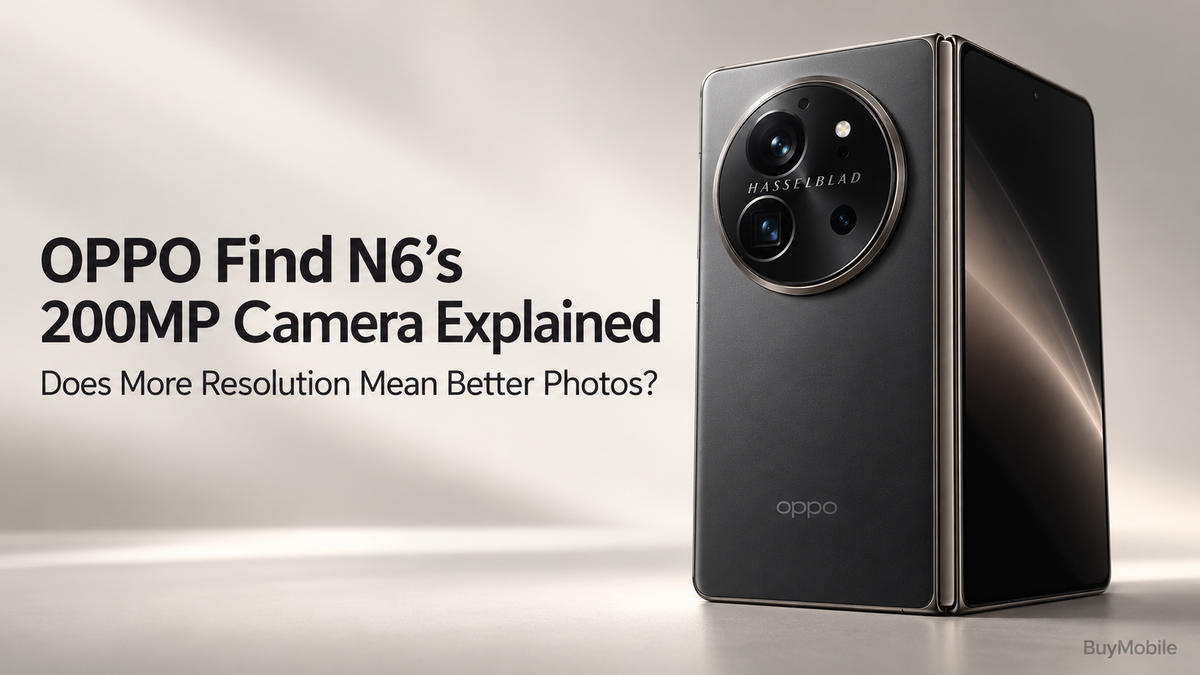
OPPO lists a 200MP main camera with an f/1.8 aperture, autofocus and two-axis optical image stabilisation. Its Hasselblad Hi-Res mode supports 50MP and 200MP shooting, giving users a choice when they want to prioritise resolution. Megapixels describe the number of pixels in an image. A 200MP photograph contains approximately 200 million pixels, offering substantial potential for recording fine detail.However, pixel count measures image dimensions rather than overall photographic quality. A high-resolution picture can still have inaccurate colours, blurred subjects or poorly balanced exposure. Think of megapixels as extra room for detail, provided the camera captures that detail successfully.
When Does More Resolution Actually Help?
High resolution is most useful when photographing relatively still subjects in good light. Architecture, landscapes, artwork and carefully arranged product shots are sensible situations in which to try 200MP mode.Imagine photographing a city skyline during daylight. You might later crop the image to highlight a particular building. A detailed original gives you more flexibility before the crop starts looking visibly soft.This is the practical appeal of 200MP: more freedom after capture. However, the improvement depends on how much genuine detail the lens and sensor recorded. Extra pixels cannot recover information lost through missed focus, camera movement or atmospheric haze.
Does 200MP Mean Four Times Better Photos Than 50MP?
Although 200MP contains four times as many pixels as 50MP, it does not provide four times the resolution along each side of the image. With matching proportions, it offers approximately twice the width and twice the height.That distinction matters because the headline number can exaggerate expectations. You may notice additional texture when examining a crop, while the complete photograph looks quite similar at normal viewing size.For social media posts and everyday sharing, the difference can become smaller still. Images are often resized or compressed, so much of the extra resolution may never reach the viewer.
Why Do High-Resolution Cameras Produce Smaller Images?
High-resolution smartphone sensors can use pixel binning, which combines information from neighbouring pixels to produce a lower-resolution image. Samsung’s sensor documentation explains how this approach allows high-resolution sensors to adapt to different lighting conditions. This is a general explanation of the technology, rather than a claim about the Find N6’s exact default output or binning arrangement.The important takeaway is that a smaller image is not necessarily an inferior one. Camera systems balance detail against noise, exposure and processing requirements. A lower-resolution result can be the more useful photograph, particularly when conditions are challenging.
Is 200MP the Best Choice at Night?
Not automatically. After sunset, available light becomes a bigger limitation than pixel count. Capturing a clean image requires the camera to manage exposure, noise and movement effectively.For evening streets, dim restaurants or indoor gatherings, start with the regular photo mode or night mode. Try high-resolution shooting separately if your subject is still and the scene has enough illumination.Compare the results at the same viewing size. Look at shadow detail, faces and bright lights rather than judging sharpness alone. A photograph with fewer pixels but cleaner shadows and better exposure may be the stronger image.
Can Optical Stabilisation Prevent Blurry Photos?
The Find N6’s main camera includes optical image stabilisation, which helps compensate for camera shake. That can be useful when shooting handheld, especially as light levels fall. However, stabilising the camera does not freeze a moving subject. Children running across a room or pets turning their heads can still appear blurred if the exposure is too long.For these moments, prioritise good light and quick capture. Regular photo mode is a sensible starting point. A sharp expression matters more than a huge image file containing motion blur.
What About Hasselblad Colour and Image Processing?
Resolution is only one part of the Find N6’s camera system. OPPO also promotes Hasselblad imaging features and a True Color Camera intended to support consistent, natural-looking colours. Colour accuracy, white balance and exposure can affect a photograph’s appeal as much as fine detail. Skin tones should look believable, while bright skies and dark backgrounds need careful handling.When comparing camera results, examine those qualities alongside resolution. Manufacturer descriptions explain the intended benefits, but they do not replace examining photographs taken in the conditions that matter to you.
Should You Always Leave 200MP Mode On?
Use 200MP selectively. Larger images generally require more storage, and their extra detail is most valuable when you plan to crop, edit or print.For casual snapshots, choose the setting that consistently delivers pleasing results. For deliberate photography, experiment with high resolution and check whether it produces a meaningful improvement.The OPPO Find N6’s 200MP camera offers creative flexibility, but better photos still begin with good light, accurate focus and thoughtful composition. More resolution expands your options; it does not guarantee the best photograph.