


































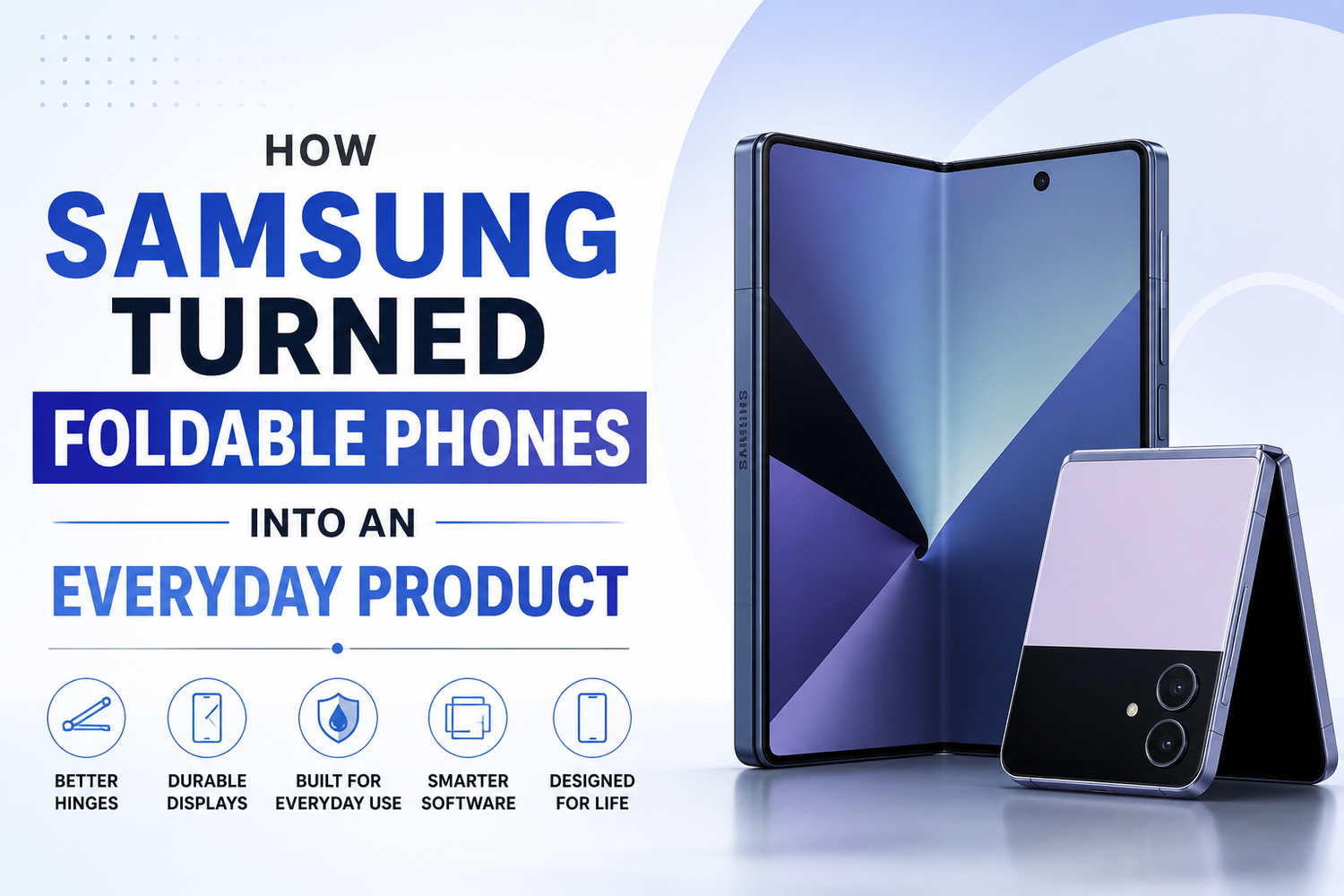
There was a time when a smartphone with a folding screen sounded like something from a science-fiction movie. Traditional phones had rigid displays, predictable designs and very little variation in their basic shape. Then Samsung began pushing foldable technology into the consumer market, changing expectations about what a smartphone could look like and how it could be used.Samsung did not make foldable phones an everyday product overnight. The process involved years of display research, ambitious early devices, highly publicised problems and continuous improvements to durability, software, cameras and design.From the original Galaxy Fold to newer Galaxy Z Fold and Galaxy Z Flip generations, Samsung gradually moved foldables from experimental technology toward devices people could realistically use every day.
Samsung Was Working on Foldable Displays Long Before the Galaxy Fold
Samsung's foldable story started well before consumers could walk into a store and buy one.Samsung Display had been developing flexible OLED technology for years. Flexible screens presented exciting possibilities because they were not restricted to the rigid glass panels traditionally associated with smartphones.However, making a display bend was only one part of the challenge.A practical foldable smartphone also needed a hinge capable of surviving repeated opening and closing. The display needed protection. Internal components had to fit inside two moving sections. The software needed to understand when the device was folded or unfolded.Samsung therefore wasn't simply designing another Galaxy phone.It was attempting to establish an entirely new smartphone form factor.
The Original Galaxy Fold Was a Bold First Attempt
Samsung introduced the original Galaxy Fold in 2019.Its basic concept was immediately fascinating.When closed, it could function as a smartphone. Open it and users gained access to a much larger tablet-like display.For people accustomed to carrying separate phones and tablets, the idea had obvious appeal.The Galaxy Fold demonstrated that flexible-display technology had progressed far enough to become a genuine consumer product.However, its introduction also demonstrated how difficult foldable engineering could be.Early review units experienced display problems, leading Samsung to delay the commercial launch while improvements were made.It was a difficult moment, but also an important one.Instead of ending Samsung's foldable ambitions, the experience became part of the development process.
Samsung Had to Solve the Durability Problem
One of the biggest questions surrounding early foldables was simple:Would they last?People open their smartphones constantly. A foldable device needs to survive that repeated mechanical movement while protecting a flexible display.Samsung gradually refined its hinge designs, screen construction and overall durability.The company also had to educate customers.A flexible display doesn't behave exactly like the conventional glass screen people had been using for years. Early foldables required different expectations regarding handling and screen protection.Over successive generations, however, foldables began feeling less like delicate technology demonstrations and more like devices intended for ordinary daily routines.That shift in confidence was essential.Consumers were unlikely to adopt foldables widely if they were constantly worried about opening them.
The Galaxy Z Fold2 Showed Samsung Was Serious
The Galaxy Z Fold2 represented an important step forward.One major improvement involved the outer display.The original Galaxy Fold's cover screen was relatively small, which limited what users could comfortably do without opening the phone.Samsung expanded the cover display significantly with the Fold2.This made the device more practical because users could quickly check messages, navigate applications or perform everyday tasks without unfolding the larger screen.Then, when additional space was useful, they could open the device.This dual-screen behaviour became central to the Fold experience.Instead of thinking of the foldable exclusively as a tablet that became smaller, users could treat it as a normal smartphone that became bigger when required.That difference helped make the concept easier to understand.
The Galaxy Z Flip Offered a Completely Different Idea
Samsung's foldable strategy wasn't limited to the Fold series.The Galaxy Z Flip approached folding from the opposite direction.Rather than turning a phone into a small tablet, the Flip took a conventional smartphone-sized screen and folded it into a more compact shape.That made foldable technology relevant to a different audience.Not everyone wanted a productivity-focused device with a huge internal screen. Some people simply wanted a full-sized smartphone that occupied less space when closed.The Flip also introduced a strong fashion and lifestyle element to Samsung's foldable range.Suddenly, foldables weren't only about productivity.They could also be about portability, design and personal style.
Water Resistance Was a Major Milestone
One of Samsung's most meaningful foldable improvements arrived with the Galaxy Z Fold3 and Galaxy Z Flip3generation.Samsung introduced water resistance to these devices.That might sound less exciting than a new processor or camera, but it was extremely important for everyday usability.Smartphones encounter unpredictable environments .Rain happens.Drinks spill.Phones are used near swimming pools, kitchen sinks and bathroom counters.Adding meaningful water resistance helped foldables behave more like conventional premium smartphones.It sent an important message: foldable phones were moving beyond experimental status.
Software Had to Evolve With the Hardware
A large folding display is only useful if applications know what to do with it.Samsung therefore invested heavily in software features designed around foldable screens.Multitasking became one of the Fold series' biggest strengths.Users could place multiple applications on the large internal display, making it possible to read an email while checking a calendar or watch a video while browsing other information.Samsung also developed continuity features that allowed applications to transition between outer and inner displays.Flex Mode introduced another interesting possibility.Because the device could remain partially folded at different angles, applications could divide controls and content across different parts of the screen.The hinge was no longer simply something that made the phone smaller.It became part of the user interface.
Samsung Continued Making Foldables Thinner and Lighter
Early Fold devices were undeniably bulky.When you fold a large smartphone in half, thickness becomes a serious design challenge.Samsung gradually worked on reducing that compromise.Hinge mechanisms became more sophisticated. Internal layouts improved. Gaps between folded sections were reduced. Weight and thickness became increasingly important areas of development.These improvements may appear less dramatic than introducing folding technology itself, but they are essential to mainstream adoption.A device can have extraordinary technology and still become frustrating if it feels uncomfortable in a pocket every day.The closer foldables get to the convenience of conventional smartphones, the easier they become to recommend.
The Cover Screens Became More Useful
Samsung also improved how users interact with foldables while they're closed.
This was particularly important for the Galaxy Z Flip series.Larger and more functional cover displays allowed users to check notifications, control music, access widgets and perform quick tasks without unfolding the phone.That reduces unnecessary interactions.You don't necessarily need to open the device just to check the weather or see who's calling.Over time, this helped the folding mechanism feel less like a novelty and more like a practical design choice.
Cameras and Performance Had to Catch Up
Consumers purchasing expensive smartphones expect premium performance.Being foldable isn't enough.Samsung therefore had to improve processors, cameras, displays and connectivity alongside the folding technology.This is an important part of how foldables became more normal.Early buyers might have accepted compromises because the technology was new.Mainstream consumers are less forgiving.If someone is spending flagship-level money, they expect flagship-level everyday performance.As Galaxy Z devices evolved, the conversation increasingly moved away from simply asking, "Does the screen really fold?"People started asking normal smartphone questions.How good is the camera?How long does the battery last?How fast is it?Is the screen bright enough outdoors?That change in conversation is evidence of foldables becoming more mature.
Competition Helped Normalise Foldables
Samsung's persistence also encouraged broader competition.Companies including Google, Motorola, Honor, Oppo and others developed their own approaches to folding smartphones.Competition is important because different manufacturers solve problems differently.Some concentrate on thinner designs. Others emphasise cameras, larger cover screens or different hinge systems.For Samsung, increased competition created pressure to continue improving the Galaxy Z family.For consumers, it helped establish foldables as a genuine smartphone category rather than an unusual Samsung experiment.
Price Remains One of the Biggest Challenges
Despite all the progress, foldable phones aren't yet ordinary in the same way traditional smartphones are.Price remains a significant barrier.The sophisticated displays, hinges and complex manufacturing involved can make premium foldables considerably more expensive than many conventional smartphones.Repair costs and long-term durability can also influence buying decisions.This is why the Galaxy Z Flip concept is particularly important.Smaller foldables have the potential to make the category approachable to people who don't need the enormous internal display offered by Fold devices.For foldables to become truly mainstream, affordability will likely remain just as important as technological innovation.
Foldables Became Useful Instead of Simply Interesting
Perhaps Samsung's biggest achievement wasn't making a screen fold.It was finding reasons for people to actually use that ability.The Fold provides a large display for multitasking, reading, entertainment and productivity while remaining pocketable.The Flip provides a normal smartphone experience that can collapse into a compact form.Those are understandable benefits.Foldable phones started becoming more compelling when the conversation shifted from "Look what this technology can do" to "Here's why this could make your daily routine easier."