


































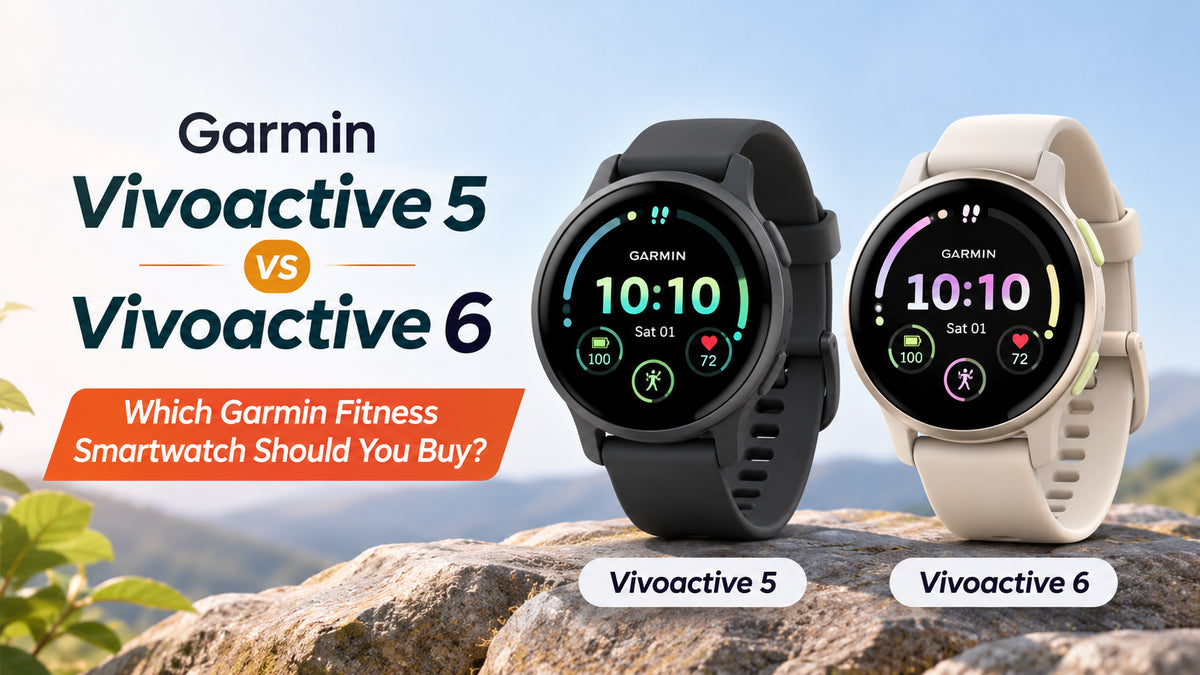
Choosing the right fitness smartwatch can be challenging, especially when two devices offer similar designs, health tracking capabilities and battery performance. The Garmin Vivoactive 5 and Garmin Vivoactive 6 are excellent options for users who want reliable fitness monitoring without purchasing an expensive premium smartwatch. Both watches feature AMOLED displays, built-in GPS, advanced sleep tracking and Garmin's popular Body Battery energy monitoring system. However, the Vivoactive 6 introduces additional sports profiles, improved running features and several software enhancements. In this Garmin Vivoactive 5 vs Vivoactive 6 comparison, we explore their design, fitness tracking, health monitoring, battery life and overall value to help Australian buyers choose the right smartwatch in 2026.
Garmin Vivoactive 5 vs Vivoactive 6: Design and Display
The Garmin Vivoactive 5 and Vivoactive 6 share remarkably similar designs. Both feature a lightweight circular case, silicone straps and a comfortable construction suitable for everyday wear. The Vivoactive 5 measures 42.2 × 42.2 × 11.1mm, while the Vivoactive 6 is slightly thinner at 10.9mm. Both watches feature a 1.2-inch AMOLED display with a resolution of 390 × 390 pixels. This display delivers vibrant colours, sharp text and excellent contrast when viewing fitness information or smartphone notifications. The Vivoactive 6 offers improved display brightness, making information easier to read in certain outdoor conditions. Both models also feature Corning Gorilla Glass 3 protection and 5 ATM water resistance, making them suitable for swimming and everyday activities.
Display and Design Winner: Garmin Vivoactive 6, although the improvements are relatively minor.
Fitness Tracking: Which Garmin Watch Offers More Features?
Fitness tracking represents one of the biggest differences between these smartwatches. The Garmin Vivoactive 5 supports more than 30 built-in sports applications, covering activities such as walking, running, cycling, swimming, yoga and strength training. For most casual fitness enthusiasts, these activities provide everything needed to monitor regular workouts. The Garmin Vivoactive 6 expands the selection to more than 80 sports applications. Additional activities include hiking, trail running, mobility workouts and several outdoor recreation profiles. The newer model also introduces improved workout guidance and on-screen animations for selected exercises. These features make it easier to follow structured workouts without constantly checking a smartphone. Fitness enthusiasts who regularly switch between different activities will appreciate the expanded tracking options.
Fitness Tracking Winner: Garmin Vivoactive 6.
GPS Accuracy and Outdoor Activity Tracking
GPS performance is particularly important for runners, cyclists and outdoor fitness enthusiasts. Both Garmin smartwatches include built-in GPS, allowing users to record outdoor routes, distance, speed and pace without carrying their smartphones. The Vivoactive 5 supports GPS, GLONASS and Galileo satellite systems. The Vivoactive 6 expands compatibility by adding BeiDou and QZSS satellite support. This provides additional satellite coverage that may improve positioning reliability in certain environments. However, neither smartwatch includes Garmin's advanced multi-band GPS technology. For everyday running, walking and cycling, both watches offer dependable tracking capabilities. The Vivoactive 6 also provides basic course-following functionality, which adds flexibility for outdoor workouts.
GPS Tracking Winner: Garmin Vivoactive 6.
Health Monitoring: Heart Rate, Sleep and Stress Tracking
Health monitoring remains an important reason to purchase a Garmin fitness smartwatch. Both the Vivoactive 5 and Vivoactive 6 feature continuous wrist-based heart rate monitoring, stress tracking and Pulse Ox blood oxygen measurement. Garmin's Body Battery feature estimates available energy levels using information such as activity, stress and recovery. This helps users understand when they may be ready for exercise or additional rest. Both watches also include sleep scoring, sleep coaching, nap detection and heart rate variability monitoring. The Vivoactive 6 introduces a Smart Wake Alarm designed to wake users with gentle vibrations during a lighter sleep stage within a selected window. However, both models use Garmin's fourth-generation Elevate optical heart rate sensor. Consequently, buyers should not expect a major difference in basic heart rate tracking accuracy. Neither smartwatch supports ECG measurements.
Health Monitoring Winner: Garmin Vivoactive 6, primarily because of its additional wellness features.
Running Features: Is the Vivoactive 6 Better for Runners?
The Vivoactive 6 offers meaningful improvements for users who take running seriously. The Vivoactive 5 provides essential running information such as pace, distance, heart rate and estimated VO2 max. These metrics are sufficient for beginners and recreational runners. However, the Vivoactive 6 introduces additional running tools previously associated with Garmin's more performance-focused watches. These include wrist-based running dynamics, running power, PacePro pacing strategies and race prediction. The newer smartwatch also supports additional Garmin Coach training options. These features help runners better understand their performance and develop structured training routines. For someone preparing for a 5K, 10K or longer running event, these additional insights can be particularly valuable.
Running Performance Winner: Garmin Vivoactive 6.
Battery Life: Which Garmin Smartwatch Lasts Longer?
Battery life is one area where both watches perform almost identically. Garmin rates both the Vivoactive 5 and Vivoactive 6 for up to 11 days of battery life in smartwatch mode. With the always-on display enabled, the estimated battery life decreases to approximately five days. Both models also offer up to 21 hours in GPS-only mode and approximately 17 hours when using all-systems GNSS tracking. Actual battery performance depends on screen brightness, workout frequency, notifications and health monitoring settings. Users who frequently activate GPS or stream music during workouts may experience shorter battery life. Nevertheless, both watches provide excellent endurance compared with many smartwatches requiring daily charging.
Battery Life Winner: Tie.
Smartwatch Features and Everyday Convenience
Beyond fitness tracking, both Garmin smartwatches offer useful everyday features. Users can receive smartphone notifications, control music and use Garmin Pay where supported. Both watches also support offline music storage and Bluetooth headphone connectivity. However, the Vivoactive 6 increases internal storage from 4GB to 8GB. This provides additional space for music and watch data. Both models work with the Garmin Connect application, allowing users to review fitness statistics, monitor progress and analyse their activities. Neither watch offers the same extensive third-party application ecosystem found on some conventional smartwatches. However, Garmin prioritises fitness functionality, battery endurance and straightforward everyday usability.
Smartwatch Features Winner: Garmin Vivoactive 6.
Garmin Vivoactive 5 vs Vivoactive 6: Which Offers Better Value?
The Garmin Vivoactive 5 remains an attractive option for budget-conscious buyers. It offers excellent health monitoring, reliable GPS tracking, an AMOLED display and impressive battery life. For users primarily interested in step counting, sleep monitoring, gym workouts and general fitness, the Vivoactive 5 provides strong value. The Vivoactive 6 offers additional functionality through expanded sports profiles, improved training features and larger storage capacity. Whether these improvements justify the additional cost depends on individual fitness requirements. Australian buyers should compare current prices, as discounts can significantly influence which model represents the better purchase.