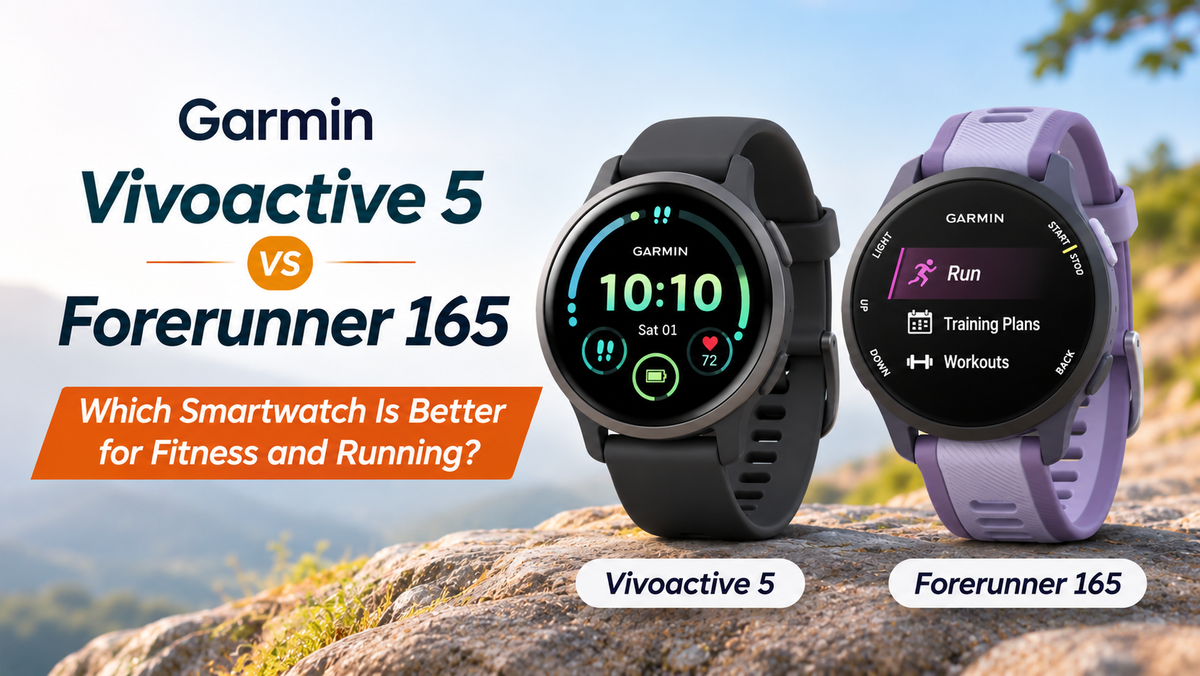




































Choosing the right Garmin smartwatch depends on your fitness goals, lifestyle and training requirements. The Garmin Vivoactive 5 and Garmin Forerunner 165 are two popular fitness smartwatches offering excellent health monitoring, built-in GPS and impressive battery life. Although both feature AMOLED displays and advanced fitness tracking capabilities, they target different users. The Garmin Vivoactive 5 focuses on everyday wellness, gym workouts and lifestyle convenience, while the Forerunner 165 is designed primarily for runners seeking structured training and detailed performance insights. In this Garmin Vivoactive 5 vs Forerunner 165 comparison, we examine their design, running features, GPS accuracy, health monitoring, battery performance and overall value to help Australian buyers make the right decision in 2026.
Garmin Vivoactive 5 vs Forerunner 165: Design and Display
Both Garmin smartwatches feature modern circular designs with lightweight construction and comfortable silicone straps. The Vivoactive 5 measures 42.2mm in diameter, while the Forerunner 165 features a slightly larger 43mm case. Both include a 1.2-inch AMOLED display with a resolution of 390 × 390 pixels. These displays deliver vibrant colours, sharp text and excellent contrast when viewing fitness statistics, notifications and workout information. The Vivoactive 5 features an aluminium bezel and two physical buttons, creating a stylish appearance suitable for everyday wear. The Forerunner 165 uses a fibre-reinforced polymer case and five physical buttons. Its additional buttons make navigating workout screens easier during running sessions, particularly when hands are sweaty. Both watches feature touchscreen functionality and 5 ATM water resistance.
Design Winner: Vivoactive 5 for everyday style, Forerunner 165 for running convenience.
Fitness Tracking: Which Garmin Smartwatch Offers More?
The Garmin Vivoactive 5 is designed for users who enjoy various fitness activities. It supports more than 30 built-in sports applications, including walking, running, cycling, swimming, yoga, Pilates and strength training. The smartwatch also includes animated workouts and exercise guidance for selected activities. These features make it useful for gym enthusiasts and individuals following varied fitness routines. The Forerunner 165 supports popular activities such as running, cycling, swimming and strength training. However, its primary focus is running performance rather than providing the broadest everyday fitness experience. Both watches track steps, calories, activity intensity and workout duration. For users who regularly combine strength training, yoga and cardio exercises, the Vivoactive 5 provides a particularly convenient experience.
Fitness Tracking Winner: Garmin Vivoactive 5.
Running Features: Is the Forerunner 165 Better for Runners?
Running performance represents the most significant difference between these devices. The Vivoactive 5 provides essential running metrics, including distance, pace, heart rate and estimated VO2 max. It also supports Garmin Coach training plans, making it suitable for beginners preparing for running events. However, the Forerunner 165 introduces more specialised training capabilities. These include running power, running dynamics, PacePro pacing strategies and race predictions. The smartwatch also provides daily suggested workouts and recovery time recommendations. These features help runners understand training intensity and plan future workouts more effectively. For example, someone preparing for a 10K or half-marathon can use daily workout recommendations to establish a more structured training routine. The Forerunner 165 also offers a Morning Report containing useful information about sleep, recovery and upcoming training.
Running Performance Winner: Garmin Forerunner 165.
GPS Accuracy and Outdoor Running Performance
GPS tracking is essential for runners who want accurate information about distance, speed and outdoor routes. Both Garmin smartwatches include built-in GPS and support multiple satellite navigation systems. This allows users to record activities without carrying their smartphones. The Vivoactive 5 performs well during everyday walking, cycling and recreational running. The Forerunner 165 offers similarly capable GPS tracking but includes additional running-focused navigation features. These include basic course navigation and guidance that can help runners follow planned routes. However, neither watch supports Garmin's advanced multi-band GPS technology. GPS accuracy can vary depending on surrounding buildings, trees and satellite visibility. For casual outdoor activities, both models provide dependable functionality.
GPS and Navigation Winner: Garmin Forerunner 165, primarily because of its running-oriented navigation capabilities.
Health Monitoring: Heart Rate, Sleep and Body Battery
Both Garmin smartwatches provide comprehensive health monitoring throughout the day. They include continuous wrist-based heart rate tracking, stress monitoring, Pulse Ox measurement and Garmin's Body Battery energy monitoring. Body Battery estimates available energy using information related to sleep, stress and daily activities. Both watches also feature sleep scoring, sleep coaching, nap detection and heart rate variability tracking. These tools help users recognise patterns in their daily routines and recovery. The Vivoactive 5 includes additional lifestyle-oriented features, such as wheelchair mode and dedicated wheelchair activity tracking. The Forerunner 165 places greater emphasis on recovery information connected to running performance. Neither device offers ECG functionality. For everyday wellness monitoring, both smartwatches provide remarkably similar capabilities.
Health Monitoring Winner: Tie.
Battery Life: Which Garmin Watch Lasts Longer?
Battery life is an important consideration for users who track activities regularly. Both the Vivoactive 5 and Forerunner 165 offer up to 11 days of battery life in smartwatch mode. However, GPS battery performance differs slightly. The Vivoactive 5 offers up to 21 hours in GPS-only mode, while the Forerunner 165 provides up to 19 hours. Actual battery endurance depends on settings, GPS usage, display brightness and connected features. The Vivoactive 5 also offers approximately five days with its always-on display enabled. Both watches provide considerably longer battery endurance than many smartwatches requiring daily charging. For regular fitness enthusiasts, either smartwatch should comfortably support several days of workouts between charges.
Battery Life Winner: Garmin Vivoactive 5, although the difference is relatively small.
Smartwatch Features: Music, Notifications and Everyday Use
The Vivoactive 5 offers several convenient smartwatch features. It supports smartphone notifications, Garmin Pay and onboard music storage. Users can download compatible music playlists and listen through Bluetooth headphones without carrying their smartphones. The standard Forerunner 165 includes smartphone notifications and Garmin Pay but does not support onboard music storage. Users wanting offline music playback must choose the Forerunner 165 Music edition. Both watches connect to Garmin Connect, allowing users to analyse workouts, monitor health statistics and review long-term fitness progress. For everyday convenience, the Vivoactive 5 offers greater flexibility without requiring a separate music-specific model.
Smartwatch Features Winner: Garmin Vivoactive 5.
Garmin Vivoactive 5 vs Forerunner 165: Which Offers Better Value?
The Vivoactive 5 is an excellent option for buyers seeking an all-round fitness smartwatch. Its combination of health tracking, multiple sports profiles, music storage and attractive design makes it suitable for everyday activities. The Forerunner 165 offers better value for runners who regularly follow structured training plans. Its running metrics, recovery recommendations and dedicated navigation controls provide useful advantages. Australian buyers should compare current retail prices before purchasing because discounts can influence the overall value.