


































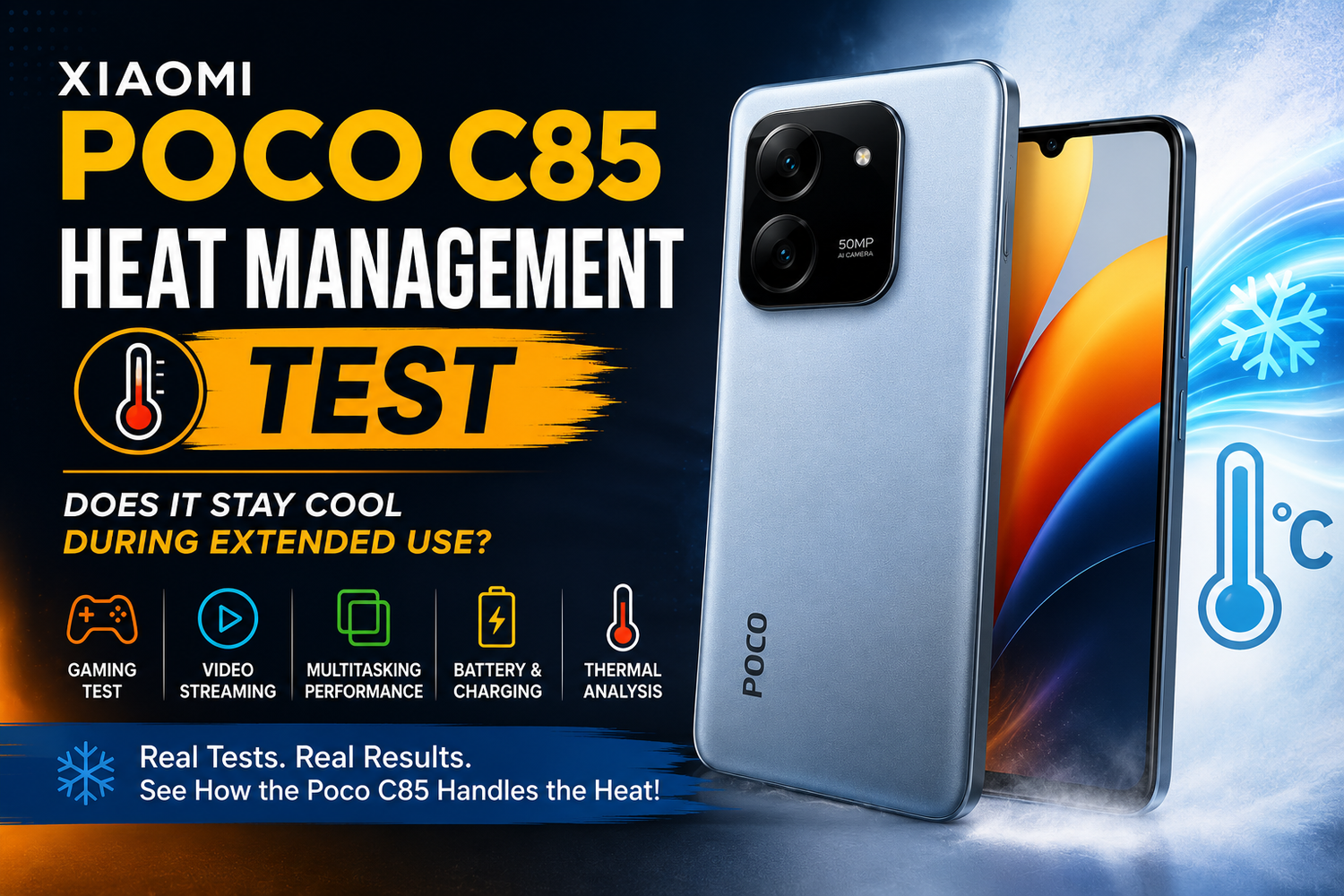
Smartphone performance has improved dramatically over the past few years, even in the budget segment. However, powerful hardware alone is not enough to guarantee a good user experience. Heat management plays a crucial role in maintaining smooth performance, extending battery life, and ensuring user comfort during prolonged use. A phone that overheats can suffer from slower performance, rapid battery drain, and an uncomfortable grip.The Xiaomi Poco C85 is designed as an affordable smartphone that balances everyday performance with practical features. But how well does it handle heat during extended use? Whether you're gaming, streaming videos, attending video calls, or multitasking throughout the day, understanding its thermal performance can help you decide if it's the right device for your needs.
Why Heat Management Matters
Every smartphone generates heat while performing tasks. Opening apps, downloading files, recording videos, navigating with GPS, or playing games all require processing power that naturally produces heat.The real difference lies in how effectively a smartphone manages that heat.Good thermal management allows the processor to maintain consistent performance without slowing down. It also prevents excessive battery degradation over time and keeps the device comfortable to hold.For budget smartphones like the Poco C85, efficient heat control is especially important because users often rely on a single device for work, entertainment, and communication throughout the day.
Everyday Tasks Keep Temperatures Under Control
For normal daily activities, the Xiaomi Poco C85 remains pleasantly cool.Browsing websites, checking emails, chatting on messaging apps, scrolling through social media, and listening to music place minimal stress on the processor. During these activities, the phone maintains stable temperatures with no noticeable warmth.Even after hours of casual use, the back panel remains comfortable to hold, making it suitable for users who spend long periods on their smartphones.Students, office workers, and casual users are unlikely to encounter any overheating concerns during everyday operation.
Streaming Videos for Hours
Watching movies and television shows is one of the most common smartphone activities.The Poco C85 performs well during extended streaming sessions on platforms such as YouTube and Netflix. Video playback remains smooth while heat levels stay well within comfortable limits.The device may become slightly warm after several hours of continuous streaming, particularly if the screen brightness is set very high, but temperatures never become uncomfortable.This makes the Poco C85 an excellent companion for users who enjoy binge watching their favourite content.
Gaming Performance Under Pressure
Gaming places far greater demands on a smartphone than everyday applications.Popular games require continuous CPU and GPU activity, resulting in increased heat generation. During light and moderately demanding games, the Poco C85 maintains respectable thermal performance.The phone gradually becomes warm after extended gameplay, especially around the processor area, but remains comfortable enough for extended sessions.For highly demanding games played at maximum graphics settings, temperatures naturally increase further. As with most budget smartphones, the device may slightly reduce performance after long gaming sessions to prevent excessive heat buildup.This behaviour is normal and helps protect both the processor and battery from unnecessary stress.
Video Recording Performance
Recording high resolution videos continuously is another task that generates significant heat.The Poco C85 handles casual video recording without difficulty. Recording family events, short travel clips, or social media content does not cause noticeable overheating.Long continuous recording sessions naturally produce more heat because the processor must handle image processing, video encoding, and storage simultaneously.Fortunately, the phone manages these situations reasonably well, allowing users to capture extended footage without major interruptions under normal environmental conditions.
Multitasking Throughout the Day
Many users rarely focus on one application at a time.Switching between messaging apps, browsers, video calls, navigation, camera applications, and productivity tools places continuous demands on the processor.The Poco C85 handles this workload efficiently without generating excessive heat.Application switching remains smooth while temperatures stay under control, making the phone suitable for users with busy daily routines.Whether you're responding to emails while attending meetings or managing multiple social media platforms, the phone remains dependable throughout the day.
Charging Temperatures
Fast charging naturally generates additional heat because energy enters the battery at a much higher rate than standard charging.The Xiaomi Poco C85 becomes moderately warm during charging, which is completely normal for modern smartphones.The device is designed with built in charging protection that monitors battery temperature and adjusts charging speed when necessary.For the healthiest long term battery performance, users should avoid heavy gaming or intensive applications while charging.Following this simple habit helps minimise heat generation and extends battery lifespan.
Outdoor Use in Warm Weather
External temperatures significantly influence smartphone heat management.Using the Poco C85 outdoors on sunny days causes temperatures to rise more quickly than indoor use. High display brightness combined with mobile data, GPS navigation, and direct sunlight creates additional thermal stress.Even under these conditions, the device continues to function reliably for typical daily tasks.Users planning extended outdoor photography or gaming sessions may notice increased warmth, but this is expected for nearly every smartphone regardless of price.Keeping the phone out of direct sunlight whenever possible helps maintain optimal performance.
Battery Efficiency and Heat
Heat and battery performance are closely connected.Excessive temperatures accelerate battery wear and reduce long term capacity. Efficient thermal management helps preserve battery health over months and years of regular use.The Poco C85's balanced processor contributes to lower power consumption during everyday tasks. Because the chipset focuses on efficiency rather than extreme performance, it naturally produces less heat than flagship processors.This balance benefits both battery life and overall device longevity.
Practical Tips to Keep the Poco C85 Cool
Although the Poco C85 manages heat well, users can further improve thermal performance with a few simple habits.Reducing screen brightness when indoors helps lower power consumption. Closing unused background applications minimises processor workload. Removing thick protective cases during long gaming sessions allows heat to dissipate more effectively.Avoid leaving the phone inside parked vehicles or under direct sunlight for extended periods, as high environmental temperatures significantly increase internal heat.Keeping software updated also ensures that Xiaomi's latest performance and thermal optimisations are applied.
Is Heat Management Good Enough?
Considering its affordable price point, the Xiaomi Poco C85 delivers commendable thermal performance.Everyday activities generate very little heat, while streaming, multitasking, photography, and casual gaming remain comfortable even during longer sessions.Only extremely demanding workloads, such as extended high performance gaming or prolonged video recording, result in noticeable warmth, and even then the phone manages temperatures responsibly by balancing performance with hardware protection.For the majority of users, overheating is unlikely to become a concern.