
































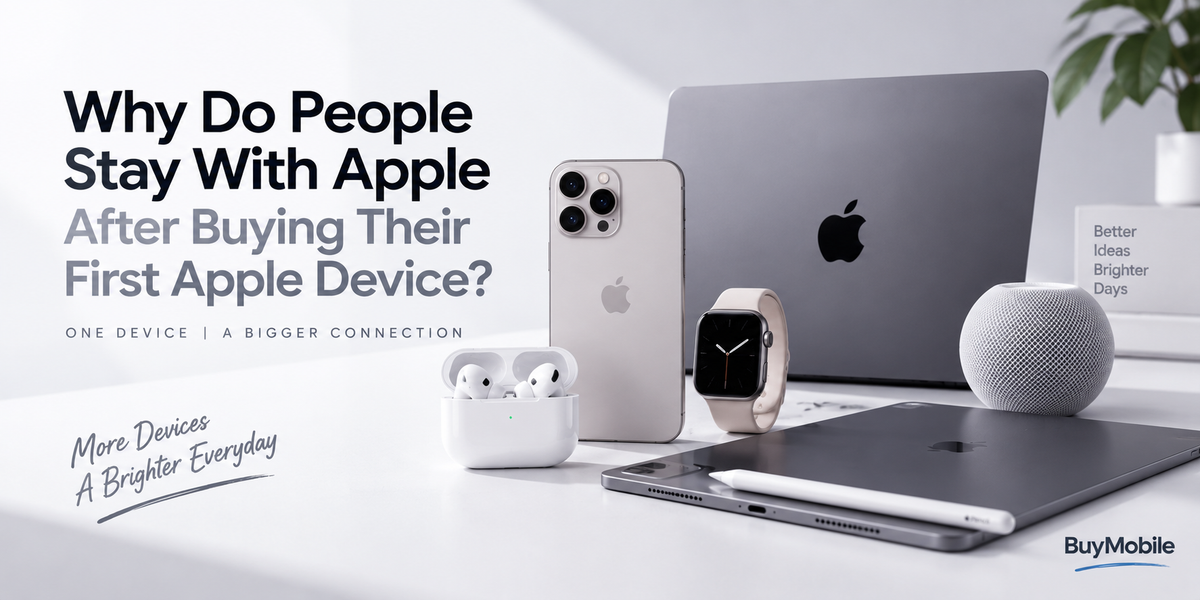
Buying your first Apple device can start as a simple purchase. Maybe you choose an iPhone because you like its camera, buy a MacBook for work or pick up an iPad for studying. But something interesting often happens afterwards. When it is time to buy another phone, tablet, laptop, smartwatch or pair of earbuds, many people look at Apple again.Why?The obvious explanation is brand loyalty, but the real answer is more complicated. Apple has built an ecosystem where individual products become increasingly useful when they are connected to other Apple devices. Familiar software, convenient features, long-term updates, accessory integration and the effort involved in changing ecosystems can all influence the decision to stay.Here is why one Apple device can sometimes become the beginning of an entire collection.
The First Device Introduces You to the Apple Ecosystem
An iPhone by itself is simply a smartphone. Add AirPods, an Apple Watch, an iPad and a Mac, however, and the experience starts changing.Apple designs its hardware, operating systems and services to work closely together.This means buying another Apple product can provide benefits beyond the capabilities of the new device itself. It can also improve how you use the Apple products you already own.That creates a powerful incentive to remain within the ecosystem.Instead of evaluating every future purchase as an isolated product, people may begin asking which device will work best with everything they already have.
Setup Is Usually Familiar
Familiarity is a surprisingly strong reason people stay with technology brands.Once someone has spent years using an iPhone, they understand where important settings are located, how notifications behave, how apps are organised and how everyday features work.Moving to another platform means learning new menus, gestures, account systems and workflows.Some users enjoy that change.Others simply want their next device to feel immediately familiar.Upgrading from one iPhone to another generally means you are entering an environment you already understand. That reduces the amount of adjustment required and can make replacing an old device feel easier.Convenience can be more persuasive than specifications.
Apple Devices Become More Useful Together
One of Apple's biggest strengths is Continuity, the collection of features designed to help its devices cooperate.For example, Handoff can allow you to begin an activity on one compatible Apple device and continue it on another.Universal Clipboard can make it possible to copy content on one Apple device and paste it onto another nearby device signed into the same Apple Account.AirDrop provides a convenient way to transfer compatible files between nearby Apple devices.An iPhone can also work with a Mac through features such as iPhone Mirroring, while Continuity Camera can allow the iPhone's camera system to be used with a Mac.Each feature may seem relatively small by itself.Together, they can remove dozens of tiny inconveniences from everyday computing.Once people become accustomed to these workflows, losing them can feel more noticeable than expected.
AirPods Add Another Layer of Convenience
Wireless earbuds are available from countless manufacturers, but AirPods become particularly attractive when someone already owns Apple devices.Pairing them with an iPhone connects them to the user's Apple Account, helping them work across compatible Apple devices.Features such as automatic device switching can make moving between an iPhone, iPad and Mac more convenient.Imagine listening to music on your iPhone and then moving to your Mac for work. The goal of the ecosystem is to reduce the amount of manual Bluetooth management required.This does not necessarily mean AirPods are the best earbuds for every person.It means their value can increase when the buyer already owns other Apple products.That distinction is important when understanding Apple's customer retention.
Apple Watch Strengthens the Connection to iPhone
Apple Watch can deepen the ecosystem relationship even further.The watch is designed around its relationship with iPhone, providing access to notifications, fitness information, calls, messages and other connected functionality.Once someone has invested in an Apple Watch and uses it every day, their next smartphone decision is no longer just about replacing an iPhone.Changing smartphone platforms could also affect how they use their watch.The more connected devices someone owns, the more consequences there can be when changing one major part of the ecosystem.This creates what is sometimes called ecosystem lock-in.However, it is worth separating negative lock-in from genuine convenience. Many users stay because they actively like the connected experience rather than simply because leaving is difficult.Both factors can exist at the same time.
iCloud Keeps Important Information Connected
Cloud services are another important part of the experience.
iCloud can synchronise information such as photos, files, contacts, calendars, passwords and other supported data across Apple devices.Take a photo on an iPhone and it can become available through your other connected devices when the relevant iCloud features are enabled.Save a file to iCloud Drive on a Mac and you can access it from an iPhone or iPad.This reduces the feeling that every device contains a completely separate collection of information.Instead, your devices can become different windows into the same digital life.After years of building that environment, switching ecosystems can require more planning.
Familiar Apps and Services Encourage People to Stay
Over time, users can accumulate much more than hardware.They may have purchased applications, subscribed to Apple services, organised an iCloud Photo Library, created shared albums, saved passwords and built workflows around Apple's software.Families may also use features such as Family Sharing.Every additional service increases the number of connections associated with the ecosystem.Again, this does not make leaving impossible.People can export data, move files and adopt alternatives.The question is whether they believe changing platforms offers enough benefit to justify the effort.For many users, staying is simply easier.
Software Updates Can Encourage Long-Term Ownership
People are more likely to remain loyal to a product when they feel it will continue receiving attention after purchase.Apple has historically supported iPhones with major software updates for multiple years.Long software support can make an older device remain useful and familiar for longer, while security updates help extend its practical life.When that device eventually needs replacing, a customer who had a positive ownership experience may naturally consider another iPhone.Long-term satisfaction can therefore influence the next purchasing decision years later.
Privacy Has Become Part of Apple's Identity
Apple has made privacy a major part of its product positioning.Features such as App Tracking Transparency, privacy indicators and on-device processing for certain functions can appeal to users who pay attention to how their personal information is handled.No connected device should be treated as completely private simply because of its brand, and users should still review settings and understand what services they enable.However, Apple's privacy-focused messaging and features can become another reason some customers feel comfortable remaining with the company.Trust can be difficult for a technology brand to earn and equally difficult for users to transfer to another company once established.
The Hardware Feels Consistent
Another factor is consistency.Someone who likes the design, materials and interface philosophy of an iPhone may find similar ideas when they use an iPad, Apple Watch or Mac.The products are not identical, but there is a recognisable design language.That consistency reduces uncertainty when purchasing something new.If your experience with an iPhone has been reliable, buying an iPad may feel like a lower-risk decision because you already understand Apple's approach to hardware and software.Positive experiences can gradually reinforce future purchases.
Accessories Can Make Switching More Complicated
Over several years, people may accumulate cases, chargers, cables, AirTags, AirPods, watches, keyboards and other accessories.USB-C has made some modern charging equipment more universal, but plenty of accessories and features remain ecosystem-specific.Switching brands can therefore involve more than buying one new device.It might mean replacing accessories or changing familiar workflows.The larger someone's technology collection becomes, the more valuable compatibility can become.
Social Connections Can Also Matter
Technology is not always an individual experience.People share photos, communicate with family members, use group services and help each other troubleshoot devices.When several members of a household use Apple products, features such as AirDrop, FaceTime, shared albums and Family Sharing can become part of normal routines.A person considering another platform may therefore need to think about how the change affects interactions with other people as well as their own device.This network effect can quietly reinforce ecosystem loyalty.
Is It Really Just Ecosystem Lock-In?
Calling every returning Apple customer "locked in" oversimplifies the situation.Yes, switching becomes more complicated as someone invests in more devices, apps and services.But ecosystems only become sticky if users find value in them.A person may continue buying Apple products because their devices work reliably together, because they prefer the interfaces or because changing would solve no meaningful problem for them.Another person may feel restricted and decide that switching is worthwhile.Both experiences are valid.The important point is that Apple's ecosystem combines convenience with switching costs. The convenience encourages people to enter more deeply, while the growing number of connections makes leaving a bigger decision.
Why the Second Apple Purchase Matters
The most important Apple purchase may not actually be the first one.It could be the second.An iPhone introduces someone to iOS. Adding an Apple Watch demonstrates how two Apple devices can work together. AirPods add another connection. A Mac or iPad can introduce cross-device workflows.At that stage, the customer is no longer buying individual products.They are building a system.Every additional product can increase the usefulness of the others, which makes future Apple purchases easier to justify.