


































Upgrading your smartphone in 2026 sounds exciting but it can also be confusing.Every year, new devices promise faster performance, better cameras, and smarter features. But do you really need all of that? Or are you just upgrading because it feels like the right time?Before you spend your money, it’s worth asking the right questions.Because sometimes, the smartest upgrade isn’t the newest phone it’s the right one for you.
Do you really need to upgrade your phone right now?
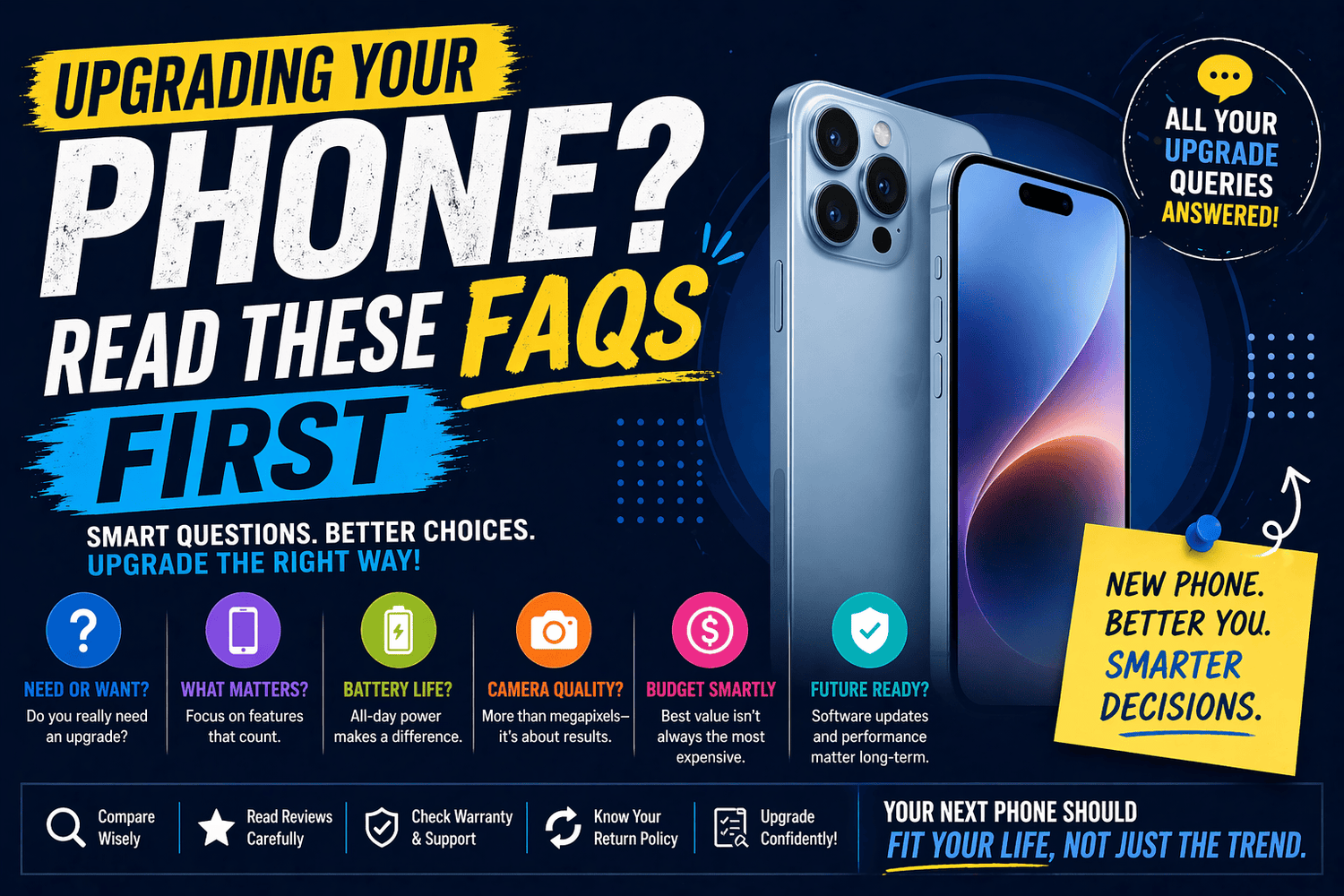
This is the first and most important question.If your current phone still handles your daily tasks smoothly, upgrading might not be necessary. But if you’re experiencing slow performance, battery issues, or outdated software, it might be time.Upgrading should solve a problem not just follow a trend.
What actually matters when choosing a new phone?
It’s easy to get distracted by specs, but not all of them matter equally.Performance, battery life, display quality, and camera reliability are the most important factors for most users. These are the features you interact with every day.Instead of focusing on numbers, think about your usage.The best phone is the one that fits your lifestyle.
Should you go for a flagship or a mid-range phone?
This depends on how you use your device.Flagship phones offer premium features, but they also come with higher prices. Mid-range phones, on the other hand, have improved significantly and now offer excellent value.If you need top performance and advanced features, a flagship makes sense. But for everyday use, a good mid-range phone can deliver more than enough.It’s about value, not just price.
How important is the camera really?
For many users, the camera is a deciding factor.But here’s the reality most modern smartphones offer good camera quality. The difference lies in advanced features like low-light performance, zoom, and processing.If you take a lot of photos or create content, investing in a better camera makes sense. Otherwise, a standard camera setup will work just fine.It’s not about having the best camera it’s about having the right one.
What about battery life?
Battery life is one of the most practical considerations.A phone that lasts all day without constant charging can make a huge difference in your routine. Fast charging also adds convenience, especially for busy users.When upgrading, look for a device that matches your daily usage.Because a powerful phone isn’t useful if it can’t keep up with your day.
Does performance matter for everyday users?
Yes but not in the way you might think.You don’t need the most powerful processor for basic tasks like browsing, messaging, or streaming. Most modern phones handle these activities easily.Performance becomes more important if you’re gaming, multitasking heavily, or using demanding apps.For most people, smooth and consistent performance is more important than extreme speed.
How much storage do you actually need?
Storage depends on how you use your phone.If you take a lot of photos, videos, or download large apps, you’ll need more space. If you rely on cloud storage, you may not need as much.It’s better to plan ahead than run out of storage later.Because managing space shouldn’t become a daily struggle.
Should you care about software updates?
Absolutely.Software updates keep your phone secure, improve performance, and add new features. Phones with longer update support tend to last longer overall.When upgrading, consider how long the device will stay updated.It’s not just about buying a phone it’s about how long it stays useful.
Is design just about looks?
Not at all.Design affects how your phone feels in your hand, how comfortable it is to use, and how durable it is over time.A well-designed phone is easier to use daily, which makes a bigger difference than you might expect.It’s not just about appearance it’s about experience.
Are new features actually useful?
Some are, and some aren’t.Manufacturers often introduce new features to stand out, but not all of them are necessary for everyday use. Focus on features that improve your experience rather than those that sound impressive.It’s easy to get caught up in hype.But practicality always wins.
Should you switch brands when upgrading?
Switching brands can be exciting, but it also comes with adjustments.Different ecosystems offer different experiences, apps, and integrations. If you’re comfortable with your current setup, staying within the same brand may be easier.If you’re looking for something new, switching can be worth it.Just be prepared for a learning curve.
How much should you really spend?
Your budget should reflect your needs.Spending more doesn’t always mean a better experience. Many mid-range phones now offer features that were once exclusive to flagships.Set a budget based on what you need, not what’s trending.Because the best value is finding the right balance.