


































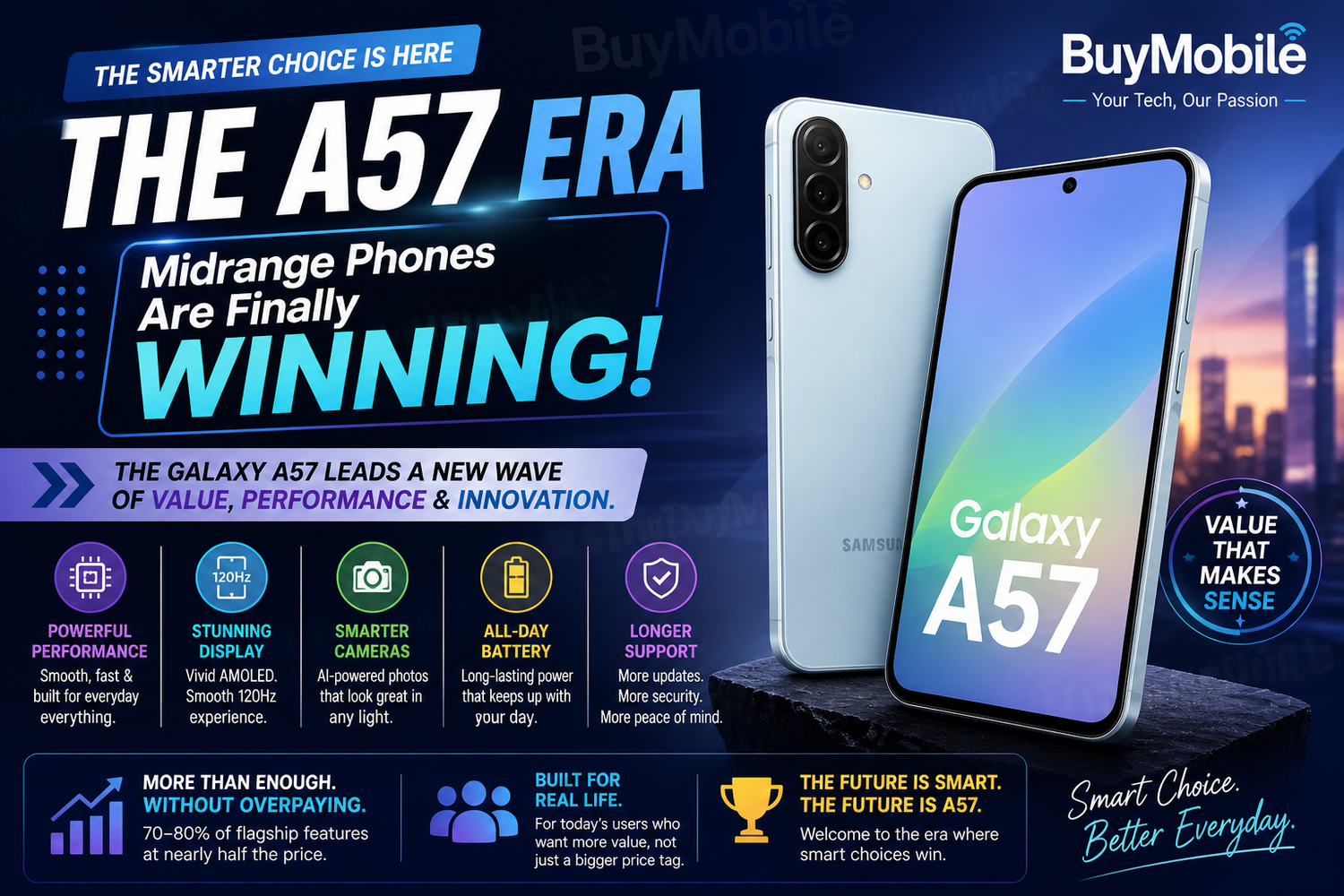
For years, the smartphone market has been dominated by a simple idea: if you want the best experience, you have to pay flagship prices. Premium devices were faster, sharper, and more powerful while midrange phones were seen as compromises.But something has shifted.Welcome to The A57 Era, where midrange smartphones are no longer “good enough” they’re actually the smarter choice. And leading this shift is a new wave of devices, symbolized by phones like the Galaxy A57, that redefine what value really means.So why are midrange phones finally winning? Let’s break it down.
What exactly is “The A57 Era”?
“The A57 Era” isn’t just about one phone it represents a turning point in the smartphone industry.It’s the moment where:
-
Midrange devices start offering near-flagship experiences
-
The price-performance gap becomes impossible to ignore
-
Consumers begin questioning whether premium phones are worth it
The Galaxy A57, and devices like it, signal that we’ve crossed into a new phase one where value beats vanity.
Why are midrange phones suddenly so good?
A few years ago, midrange phones struggled with performance, camera quality, and longevity. Today, those gaps have narrowed dramatically.Here’s why:
1. Chipsets have caught up
Modern midrange processors are powerful enough for:
-
Smooth multitasking
-
Casual to moderate gaming
-
Everyday productivity
For most users, the difference between midrange and flagship performance is barely noticeable.
2. Displays are no longer a compromise
High refresh rate AMOLED screens once exclusive to premium phones are now common in midrange devices.That means:
-
Smoother scrolling
-
Better colors
-
Improved viewing experiences
In many cases, the display is just as enjoyable as flagship alternatives.
3. Cameras are smarter, not just better
Midrange phones now rely heavily on AI-driven photography, which levels the playing field.Instead of expensive hardware, brands are using:
-
Computational photography
-
Scene optimization
-
Software-based enhancements
The result? Photos that look great for social media and everyday use.
Are flagship phones losing their edge?
Not entirely but the gap is shrinking fast.Flagships still offer:
-
Cutting-edge performance
-
Premium materials
-
Advanced camera systems
But here’s the reality: most users don’t fully utilize those features.In The A57 Era, people are asking:Why spend twice as much for features I rarely use?”And that question is changing buying behavior.
What role does pricing play in this shift?
Pricing is at the heart of everything.Midrange phones now offer:
-
70–80% of flagship features
-
At nearly half the price
That kind of value is hard to ignore especially in a world where consumers are becoming more conscious about spending.Instead of chasing the latest flagship every year, users are:
-
Holding onto devices longer
-
Choosing smarter upgrades
-
Prioritizing practicality over prestige
Is software experience improving on midrange devices?
Yes and significantly.Brands like Samsung have brought:
-
Cleaner interfaces
-
Longer software support
-
Regular security updates
This means midrange phones no longer feel outdated after a year. They stay relevant, functional, and secure for longer periods.That’s a huge win for everyday users.
What about battery life and real-world usage?
This is where midrange phones often outperform flagships.Because they use more efficient processors, they tend to offer:
-
Longer battery life
-
Better thermal management
-
Consistent performance throughout the day
In real-world usage calls, streaming, browsing midrange phones often feel more reliable.
Who is driving the popularity of midrange phones?
The shift isn’t accidental it’s driven by a new kind of user.Today’s smartphone buyer:
-
Values practicality over status
-
Uses phones for everyday tasks, not extreme performance
-
Wants reliability without overspending
This audience is growing rapidly, and brands are responding by improving midrange offerings.
Are midrange phones replacing flagships?
Not completely but they’re redefining the market.Flagships are becoming more niche, appealing to:
-
Power users
-
Content creators
-
Tech enthusiasts
Meanwhile, midrange phones are becoming the default choice for the majority.In The A57 Era, the question isn’t “Can midrange compete?”It’s “Do you really need a flagship?”
What does this mean for the future of smartphones?
The rise of midrange phones signals a broader shift in the industry.We’re moving toward:
-
Smarter pricing strategies
-
Longer device lifecycles
-
Greater focus on user experience over raw specs
Innovation isn’t disappearing it’s becoming more accessible.