


































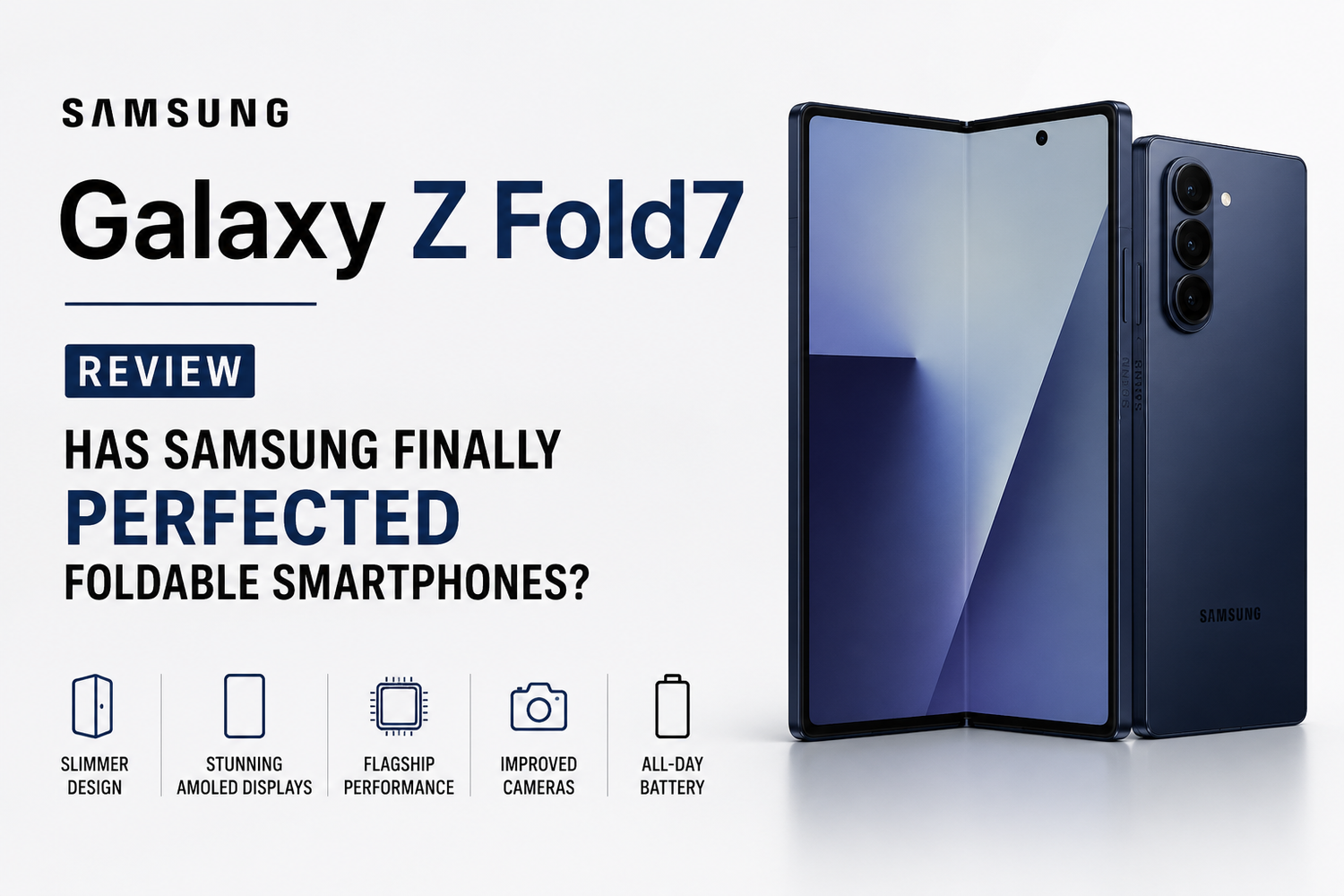
Foldable smartphones have always represented the future of mobile technology futuristic displays, tablet-sized productivity, and the ability to carry a mini computer in your pocket. But for years, foldables also came with compromises: bulky designs, visible screen creases, average battery life, fragile durability, and sky-high prices.Now in 2026, Samsung returns with the Galaxy Z Fold7, its most refined foldable smartphone yet. After several generations of improvements, Samsung appears closer than ever to delivering a foldable device that truly feels ready for mainstream users rather than early adopters.So the big question is simple: Has Samsung finally perfected foldable smartphones with the Galaxy Z Fold7?After extensive testing, the answer feels surprisingly close to “yes.”
A Much More Refined Design
The first thing you notice about the Galaxy Z Fold7 is how much slimmer and lighter it feels compared to older Fold models.Samsung has clearly focused on reducing one of the biggest criticisms of foldables bulkiness. Previous Fold devices often felt thick and heavy in pockets, making them less practical for everyday users. The Fold7 changes that significantly with a thinner hinge mechanism and improved weight distribution.When folded, the phone finally feels closer to a regular flagship smartphone instead of a thick experimental gadget. The redesigned hinge also allows the device to close more cleanly, reducing the visible gap between the two halves.Samsung’s Armor Aluminum frame and Gorilla Glass Victus protection continue improving durability, while the phone’s water resistance adds extra confidence for daily use. Although foldables still require more care than standard smartphones, the Fold7 feels sturdier and more polished than earlier generations.The overall design now feels mature rather than experimental — and that’s a huge achievement for Samsung.
The Main Display Is Stunning
Open the Galaxy Z Fold7, and you immediately understand why foldables remain exciting.The large inner AMOLED display delivers an immersive experience that standard smartphones simply cannot match. Whether you’re watching Netflix, multitasking between apps, editing documents, gaming, or browsing the web, the Fold7 transforms into a mini tablet instantly.Samsung’s display quality remains industry-leading. Colors are vibrant, blacks appear incredibly deep, and brightness levels are excellent even outdoors.The crease is still technically visible under certain lighting conditions, but Samsung has minimized it enough that most users stop noticing it after a short time. More importantly, the crease feels less distracting during everyday usage compared to previous Fold devices.The 120Hz adaptive refresh rate also keeps scrolling and animations extremely smooth. Everything from gaming to social media browsing feels premium and fluid.Samsung has also improved the outer cover display. Older Fold phones sometimes felt awkward to use while closed because the external screen was too narrow. The Fold7’s wider cover display feels far more practical for texting, quick browsing, and one-handed usage.For the first time, both displays feel equally useful.
Performance Is Flagship-Level
As expected from Samsung’s premium foldable lineup, the Galaxy Z Fold7 delivers top-tier performance.Powered by Qualcomm’s latest Snapdragon flagship chipset paired with generous RAM and storage options, the Fold7 handles virtually everything without slowing down.Apps launch instantly, multitasking feels effortless, and gaming performance remains excellent. Heavy apps like Adobe Lightroom, video editors, and high-end mobile games run smoothly even during extended sessions.What makes the Fold7 particularly impressive is how well Samsung has optimized multitasking. Running three apps simultaneously feels natural instead of gimmicky.You can watch YouTube while replying to emails and browsing Chrome at the same time without the device struggling. Samsung’s split-screen tools, floating windows, and taskbar system make productivity genuinely useful rather than simply experimental.This is one area where foldables clearly outperform traditional smartphones.
Samsung’s Software Finally Feels Optimized for Foldables
Hardware alone isn’t enough to make foldables successful. Software matters even more.Thankfully, Samsung continues leading the Android foldable market because of its software experience. One UI on the Galaxy Z Fold7 feels polished, stable, and intelligently designed for large-screen multitasking.App continuity works smoothly when transitioning between the cover display and the main display. Many popular apps are now properly optimized for foldable screens, which greatly improves usability.Samsung’s taskbar feature especially deserves praise. It allows users to quickly switch between apps much like a desktop operating system, making the Fold7 feel surprisingly productive for work-related tasks.The S Pen support also adds another layer of functionality for note-taking, sketching, and productivity.Unlike earlier generations where foldable software often felt unfinished, the Fold7 experience finally feels mature.
Cameras Are Better Than Before
Foldable phones traditionally lagged behind Samsung’s Galaxy S Ultra lineup in camera performance. The Fold7 narrows that gap significantly.The main camera system now captures sharper images, better low-light performance, and improved dynamic range compared to previous Fold devices. Daylight photos look vibrant and detailed, while Samsung’s image processing remains excellent for social media-ready shots.Portrait photography also performs impressively, with accurate edge detection and natural background blur.Night photography has improved noticeably as well. While the Fold7 may still not completely match Samsung’s Ultra flagship cameras, it now feels much closer than before.The under-display selfie camera inside the foldable screen remains one of the weaker aspects. Although Samsung improved image quality slightly, selfies still appear softer compared to traditional front cameras.However, most users will likely use the rear cameras for higher-quality selfies thanks to the Fold7’s flexible folding design.
Battery Life Finally Feels Reliable
Battery life has historically been one of the biggest concerns for foldable devices due to their large displays and power-hungry multitasking features.Fortunately, the Galaxy Z Fold7 performs far better than expected.Samsung’s software optimization and chipset efficiency help the device comfortably survive a full day for most users. Moderate users can easily get through work, streaming, messaging, and social media without major battery anxiety.Heavy multitasking and gaming will still drain the battery faster than standard flagship phones, but the endurance improvements are noticeable compared to earlier Fold generations.Fast charging remains decent, although Samsung still trails some Chinese competitors in charging speeds.Wireless charging and reverse wireless charging also remain included, helping the Fold7 maintain its premium flagship status.
What Are the Weaknesses?
Despite its major improvements, the Galaxy Z Fold7 is not perfect.The biggest issue remains price. Foldables are still expensive, and the Fold7 continues targeting premium buyers rather than mainstream budget-conscious consumers.Durability, while improved, also remains a long-term concern for some users. Foldable displays are still inherently more delicate than traditional glass screens.Some apps occasionally struggle with aspect ratio optimization, although this issue is becoming less common every year.The under-display camera still cannot compete with standard selfie cameras, and battery life while improved still doesn’t completely outperform traditional flagship phones.These compromises may matter depending on how users prioritize their smartphone experience.