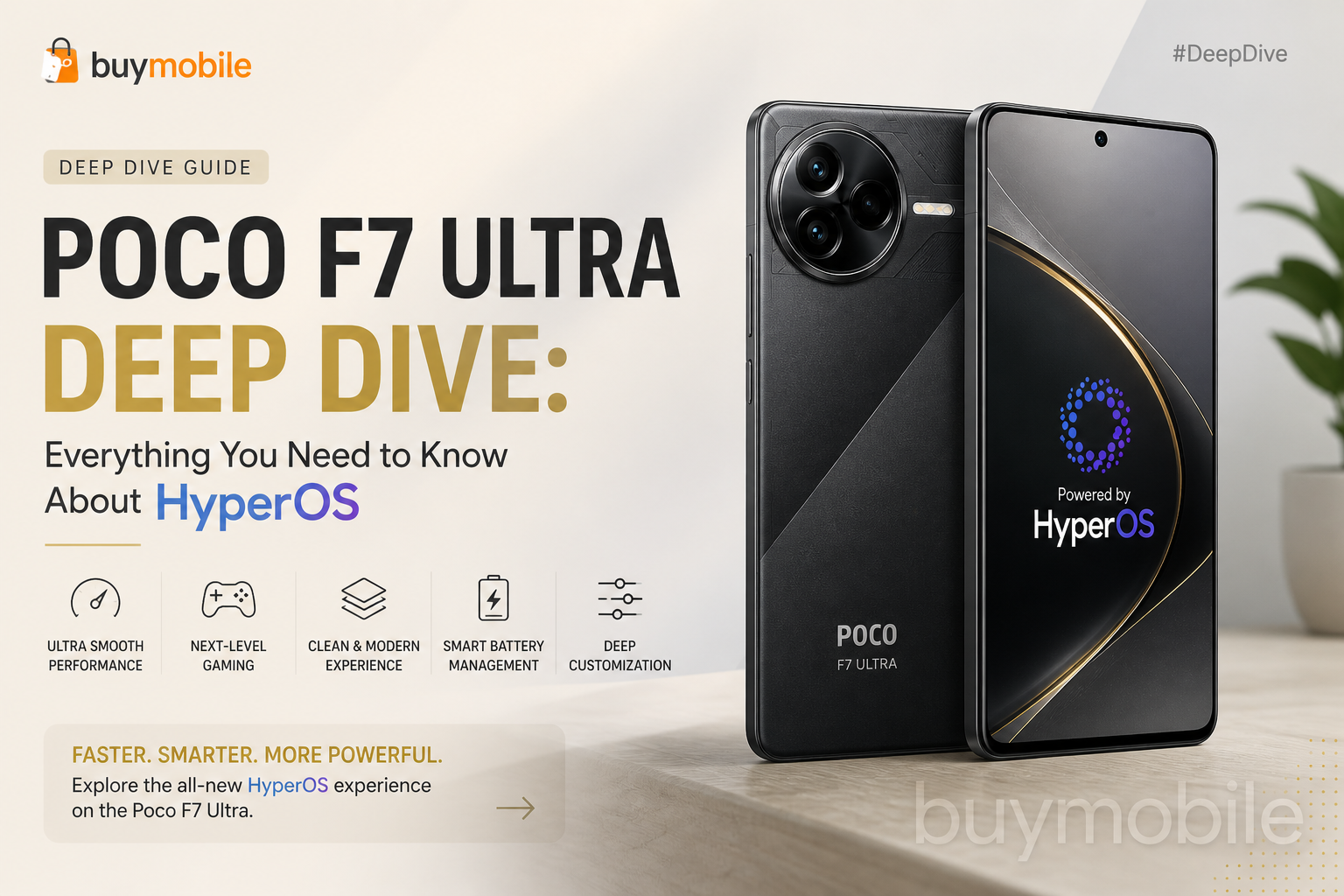



































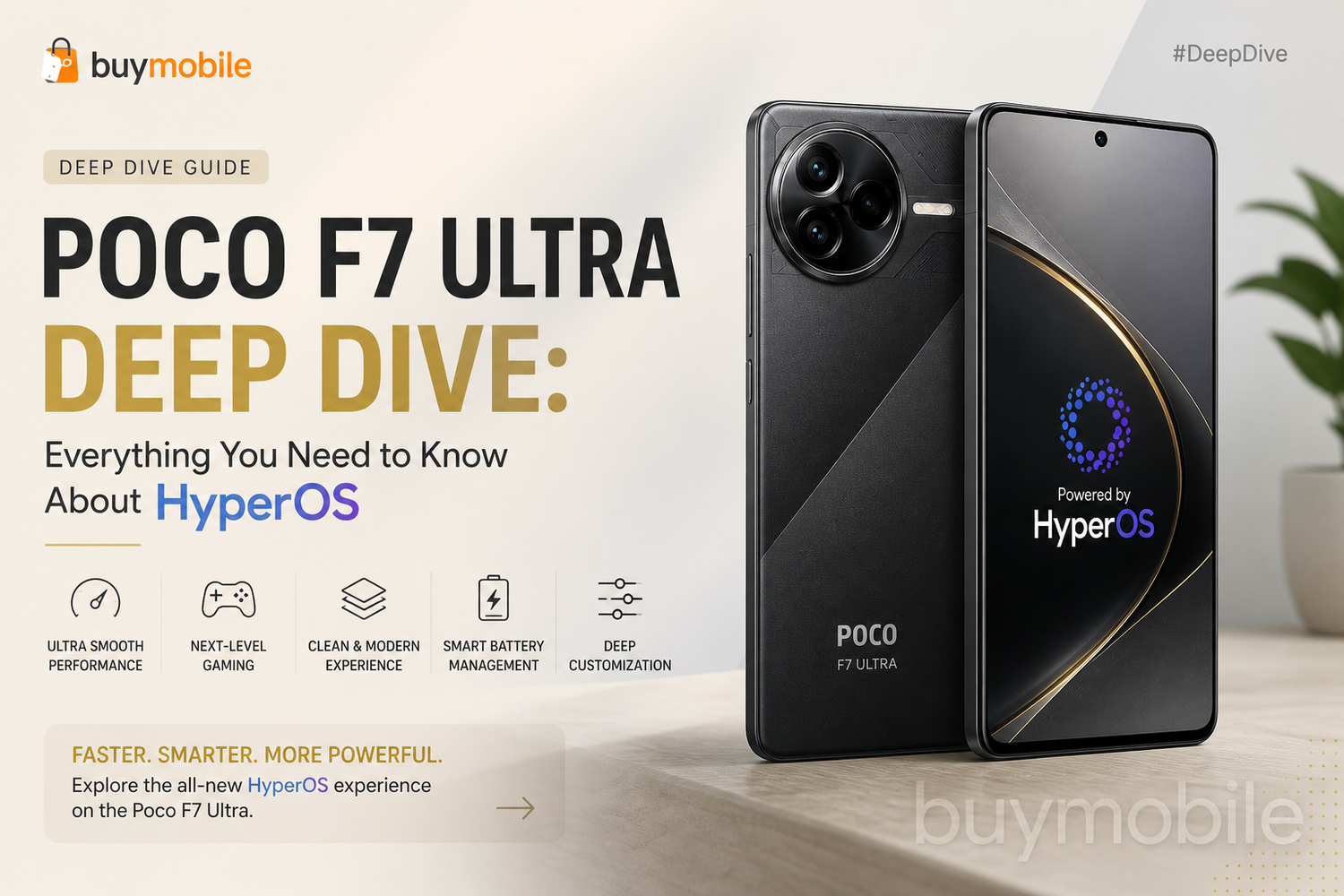
The Poco F7 Ultra is already one of the most talked-about Android phones of 2026, but let’s be honest the hardware is only half the story.What really changes the experience is HyperOS.Xiaomi’s HyperOS is no longer just another Android skin trying to copy stock Android or iOS. In 2026, HyperOS has evolved into a fast, intelligent, highly optimized ecosystem built specifically for speed, gaming, multitasking, and AI-driven convenience.And on the Poco F7 Ultra, HyperOS feels more powerful than ever.The phone already delivers flagship-level performance, but HyperOS is what makes everything feel smooth, responsive, and modern in daily usage.From gaming optimization and AI tools to customization and battery intelligence, HyperOS quietly transforms the Poco F7 Ultra into one of the most exciting Android experiences available right now.So if you’re wondering what HyperOS actually offers on the Poco F7 Ultra, here’s a deep dive into everything you need to know.
HyperOS Feels Faster Than Previous Xiaomi Software
The first thing most users notice about HyperOS is the speed.Everything feels fluid.Animations look smoother, apps launch faster, multitasking feels more responsive, and gaming performance feels highly optimized.Older Xiaomi software sometimes felt overloaded with unnecessary visual clutter, but HyperOS feels cleaner and more refined.The Poco F7 Ultra benefits massively from this optimization.Scrolling through apps feels effortless.Transitions feel polished.Gaming feels responsive.Daily usage feels fast without becoming chaotic.And honestly, this might be the smoothest Poco software experience yet.
Gaming Optimization Is One of HyperOS’ Biggest Strengths
The Poco F7 Ultra is clearly designed for gamers, and HyperOS fully embraces that identity.Gaming performance feels aggressively optimized.HyperOS includes advanced gaming tools that improve:
-
Performance stability
-
Touch responsiveness
-
Thermal management
-
Background app control
-
Frame consistency
The experience feels much more serious compared to standard Android software.During heavy gaming sessions, the Poco F7 Ultra maintains smooth performance while intelligently managing resources in the background.And unlike some gaming phones that feel overly complicated, HyperOS keeps everything accessible and easy to use.For gamers, this software experience feels extremely satisfying.
HyperOS Customization Feels Modern
Customization has always been one of Android’s biggest strengths, and HyperOS pushes it even further.The Poco F7 Ultra allows users to personalize:
-
Lock screens
-
Icons
-
Animations
-
Wallpapers
-
Themes
-
Widgets
-
Notification styles
The overall design language feels cleaner and more futuristic compared to previous MIUI generations.Everything feels visually modern without becoming overwhelming.And unlike some Android skins that sacrifice speed for flashy visuals, HyperOS remains surprisingly smooth even with heavy customization enabled.That balance matters a lot.
AI Features Are Quietly Becoming Important
Artificial intelligence is everywhere in 2026, and Xiaomi is slowly integrating AI deeper into HyperOS.The Poco F7 Ultra includes AI-powered features designed to improve:
-
Battery management
-
Photo editing
-
Smart suggestions
-
Productivity
-
Performance optimization
-
Background app behavior
Some AI features feel subtle, but they improve the overall experience over time.The phone learns how users interact with apps and adjusts system resources more intelligently.Battery optimization feels smarter.Notifications feel cleaner.Performance feels more stable.Xiaomi may not market AI as aggressively as Samsung, but HyperOS quietly benefits from it every day.
Multitasking Feels Surprisingly Powerful
One of the most underrated strengths of HyperOS is multitasking.The Poco F7 Ultra handles multiple apps extremely well.Split-screen mode feels smooth, floating windows work efficiently, and app switching happens almost instantly.For students, creators, and professionals, this becomes genuinely useful during daily usage.Watching videos while replying to messages, editing content while browsing, or gaming while multitasking feels seamless.The Poco F7 Ultra almost starts feeling like a mini productivity machine instead of just a gaming phone.
Battery Optimization Is Much Better Than Before
Older Xiaomi software sometimes struggled with battery management consistency.HyperOS improves this significantly.The Poco F7 Ultra intelligently manages background apps, refresh rates, thermal performance, and system behavior to improve endurance.And honestly, it works surprisingly well.The phone feels efficient during regular usage without sacrificing performance.Gaming sessions remain stable, while casual users still benefit from excellent battery life throughout the day.This balance between speed and efficiency is one of HyperOS’ biggest improvements.
HyperOS Feels More Connected Across Xiaomi Devices
Xiaomi is clearly trying to build a stronger ecosystem experience.HyperOS allows smoother integration between:
-
Smartphones
-
Tablets
-
Smart home devices
-
Wearables
-
Earbuds
-
Xiaomi laptops
The Poco F7 Ultra becomes more useful when connected to other Xiaomi products.Features like cross-device syncing, file transfers, and smart connectivity feel more polished than before.Xiaomi is slowly building an ecosystem that feels more premium and interconnected.And honestly, that’s something Android brands are taking much more seriously now.
Notifications and Control Center Feel Cleaner
One of the noticeable improvements in HyperOS is the cleaner user interface.Notifications feel better organized, quick settings feel easier to access, and the control center looks much more modern compared to older Xiaomi software.The overall experience feels less cluttered.That makes the Poco F7 Ultra feel more polished in daily use.Even small visual changes help the phone feel faster and more premium overall.
HyperOS Still Prioritizes Speed Above Everything
At its core, HyperOS is built for performance.The software feels designed to keep the Poco F7 Ultra fast even during heavy workloads.Gaming, multitasking, editing, streaming, and social media usage all feel highly optimized.And unlike some Android skins that become bloated over time, HyperOS feels surprisingly lightweight considering how many features it offers.That’s one reason why Poco fans are loving this software experience.The phone simply feels fast all the time.
HyperOS Makes the Poco F7 Ultra Feel Like a Flagship
This is probably the biggest compliment you can give the software.HyperOS genuinely helps the Poco F7 Ultra feel like a true flagship device rather than just another budget performance phone.The smoothness, optimization, customization, gaming tools, and intelligent features create a premium experience that feels much more expensive than expected.And honestly, that’s Xiaomi’s biggest strength right now.Delivering flagship-level experiences at aggressive pricing.
FAQ: Poco F7 Ultra HyperOS Deep Dive
What is HyperOS on the Poco F7 Ultra?
HyperOS is Xiaomi’s latest Android-based operating system focused on speed, optimization, AI features, customization, and ecosystem connectivity.
Is HyperOS better than MIUI?
For most users, yes. HyperOS feels smoother, cleaner, faster, and more optimized compared to older MIUI software.
Is HyperOS good for gaming?
Absolutely. HyperOS is heavily optimized for gaming performance, touch responsiveness, and thermal management.
Does HyperOS improve battery life?
Yes. HyperOS includes smarter battery optimization and background app management that help improve endurance.
Can HyperOS be customized heavily?
Yes. Users can customize wallpapers, icons, themes, animations, widgets, and lock screen styles extensively.
Is HyperOS smooth for daily usage?
Very smooth. Scrolling, app switching, animations, and multitasking all feel highly optimized on the Poco F7 Ultra.
Does HyperOS include AI features?
Yes. HyperOS uses AI for battery optimization, smart suggestions, system management, and photo editing improvements.
Is HyperOS better than Samsung One UI?
That depends on your priorities. HyperOS focuses more on speed and performance, while Samsung One UI focuses more on productivity, AI tools, and ecosystem refinement.