


































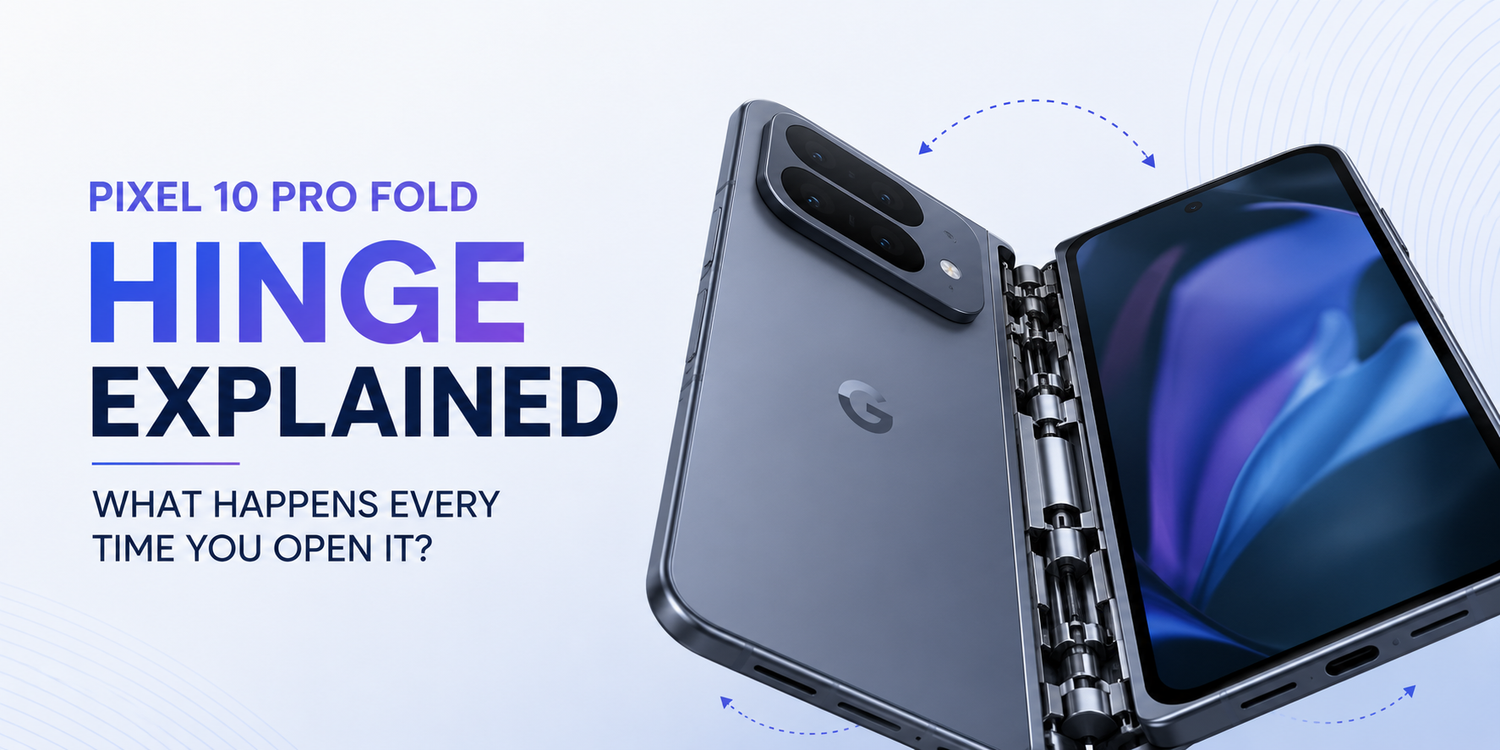
Foldable smartphones can look almost magical. One moment, the Google Pixel 10 Pro Fold is a familiar smartphone with a 6.4-inch outer display. Open it, and you get an expansive 8-inch inner screen that feels much closer to a compact tablet. Behind this transformation is one of the most important pieces of engineering in the entire device: the hinge.The Pixel 10 Pro Fold introduces a new high-strength, gearless hinge. It might seem like a small mechanical component compared with the displays, cameras and processor, but the hinge has an enormous job. Every time you unfold the phone, it has to coordinate both halves of the device, manage resistance, support the flexible display and create a smooth movement that feels natural in your hands.So, what is actually happening inside the Pixel 10 Pro Fold every time you open it?
The Pixel 10 Pro Fold Uses a Gearless Hinge
Traditional foldable hinges commonly rely on sets of interlocking gears to make both halves of the smartphone rotate together. Google took a different approach with the Pixel 10 Pro Fold.Its hinge is gearless.Instead of the four gears typically used to synchronise movement, Google says the new mechanism uses components called cams. These convert rotational movement into linear movement. Spring-loaded cams on the two halves are connected so that when you move one side of the phone, the other follows in sync. The result is something that feels simple from the outside even though considerable mechanical engineering is happening underneath.You pull the two halves apart, the hinge responds, and the smartphone smoothly begins transforming into its tablet-like form.
What Happens When You Start Opening the Phone?
Imagine holding the closed Pixel 10 Pro Fold.As you begin pulling the two sides apart, you apply rotational force around the hinge. The hinge mechanism controls that movement rather than allowing the two halves to move loosely.The cams inside help keep both halves synchronised. This is important because a foldable cannot simply behave like two unrelated pieces connected by a basic door hinge. The entire structure needs controlled and predictable movement.Google spent time adjusting the hinge torque, meaning the amount of rotational force involved in opening and closing it. Engineers experimented with different hinge angles and torque levels to create an opening action that feels smooth while still making the phone feel sturdy. That resistance you feel when unfolding the device therefore serves an important purpose. It helps give the phone a controlled motion rather than allowing it to simply flop open.
The Flexible Display Is Unfolding at the Same Time
While the hinge is moving, something even more interesting is happening to the screen.The inner display is physically transitioning from its folded position into a large, nearly flat viewing surface. Unlike conventional smartphone screens, a foldable display must tolerate this movement repeatedly.Google uses an 8-inch Super Actua Flex display on the Pixel 10 Pro Fold. According to Google, the display incorporates ultra-thin glass and two layers of anti-impact film designed to improve durability and drop protection. This means the hinge and display have to work together.The hinge controls the geometry of the fold, while the flexible display accommodates the changing shape. When the phone reaches its unfolded position, you have one continuous inner screen rather than two separate displays joined together.That coordination is one of the reasons hinge engineering is so important to modern foldable phones.
Why Did Google Remove the Gears?
Removing gears was not simply about making the hinge different.Gears take up physical space. They also contain teeth that can potentially be affected by wear or debris over long periods. Google says dust getting between gears can degrade the opening and closing experience over time. A gearless system helped Google reduce these concerns while freeing valuable internal space.And inside a smartphone, every millimetre matters.Removing the traditional gear arrangement helped Google expand the display closer towards the hinge, reduce bezels and create additional room for other components. Google also says the redesigned internal architecture helped create space for a larger battery. So the hinge does more than allow the Pixel to fold. Its design influences the entire smartphone.
The Hinge Also Helps Make the Fold More Durable
Durability has historically been one of the biggest questions surrounding foldable phones.A conventional smartphone has very few major mechanical movements during everyday operation. A foldable can be opened and closed multiple times every day for years.Google says the Pixel 10 Pro Fold's gearless hinge is twice as durable as the hinge on the Pixel 9 Pro Fold. The company also states that the phone is designed to handle more than 10 years of folding. That does not mean the phone is indestructible, but it illustrates how seriously the folding mechanism has been engineered for repeated use.Every time you open your messages on the outer screen and then unfold the device to watch a video, edit a document or multitask, the hinge is performing the same carefully controlled mechanical operation.And it has to repeat that operation reliably thousands upon thousands of times.
Why Dust Resistance Matters for the Hinge
Another major development is the Pixel 10 Pro Fold's IP68 dust and water resistance rating.Dust is particularly challenging for foldable smartphones because hinges naturally involve moving parts and potential openings where tiny particles could enter.Google says eliminating the spaces associated with the previous geared hinge contributed to making IP68 protection possible on the Pixel 10 Pro Fold.That is an important advancement because it brings the foldable closer to the durability expectations people already have for conventional premium smartphones.
The Hinge Changes More Than the Way the Phone Opens
The clever part of the Pixel 10 Pro Fold hinge is how many other aspects of the smartphone it influences.A more compact mechanism contributes to smaller bezels, more internal space, improved grip and a thinner-feeling design. It also helps the device transition between its two personalities.Closed, the 6.4-inch outer display allows the Pixel 10 Pro Fold to behave much like a traditional smartphone. Open the hinge, and the 8-inch inner display gives you significantly more room for multitasking, entertainment, reading and productivity. The hinge is therefore not simply connecting two halves of a phone. It is the mechanical system that makes the entire foldable concept possible.
A Small Movement Hiding a Lot of Engineering
Opening the Pixel 10 Pro Fold takes only a second, so it is easy to overlook what is happening.Your hands provide the force. The hinge manages the movement. The cam mechanism synchronises the two halves. The flexible display transitions towards its open position, and the phone changes from a conventional smartphone shape into an 8-inch mobile workspace.Then the entire process happens in reverse when you close it.The best hinge is ultimately one you rarely have to think about. It should feel smooth, predictable and sturdy enough that opening the phone eventually becomes completely natural.That is what makes the Pixel 10 Pro Fold's gearless hinge interesting. It takes an extremely complicated mechanical challenge and attempts to make it feel like one simple action: open your phone and get a bigger screen.I can also create a short excerpt and minimalist blog banner for this article.