


































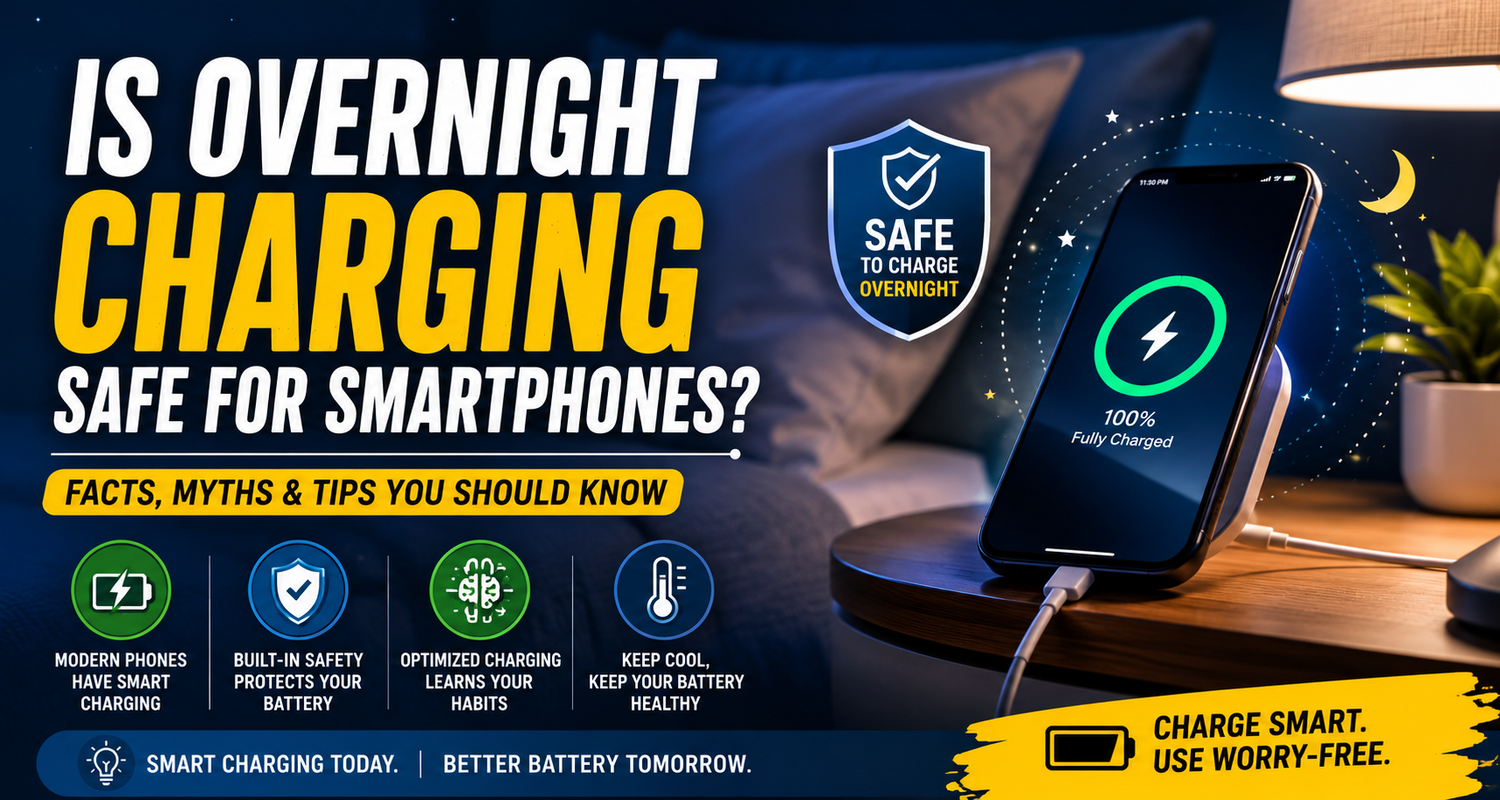
One of the most common questions smartphone users ask is whether leaving their phone plugged in overnight is safe. For years, people have worried that charging a smartphone for several hours after it reaches 100% could damage the battery, reduce its lifespan, or even create safety risks. With modern smartphones becoming more advanced and expensive, it's understandable why users want to protect their devices and maximize battery health.The good news is that overnight charging is generally safe for most modern smartphones. Advances in battery technology, charging systems, and software optimization have significantly reduced the risks associated with leaving your phone connected to a charger while you sleep. However, there are still a few important factors to understand if you want to maintain optimal battery performance over the long term.
How Smartphone Batteries Work
Most modern smartphones use lithium-ion or lithium-polymer batteries. These batteries have become the industry standard because they offer high energy density, fast charging capabilities, and relatively long lifespans.Unlike older battery technologies, lithium-ion batteries do not suffer from the "memory effect," which means you don't need to completely discharge them before recharging. In fact, modern batteries perform best when they remain within a moderate charge range rather than constantly moving from 0% to 100%.Battery health naturally declines over time as the battery completes charge cycles. A charge cycle represents the use of 100% of a battery's capacity, whether that's from a single charge or multiple partial charges. This gradual wear occurs regardless of whether you charge overnight or during the day.
What Happens When Your Phone Reaches 100%?
Many people assume that when a phone reaches 100%, it continues receiving power and damages the battery. Fortunately, modern smartphones are much smarter than that.Once the battery reaches full charge, the charging system automatically stops supplying power to the battery. Instead of continuously charging, the phone enters a maintenance mode where it only tops up the battery when necessary.This built-in protection prevents overcharging, which was a more common concern with older battery technologies.In other words, your smartphone does not continuously force power into the battery all night long.
Why Manufacturers Say Overnight Charging Is Safe
Major smartphone manufacturers such as Apple, Samsung, Google, Xiaomi, and OnePlus design their devices with advanced battery management systems.These systems monitor:
-
Battery temperature
-
Charging speed
-
Voltage levels
-
Power delivery
-
Battery health
The software constantly adjusts charging behavior to minimize stress on the battery.Many flagship smartphones now include intelligent charging features that learn your daily habits. If the device detects that you typically wake up at 7:00 AM, it may charge to around 80% during the night and then slowly complete the remaining 20% shortly before you wake up.This reduces the amount of time the battery spends at maximum charge, helping preserve long-term battery health.
What Is Optimized Charging?
Optimized charging is one of the most important battery protection features available on modern smartphones.This technology uses artificial intelligence and machine learning to understand your charging patterns.For example, if you usually plug your phone in at 11:00 PM and unplug it at 7:00 AM, the phone may pause charging at around 80% for several hours before finishing the charge shortly before you wake up.By reducing the amount of time the battery remains at full capacity, optimized charging helps slow battery degradation over time.Many Android and iPhone users don't even realize this feature is running in the background.
Does Overnight Charging Damage Battery Health?
While overnight charging itself is generally safe, keeping a battery at 100% charge for extended periods can contribute to gradual wear over many months or years.Lithium-ion batteries experience the least stress when operating between roughly 20% and 80%.However, the difference is relatively small for most users.Modern battery management systems are specifically designed to minimize this issue. As a result, the impact of overnight charging on battery lifespan is far less significant than it was a decade ago.Most users will replace their smartphone before battery degradation caused by overnight charging becomes a major concern.
Heat Is the Real Enemy
When discussing battery health, heat is often a much bigger problem than overnight charging.Excessive heat can accelerate battery aging and reduce overall lifespan.Several factors can cause smartphones to become warm while charging:
Thick phone cases
1.Poor-quality chargers
2.Charging under pillows or blankets
3.Direct sunlight
4.Intensive background activity
If a phone becomes excessively hot during charging, the battery may experience more wear over time.This is why experts recommend charging your smartphone on a hard, flat surface with adequate ventilation.Keeping the device cool is one of the best ways to protect battery health.
Are Fast Chargers Safe Overnight?
Modern fast chargers are designed with multiple safety mechanisms.Smartphones communicate with chargers to determine the optimal charging speed based on battery level, temperature, and power requirements.As the battery approaches full capacity, charging speeds automatically slow down.This process helps reduce heat generation and prevents unnecessary stress on the battery.Using the original charger provided by the manufacturer or a certified third-party charger is generally considered safe for overnight charging.Low-quality chargers from unknown brands may lack proper safety protections and should be avoided.
Should You Unplug Your Phone at 80%?
Some battery enthusiasts recommend keeping battery levels between 20% and 80% whenever possible.Technically, this can help maximize battery lifespan over many years.However, for most users, the convenience of having a fully charged phone each morning outweighs the relatively small benefits of manually limiting charging.Modern smartphones are designed to accommodate real-world usage patterns.Unless you're specifically trying to maximize battery longevity for four or five years, charging to 100% is perfectly reasonable.
Tips for Healthier Overnight Charging
While overnight charging is generally safe, a few simple habits can help maintain battery health:Use the charger recommended by the manufacturer whenever possible. Keep your phone away from excessive heat sources during charging. Enable optimized or adaptive charging features if your device supports them. Avoid placing the phone under pillows, blankets, or soft surfaces while charging. Keep your software updated, as manufacturers often improve battery management through updates.Following these practices can help extend battery life without sacrificing convenience.
Common Myths About Overnight Charging
One persistent myth is that overnight charging causes batteries to explode. Modern smartphones include multiple safety systems that make this extremely unlikely under normal conditions.Another misconception is that charging your phone overnight immediately destroys battery health. In reality, battery degradation occurs gradually over hundreds of charge cycles and is influenced by many factors beyond charging habits.Some users also believe they must completely drain the battery before recharging. This advice applied to older battery technologies but is no longer necessary for modern lithium-ion batteries.Understanding these myths can help users make better decisions about battery care.