


































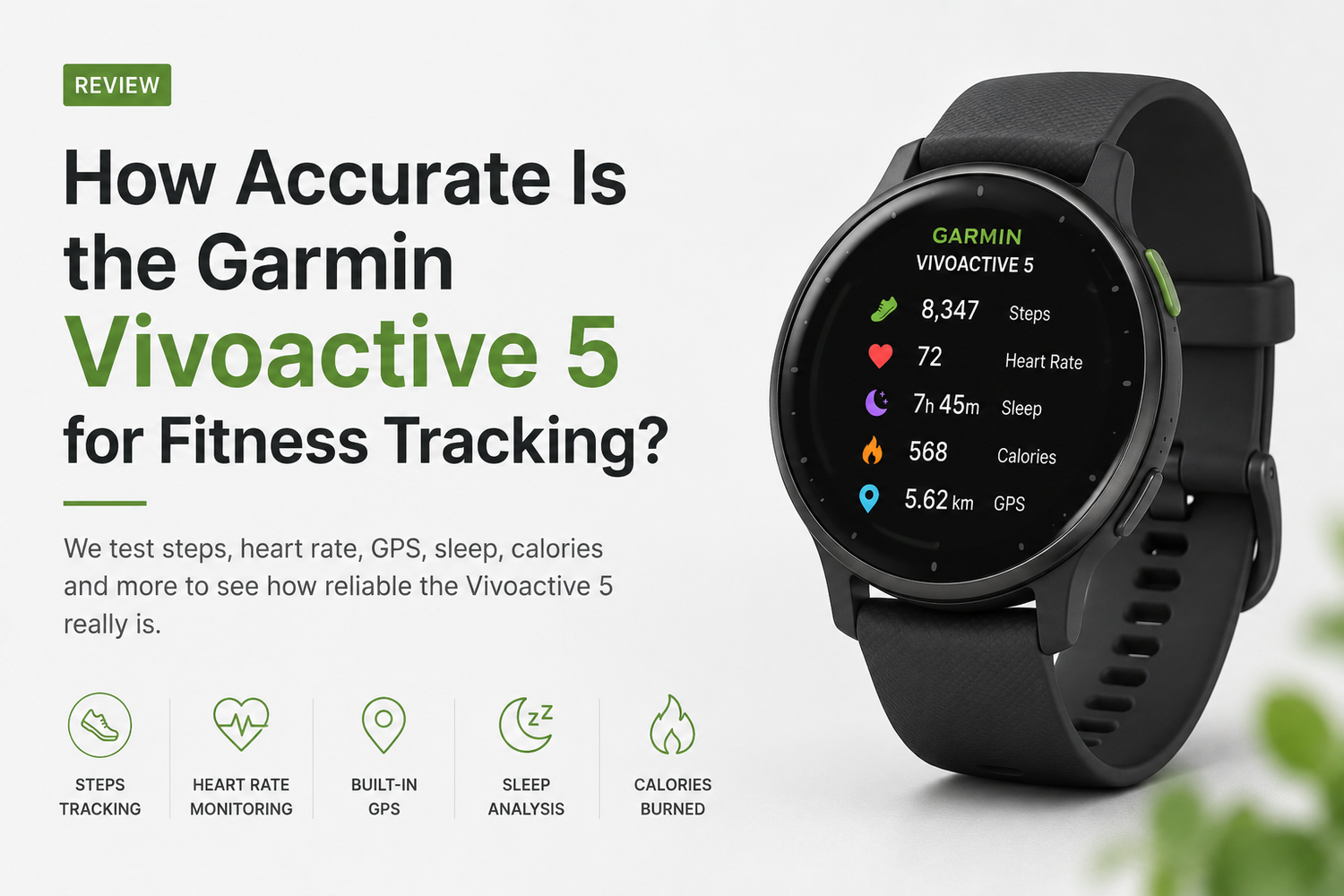
Fitness trackers and smartwatches have become essential tools for people who want to monitor their health, improve workout performance, and stay active throughout the day. Among the many options available, the Garmin Vivoactive 5stands out as a feature-rich smartwatch that combines advanced fitness tracking, health monitoring, GPS capabilities, and smart features in a lightweight package.However, one question remains important for potential buyers: How accurate is the Garmin Vivoactive 5 for fitness tracking?Accuracy is critical when it comes to tracking steps, heart rate, calories burned, sleep quality, workouts, and GPS activities. After all, fitness data is only useful if it reflects your actual activity levels. In this article, we'll take a closer look at the Garmin Vivoactive 5's fitness tracking performance and evaluate how reliable it is across different health and activity metrics.
What Fitness Tracking Features Does the Garmin Vivoactive 5 Offer?
The Garmin Vivoactive 5 is designed to be a comprehensive fitness companion. It includes tracking for daily activity, heart rate monitoring, sleep analysis, stress levels, blood oxygen saturation, calories burned, workout performance, and GPS-based outdoor activities.The smartwatch supports dozens of exercise modes, including running, walking, cycling, swimming, strength training, yoga, HIIT workouts, and more.Garmin also includes its popular Body Battery feature, which helps users understand their energy levels throughout the day based on activity, stress, and sleep data.With such an extensive set of features, the Vivoactive 5 aims to provide a complete picture of overall health and fitness.
How Accurate Is the Step Tracking?
Step counting is one of the most basic fitness tracking functions, but it's also one of the most important.The Garmin Vivoactive 5 performs very well in this area. During normal daily activities, step counts remain highly consistent and closely match actual movement patterns. Garmin's motion sensors do an excellent job distinguishing walking movements from unrelated arm motions.Like all wearable devices, occasional inaccuracies can occur. Activities such as driving on rough roads, gesturing frequently while sitting, or pushing a shopping cart may sometimes influence results. However, these minor discrepancies are common across virtually all fitness trackers.For most users, the Vivoactive 5 provides reliable daily step tracking that accurately reflects overall activity levels.
Can You Trust the Heart Rate Monitor?
Heart rate monitoring is one of the most valuable health features available on modern smartwatches.The Garmin Vivoactive 5 uses an advanced optical heart rate sensor that continuously measures heart rate throughout the day and during workouts. Under normal conditions, the sensor delivers highly accurate readings that closely align with dedicated chest strap monitors during moderate-intensity activities.Resting heart rate measurements are particularly accurate, making it easy to track long-term cardiovascular health trends.During activities such as walking, jogging, cycling, and strength training, the heart rate monitor generally performs well. However, as with most wrist-based sensors, accuracy may decrease slightly during high-intensity interval training or exercises involving rapid wrist movements.For everyday fitness tracking, the heart rate sensor is more than reliable enough for most users.
How Accurate Is the GPS Tracking?
GPS accuracy is crucial for runners, cyclists, hikers, and outdoor fitness enthusiasts.The Garmin Vivoactive 5 includes built-in GPS that allows users to track routes, distance, pace, and outdoor workout performance without relying on a smartphone.In open outdoor environments, GPS accuracy is excellent. Running routes, walking paths, and cycling distances are recorded with impressive precision. Pace tracking remains consistent throughout workouts, helping athletes monitor performance effectively.Urban environments with tall buildings or heavily wooded areas may occasionally affect signal quality, but Garmin's GPS technology remains among the most trusted in the fitness industry.For most outdoor activities, users can confidently rely on the Vivoactive 5's GPS performance.
Does the Vivoactive 5 Accurately Track Calories Burned?
Calorie tracking is one of the most difficult metrics for any wearable device to measure accurately.The Garmin Vivoactive 5 estimates calorie burn using a combination of factors, including age, weight, heart rate, activity level, workout intensity, and movement patterns.While no smartwatch can provide perfectly accurate calorie measurements, Garmin's calculations are generally considered among the most reliable available.The calorie data should be viewed as a useful estimate rather than an exact figure. For monitoring trends, setting fitness goals, and understanding overall activity levels, the information is highly valuable.Most users will find the calorie tracking accurate enough for practical fitness and weight-management purposes.
How Reliable Is Sleep Tracking?
Sleep tracking has become an increasingly important feature for health-conscious users.The Garmin Vivoactive 5 automatically monitors sleep duration and analyzes various sleep stages, including light sleep, deep sleep, and REM sleep.In most cases, sleep start and wake times are recorded accurately. The device performs particularly well at identifying overall sleep duration and detecting interruptions during the night.Sleep stage tracking, while useful, should be viewed as an estimate rather than a clinical measurement. Even professional sleep studies require specialized equipment to determine sleep stages with complete accuracy.That said, Garmin provides detailed sleep insights that can help users identify habits and improve overall sleep quality over time.
What About Body Battery Accuracy?
Body Battery is one of Garmin's most popular wellness features.Using data collected from heart rate variability, stress levels, sleep quality, and physical activity, the Vivoactive 5 generates an energy score that reflects your readiness for activity.Many users report that Body Battery aligns surprisingly well with how they actually feel. After restful sleep, scores typically increase, while stressful days and intense workouts cause noticeable declines.Although it isn't a medical measurement, Body Battery provides meaningful insights into recovery and daily energy management.For many users, it becomes one of the most valuable features on the smartwatch.
Can the Vivoactive 5 Track Workouts Accurately?
Workout tracking is another area where Garmin excels.The Vivoactive 5 provides detailed metrics for a wide range of activities, including running, cycling, swimming, strength training, cardio workouts, and yoga sessions.Distance, pace, duration, heart rate zones, and calorie estimates are all tracked with strong consistency.Strength training users benefit from automatic repetition counting and workout summaries, while runners receive advanced performance metrics that help improve training efficiency.For most fitness enthusiasts, the Vivoactive 5 delivers highly reliable workout data that supports long-term progress tracking.
How Does It Compare to Other Fitness Trackers?
Compared to many competing smartwatches and fitness trackers, the Garmin Vivoactive 5 performs exceptionally well in terms of accuracy.Garmin's long-standing reputation in sports and fitness technology gives it an advantage over many consumer-focused smartwatch brands.While premium fitness devices and chest strap heart rate monitors may offer slightly higher precision in specific scenarios, the Vivoactive 5 provides an excellent balance between accuracy, convenience, battery life, and affordability.For everyday fitness tracking, it ranks among the most dependable wearables currently available.
Who Will Benefit Most from the Garmin Vivoactive 5?
The Vivoactive 5 is ideal for users who want reliable fitness data without the complexity of a dedicated sports watch.It works particularly well for:
1.Casual fitness enthusiasts
2.Runners
3.Walkers
4.Cyclists
5.Gym-goers
6.Health-conscious individuals
7.Users focused on improving sleep and recoveryIts combination of accurate tracking and user-friendly features makes it suitable for beginners and experienced athletes alike.