


































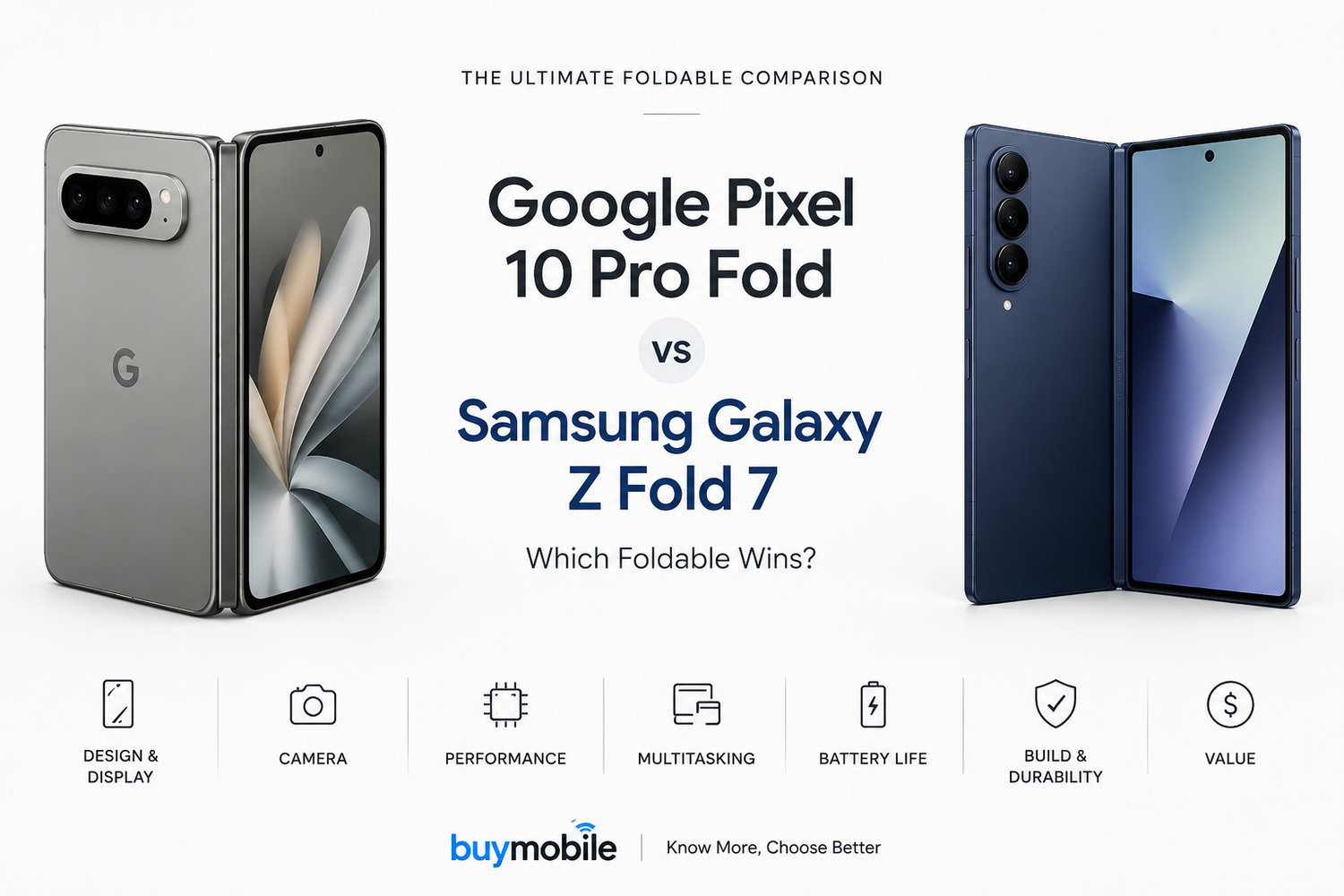
Foldable smartphones have evolved from niche devices into serious flagship contenders, offering users the productivity of a tablet and the convenience of a smartphone in one package. In 2026, two of the most anticipated foldable devices are the Google Pixel 10 Pro Fold and the Samsung Galaxy Z Fold 7. Both represent the best that their respective companies have to offer, featuring cutting-edge hardware, advanced AI capabilities, premium designs, and innovative foldable technology.But which foldable phone deserves your money? In this detailed comparison, we break down the key differences between the Google Pixel 10 Pro Fold and Samsung Galaxy Z Fold 7 to help you decide which foldable comes out on top.
Design and Build Quality
Both devices showcase premium craftsmanship, but they take slightly different approaches to design.The Google Pixel 10 Pro Fold continues Google's focus on practicality and comfort. The device features a wider cover screen compared to many foldables, making it feel more like a traditional smartphone when closed. This design choice improves usability for texting, browsing, and everyday tasks without requiring users to unfold the device constantly.Samsung's Galaxy Z Fold 7 focuses on refinement and portability. Samsung has spent years perfecting its foldable design, resulting in a thinner and lighter device than previous generations. The hinge mechanism feels incredibly polished, and the overall construction inspires confidence.While both devices are premium, Samsung's experience in foldable engineering gives the Galaxy Z Fold 7 a slight edge in terms of durability and refinement.
Display Comparison
The display experience is one of the most important factors when choosing a foldable phone.The Pixel 10 Pro Fold offers a large internal OLED display that is optimized for multitasking, media consumption, and productivity. Google's software enhancements make excellent use of the large screen, especially when using multiple apps simultaneously.Samsung's Galaxy Z Fold 7 features one of the most advanced foldable displays on the market. The inner display offers exceptional brightness, vivid colors, and smooth refresh rates. Samsung's display technology continues to set industry standards, delivering an immersive viewing experience for gaming, streaming, and productivity.The cover screen on the Pixel 10 Pro Fold feels more natural for daily use due to its wider aspect ratio, while Samsung's inner display offers slightly better visual quality overall.For display excellence, Samsung takes a narrow victory.
Performance and Hardware
Both foldables deliver flagship-level performance.The Google Pixel 10 Pro Fold is powered by Google's latest Tensor chipset, which focuses heavily on AI processing, machine learning, and smart software experiences. While it may not always lead benchmark charts, it delivers smooth real-world performance and excellent AI capabilities.The Galaxy Z Fold 7 features Qualcomm's latest flagship Snapdragon processor, offering outstanding speed, efficiency, and gaming performance. Samsung's hardware advantage becomes more noticeable during demanding workloads such as gaming, video editing, and multitasking.For raw performance, the Galaxy Z Fold 7 holds a clear advantage, although the Pixel 10 Pro Fold remains more than capable for everyday users.
Camera System
Camera performance has become one of Google's biggest strengths.The Pixel 10 Pro Fold benefits from Google's industry-leading computational photography. Photos consistently deliver excellent dynamic range, natural colors, and impressive low-light performance. Google's image processing often produces some of the most reliable smartphone photos available.Samsung counters with a versatile camera system that includes high-resolution sensors and advanced zoom capabilities. The Galaxy Z Fold 7 offers more flexibility when photographing distant subjects and provides a wide range of shooting options.However, Google's software processing continues to be a major differentiator. Many users prefer the Pixel's consistent image quality and realistic color reproduction.For point-and-shoot photography, the Pixel 10 Pro Fold has a slight advantage. For zoom photography and versatility, Samsung comes out ahead.
AI Features and Software Experience
Artificial intelligence is a major focus for both smartphones.The Pixel 10 Pro Fold leverages Google's deep AI expertise through Gemini-powered features. Users benefit from intelligent voice assistance, advanced photo editing tools, live translation, call screening, and AI-powered productivity enhancements integrated throughout the operating system.Samsung's Galaxy AI ecosystem continues to expand, offering features such as real-time translation, AI note-taking, content summarization, and productivity tools optimized for large-screen devices.While Samsung offers an impressive collection of AI features, Google's software integration feels more natural and deeply embedded into the user experience.For AI innovation, the Pixel 10 Pro Fold takes the lead.
Multitasking and Productivity
Foldables are often purchased for productivity, making this category especially important.Samsung remains the benchmark for multitasking. The Galaxy Z Fold 7 supports advanced split-screen functionality, floating windows, drag-and-drop interactions, and desktop-like workflows. Samsung DeX further enhances productivity by allowing users to connect their phone to external displays for a PC-like experience.Google has made significant progress with foldable software optimization, and the Pixel 10 Pro Fold handles multitasking well. However, Samsung's years of refinement give it a noticeable advantage for power users.If productivity is your primary reason for buying a foldable, the Galaxy Z Fold 7 remains the stronger option.
Battery Life and Charging
Battery life is a critical consideration for large-screen devices.The Pixel 10 Pro Fold focuses on software efficiency and intelligent battery management. Google's optimization helps deliver reliable all-day battery life despite the power demands of a foldable display.Samsung's Galaxy Z Fold 7 benefits from improved efficiency thanks to its latest Snapdragon processor. The device typically offers strong endurance while also supporting fast wired and wireless charging.Battery performance is likely to be similar between the two devices, though Samsung may offer slightly faster charging options.This category is effectively a tie for most users.
Durability and Hinge Technology
Samsung has spent years refining its foldable hardware and currently holds an advantage in durability.The Galaxy Z Fold 7 features one of the most advanced hinge systems available, reducing display creasing and improving long-term reliability. Samsung's extensive foldable experience is evident in every aspect of the device.Google has made major improvements with the Pixel 10 Pro Fold, but Samsung's foldable engineering remains the benchmark.For durability and hinge quality, the Galaxy Z Fold 7 wins.
Value for Money
Value depends largely on what features matter most to you.The Pixel 10 Pro Fold delivers exceptional software intelligence, outstanding cameras, and a more practical cover display. Users invested in Google's ecosystem will find tremendous value in the Pixel experience.The Galaxy Z Fold 7 offers a more mature foldable platform, superior multitasking, stronger performance, and industry-leading display technology. Power users who want the most capable foldable available will likely gravitate toward Samsung.