


































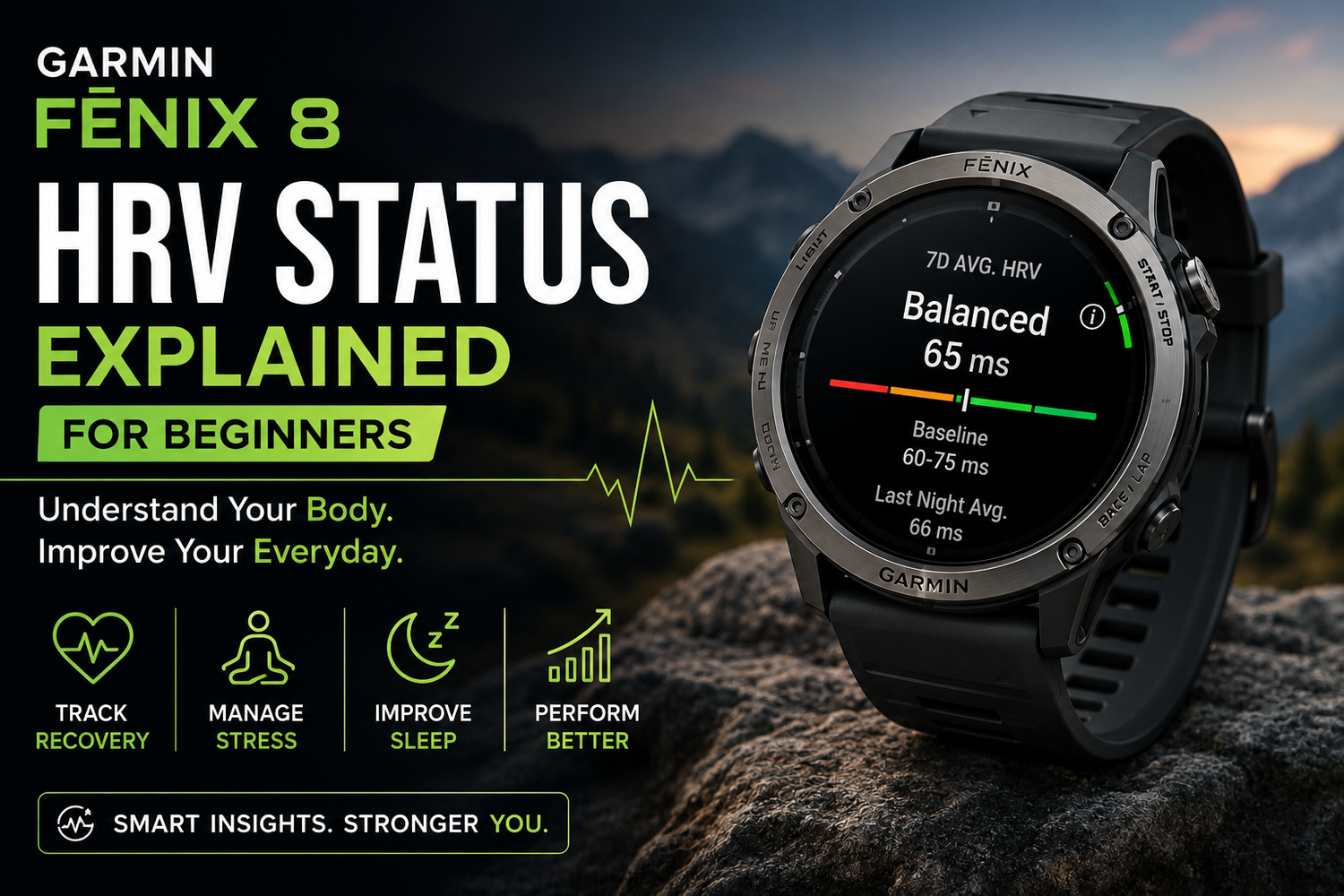
Modern smartwatches do much more than count steps or measure your heart rate. Today's advanced wearables provide deeper insights into your overall health and recovery, helping you understand how your body responds to exercise, stress, sleep, and daily life. One of the most valuable wellness metrics available on the Garmin Fenix 8 is HRV Status, which stands for Heart Rate Variability.If you're new to Garmin watches, HRV Status may sound technical, but it's actually a simple and useful tool that helps you understand how well your body is recovering and adapting. Whether you're training for a marathon, hiking on weekends, or simply trying to improve your health, learning how HRV works can help you make smarter decisions.Here's a beginner-friendly guide to understanding HRV Status on the Garmin Fenix 8.
What Is Heart Rate Variability?
Heart Rate Variability, or HRV, measures the tiny differences in time between consecutive heartbeats.Although your heart may beat sixty times in one minute, those beats do not occur at perfectly equal intervals. The slight variation between each heartbeat is completely normal and provides important information about how your nervous system is functioning.A healthy HRV often indicates that your body is adapting well to stress and recovering effectively. On the other hand, unusually low HRV may suggest fatigue, illness, poor sleep, or increased physical or mental stress.
How Does the Garmin Fenix 8 Measure HRV?
The Garmin Fenix 8 uses its advanced optical heart rate sensor to monitor your heart rhythm while you sleep.Nighttime provides the most consistent environment for measuring HRV because your body is relaxed and free from most daytime distractions. The watch collects this information over multiple nights and compares your results with your personal baseline rather than using someone else's numbers.This personalized approach makes HRV Status much more meaningful and accurate.
Why Is HRV Status Important?
HRV Status helps you understand how your body is responding to your current lifestyle.Instead of simply tracking workouts, it evaluates how well you're recovering from them. Your HRV reflects the combined effects of exercise, sleep quality, work stress, travel, hydration, and overall health.Rather than guessing whether you're fully recovered, the Garmin Fenix 8 provides data that can guide your daily decisions.
What Does a Balanced HRV Mean?
A balanced HRV indicates that your body is functioning within its normal range.When your HRV remains stable over time, it generally suggests that you're recovering well, managing stress effectively, and adapting successfully to your current training or daily routine.This is often a good sign that your body is ready for regular exercise and normal activity levels.Maintaining a balanced HRV is one of the long-term goals of health and fitness tracking.
What Happens When HRV Is Low?
Occasionally, your HRV may drop below your normal range.This doesn't necessarily mean something is wrong, but it often indicates that your body is under additional strain.Several factors can temporarily lower HRV, including poor sleep, emotional stress, intense workouts, illness, dehydration, alcohol consumption, or travel-related fatigue.A lower HRV serves as a reminder that your body may benefit from additional recovery rather than pushing through another demanding workout.
Can HRV Improve Over Time?
Yes, HRV can improve with healthy lifestyle habits.Consistent sleep, regular exercise, balanced nutrition, proper hydration, and effective stress management all contribute to better recovery and improved HRV over time.The Garmin Fenix 8 helps users observe these long-term trends rather than focusing on daily fluctuations.Small improvements in daily habits often produce noticeable improvements in HRV after several weeks.
How Long Does It Take to Establish HRV Status?
The Garmin Fenix 8 does not calculate meaningful HRV immediately after setup.Instead, it collects several nights of sleep data to establish your personal baseline.Once enough information has been gathered, the watch begins comparing future measurements against your individual range.This personalized baseline makes the results more useful because every person's HRV is naturally different.
Should You Worry About One Low Reading?
Not necessarily.HRV naturally changes from day to day.One unusually low reading may simply reflect a poor night's sleep, a stressful workday, or an intense workout.Instead of reacting to a single result, it's more useful to monitor long-term patterns.Consistent trends provide much more valuable information than isolated daily changes.
How Does HRV Help With Training?
Athletes often use HRV to decide how hard they should train.If HRV remains balanced, your body is generally recovering well and may be ready for another challenging workout.If HRV stays unusually low for several days, reducing workout intensity or scheduling a recovery day may be the better choice.This helps reduce the risk of overtraining while supporting long-term fitness improvements.
Can Everyday Users Benefit from HRV?
Absolutely.You don't need to be a professional athlete to benefit from HRV tracking.Office workers, students, travellers, and anyone interested in improving their overall wellness can use HRV to better understand how daily stress affects their body.The Garmin Fenix 8 transforms complex physiological information into simple insights that anyone can use.
How Does Sleep Affect HRV?
Sleep is one of the biggest influences on Heart Rate Variability.High-quality sleep gives your body time to recover physically and mentally, often leading to healthier HRV readings.Poor sleep, interrupted rest, or insufficient sleep can lower HRV and reduce your body's ability to recover effectively.This makes HRV another valuable reason to prioritize healthy sleeping habits.
Can Stress Lower HRV?
Yes, both physical and emotional stress can affect HRV.Busy work schedules, deadlines, anxiety, travel, illness, and demanding workouts all place additional stress on the body.The Garmin Fenix 8 helps users recognize these effects by monitoring changes in HRV over time.Understanding this relationship encourages healthier recovery habits and improved work-life balance.
How Can You Improve Your HRV?
Improving HRV starts with taking care of your overall health.Regular exercise, consistent sleep schedules, balanced nutrition, hydration, stress management, and adequate recovery all support healthier HRV levels.Instead of chasing higher numbers every day, the goal should be maintaining a stable HRV that reflects good long-term wellness.The Garmin Fenix 8 provides ongoing feedback to help users build these healthy habits.