


































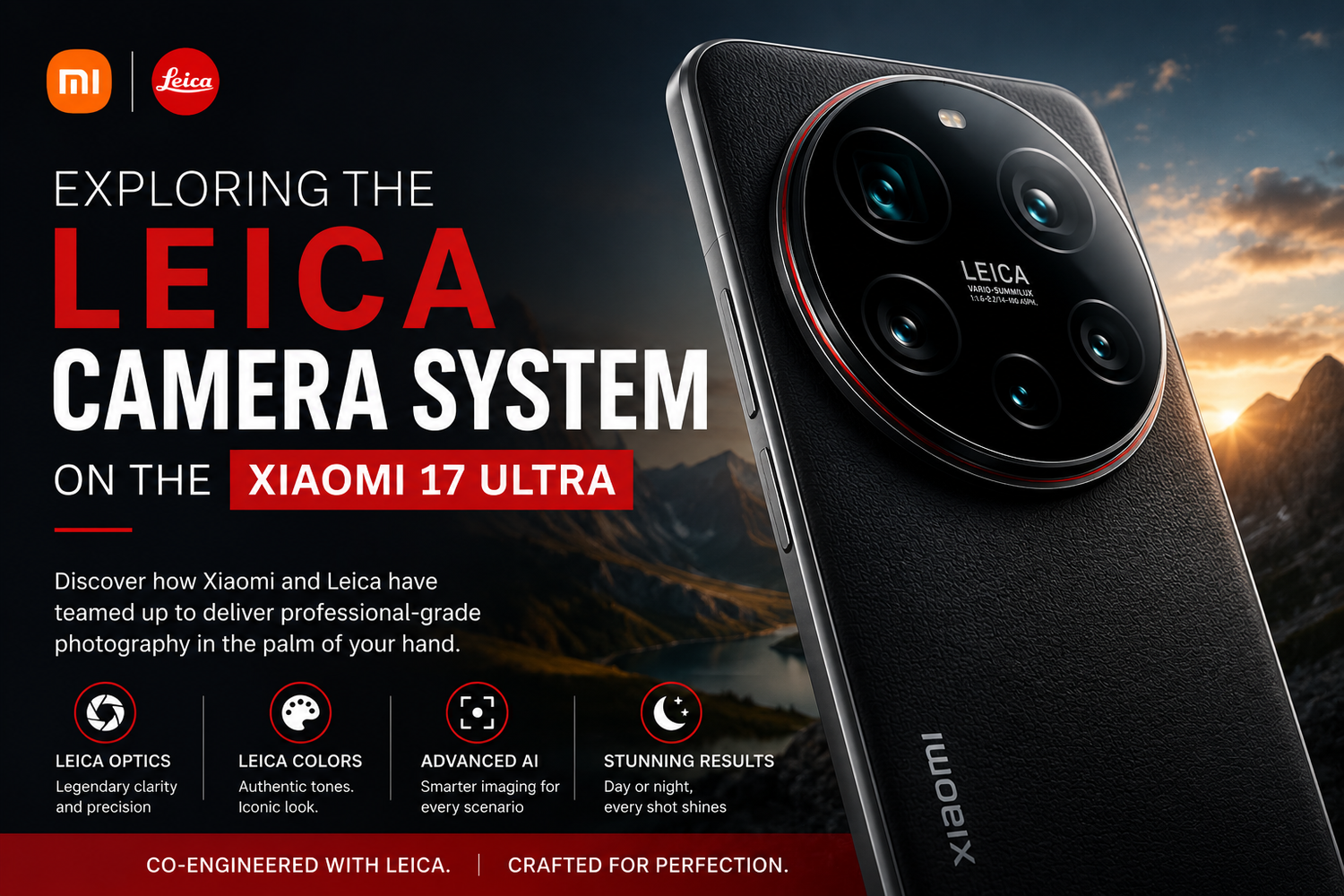
The Xiaomi Ultra series has consistently pushed the boundaries of smartphone photography, and the Xiaomi 17 Ultra continues that tradition with its advanced Leica-powered camera system. Built through Xiaomi's ongoing partnership with the legendary German camera manufacturer Leica, the Xiaomi 17 Ultra aims to deliver professional-grade photography capabilities in a smartphone form factor.Modern smartphone buyers are no longer choosing devices based solely on processing power or battery life. Camera performance has become one of the most important factors influencing purchasing decisions, especially among content creators, travelers, and photography enthusiasts. With the Xiaomi 17 Ultra, Xiaomi has once again focused heavily on imaging innovation, combining powerful hardware, computational photography, and Leica's renowned color science.In this article, we'll explore the Leica camera system on the Xiaomi 17 Ultra, examine its key features, and discover why it may be one of the most capable smartphone cameras available today.
What Makes Leica's Partnership with Xiaomi Special?
Leica is one of the most respected names in photography, known for producing premium cameras and lenses used by professionals worldwide. The partnership between Xiaomi and Leica goes beyond branding. Leica contributes to image processing, color tuning, lens optimization, and photographic styles that help create a unique shooting experience.The goal is to bring Leica's photographic philosophy to smartphones. Rather than producing overly processed images, Leica emphasizes natural colors, realistic contrast, and authentic visual storytelling.This collaboration allows Xiaomi users to enjoy a photography experience inspired by decades of professional camera expertise.
What Camera Hardware Does the Xiaomi 17 Ultra Offer?
The Xiaomi 17 Ultra features a sophisticated multi-camera setup designed to cover virtually every photography scenario.At the center of the system is a large flagship-grade primary sensor capable of capturing exceptional detail and dynamic range. The camera system is complemented by advanced ultra-wide and telephoto lenses, giving users flexibility for landscapes, portraits, macro photography, and long-range zoom shots.The large sensor size allows more light to reach the camera, improving image quality in both daytime and nighttime conditions. This hardware advantage forms the foundation upon which Leica's software enhancements operate.Together, the hardware and software work seamlessly to create images that are sharp, balanced, and visually appealing.
What Are Leica Authentic and Leica Vibrant Modes?
One of the most recognizable features of Xiaomi's Leica-powered smartphones is the inclusion of Leica Authentic and Leica Vibrant shooting modes.Leica Authentic mode focuses on producing natural and realistic images. Colors appear true-to-life, contrast remains balanced, and photographs retain a professional look that many photographers appreciate.Leica Vibrant mode takes a different approach by enhancing colors and brightness while maintaining a natural appearance. This mode appeals to users who enjoy more vivid and eye-catching photos for social media and everyday sharing.The availability of both modes allows users to choose the photographic style that best matches their preferences.
How Does the Xiaomi 17 Ultra Perform in Daylight Photography?
Daylight photography is where the Leica camera system truly shines.The primary camera captures impressive detail with excellent sharpness across the frame. Colors appear rich without looking artificial, and dynamic range is strong enough to preserve highlights and shadows in challenging lighting conditions.Leica's image processing helps avoid the excessive sharpening and oversaturation commonly found in some smartphone cameras. Instead, images maintain a more refined and professional appearance.Whether you're photographing architecture, landscapes, street scenes, or everyday moments, the Xiaomi 17 Ultra consistently delivers outstanding results.
Can the Xiaomi 17 Ultra Handle Low-Light Photography?
Low-light photography has become one of the most important tests for modern smartphone cameras, and the Xiaomi 17 Ultra performs exceptionally well in this area.The large image sensor collects significant amounts of light, helping reduce noise and preserve detail in darker environments. Advanced computational photography further enhances image quality by balancing exposure and improving clarity.Night mode photography benefits greatly from Leica's tuning, producing images with natural lighting and realistic colors rather than overly bright or artificial-looking scenes.The result is a camera system capable of capturing impressive nighttime photos without sacrificing image quality.
How Good Is the Telephoto Camera?
Zoom photography has become increasingly important, and the Xiaomi 17 Ultra addresses this with an advanced telephoto system.The Leica-enhanced telephoto lens allows users to capture distant subjects while maintaining impressive levels of detail. Whether photographing wildlife, sporting events, landmarks, or cityscapes, the zoom system provides versatility that many smartphone users appreciate.Portrait photography also benefits from the telephoto lens, as it creates more natural facial proportions and pleasing background separation.Combined with Xiaomi's AI processing, zoom images remain sharp and usable across multiple focal lengths.
Does the Leica Camera System Improve Portrait Photography?
Portrait photography is one of the strongest areas of the Xiaomi 17 Ultra.Leica's influence becomes especially noticeable through portrait rendering and depth effects. Skin tones appear realistic, edge detection is highly accurate, and background blur closely resembles the characteristics of traditional camera lenses.The device also includes Leica-inspired portrait filters that emulate the visual style of classic Leica photography.For content creators, influencers, and portrait enthusiasts, these features add a professional touch that helps images stand out.
What Video Recording Features Are Available?
The Xiaomi 17 Ultra isn't just designed for photography. It also excels as a video creation tool.The Leica camera system supports high-resolution video recording with advanced stabilization, ensuring smooth footage even during movement. Color reproduction remains consistent across different lenses, creating a more professional video experience.Content creators can benefit from cinematic color profiles, enhanced dynamic range, and precise focus control that help produce visually engaging videos.Whether recording travel vlogs, social media content, or professional projects, the Xiaomi 17 Ultra offers powerful video capabilities.
How Does AI Enhance the Leica Camera System?
Artificial intelligence plays an important role in the Xiaomi 17 Ultra's camera experience.AI assists with scene recognition, exposure optimization, autofocus improvements, and image enhancement. However, unlike some smartphones that rely heavily on aggressive AI processing, Xiaomi's Leica integration aims to preserve a natural photographic appearance.This balanced approach allows users to benefit from modern computational photography while maintaining authentic image quality.The combination of AI and Leica's photographic philosophy creates a camera experience that feels both intelligent and artistic.
Is the Xiaomi 17 Ultra a Good Camera Phone for Content Creators?
Absolutely.Content creators often require versatility, image quality, and creative flexibility, all of which are strengths of the Xiaomi 17 Ultra. The camera system handles landscapes, portraits, videos, close-up shots, and social media content with ease.The Leica filters, portrait modes, advanced zoom capabilities, and professional-grade image processing provide creators with tools that help elevate their work.For users who regularly create content across multiple platforms, the Xiaomi 17 Ultra offers one of the most comprehensive camera experiences available.