


































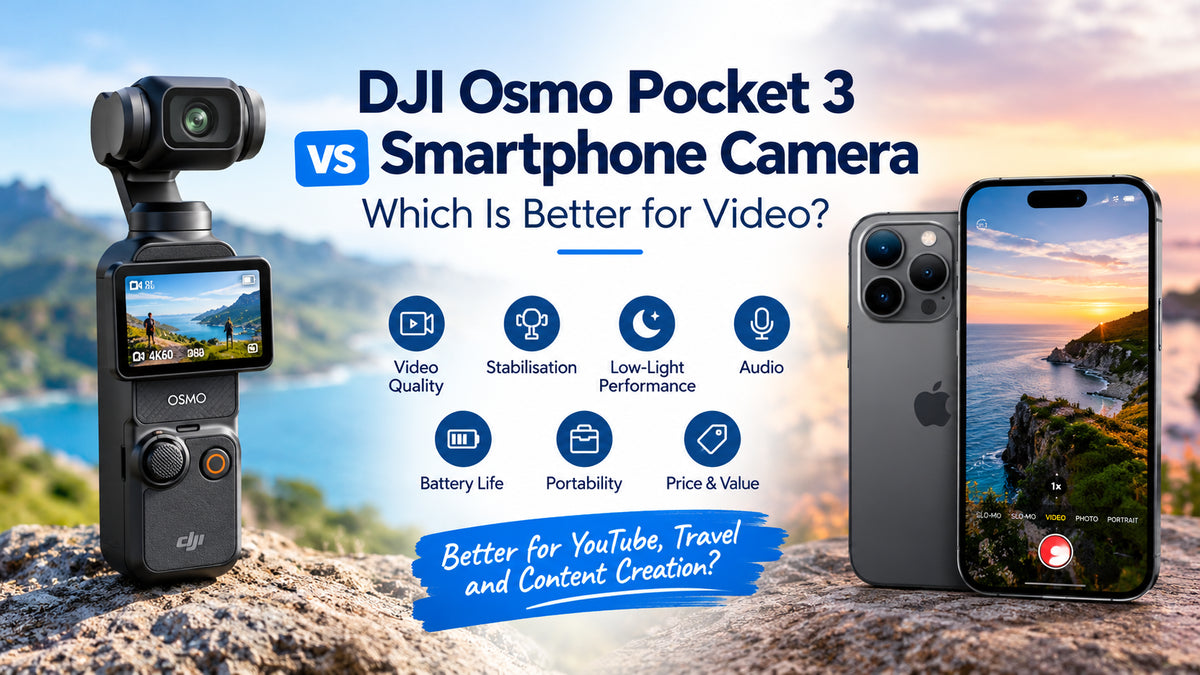
Recording high-quality videos has never been easier. Modern smartphones offer impressive camera systems, advanced image processing and powerful video features. However, dedicated compact cameras such as the DJI Osmo Pocket 3provide additional advantages for vloggers, travellers and content creators.The DJI Osmo Pocket 3 combines a 1-inch CMOS sensor, mechanical three-axis stabilisation and professional recording features in a compact design. Meanwhile, flagship smartphones from Apple, Samsung and Google offer excellent video quality alongside everyday convenience.But which option is better for recording YouTube videos, travel memories, Instagram Reels and professional content?In this DJI Osmo Pocket 3 vs smartphone camera comparison, we'll explore video quality, stabilisation, low-light performance, audio, portability and overall value to help Australian buyers make the right decision.
Video Quality: Dedicated Camera vs Smartphone
Video quality is one of the biggest considerations when choosing between these devices.The DJI Osmo Pocket 3 features a 1-inch CMOS sensor capable of recording 4K video at up to 60fps during normal recording and up to 120fps in supported slow-motion modes.Its relatively large sensor helps capture detailed footage with attractive background separation and good dynamic range.The camera also supports 10-bit D-Log M and HLG colour profiles, giving experienced creators additional flexibility during editing.Modern flagship smartphones can also record impressive 4K footage, with some supporting higher resolutions and professional recording formats.Smartphones use computational photography to optimise exposure, colours and sharpness automatically.Verdict: The Osmo Pocket 3 offers excellent video quality and colour-grading flexibility, while flagship smartphones deliver competitive results with minimal effort.
Stabilisation: Where the DJI Osmo Pocket 3 Excels
One of the biggest advantages of the DJI Osmo Pocket 3 is its built-in three-axis mechanical gimbal.Unlike smartphones that primarily rely on optical and electronic stabilisation, the Pocket 3 physically adjusts its camera position to compensate for movement.This helps produce smooth footage when walking, filming moving subjects or capturing cinematic camera movements.The gimbal also supports controlled panning and tilting, making creative camera movements easier to achieve.Smartphones offer effective stabilisation technologies, including dedicated action-video modes.However, electronic stabilisation may crop the image and can sometimes introduce unwanted visual effects.Verdict: The DJI Osmo Pocket 3 generally provides an advantage for smooth walking footage and controlled cinematic movements.
Low-Light Video Performance
Recording video at night can be challenging for both smartphones and compact cameras.The DJI Osmo Pocket 3 benefits from its 1-inch sensor, which can gather substantial light compared with smaller camera sensors.Its dedicated Low-Light Video mode helps improve exposure in darker environments.This makes it useful for evening travel videos, indoor filming and nighttime city scenes.Modern premium smartphones also perform well in low light through advanced processing and specialised video modes.However, aggressive noise reduction can sometimes remove fine details or create an artificial appearance.Actual performance depends on the smartphone model, lighting conditions and recording settings.Verdict: The Pocket 3 is particularly attractive for low-light video, although the latest flagship smartphones can produce competitive results.
Autofocus and Subject Tracking
Keeping subjects in focus is essential when recording moving people or filming yourself.The DJI Osmo Pocket 3 includes ActiveTrack 6.0, allowing the camera to follow selected subjects automatically.Its three-axis gimbal physically moves to keep the subject within the frame, making it particularly useful for solo creators.Smartphones offer face detection, autofocus tracking and cinematic recording modes. However, most smartphones cannot physically rotate their cameras to follow a moving subject without additional accessories.Verdict: The Pocket 3 offers greater convenience for solo vlogging, interviews and moving-subject videos.
Audio Quality: Which Records Better Sound?
Clear audio is just as important as video quality.The DJI Osmo Pocket 3 features three built-in microphones designed to capture directional sound and reduce unwanted noise.It also supports compatible DJI wireless microphones, including the DJI Mic 2, for improved voice recording.Smartphones include multiple microphones and sophisticated audio processing, making them suitable for casual recording.However, creators may need external microphones for professional interviews, outdoor vlogs or noisy environments.Verdict: Both devices can capture useful audio, but the Pocket 3's integrated wireless microphone compatibility makes it convenient for content creators.
Portability and Everyday Convenience
Smartphones have one major advantage: convenience.Most people already carry their smartphones, making it easy to capture unexpected moments without additional equipment.You can record, edit and upload videos directly to social media using a single device.The DJI Osmo Pocket 3 is also compact and lightweight, weighing approximately 179 grams.Its rotating two-inch touchscreen makes switching between horizontal and vertical shooting convenient.However, it requires an additional device for editing and sharing content.Verdict: Smartphones win for everyday convenience, while the Pocket 3 provides a dedicated filming experience.
Battery Life and Recording Time
The DJI Osmo Pocket 3 includes a 1,300mAh battery and offers up to 166 minutes of operating time under DJI's specified testing conditions.Actual recording time varies depending on resolution, frame rate, temperature and enabled features.It also supports fast charging, reaching approximately 80% in 16 minutes with a compatible charger.Smartphone recording endurance depends on battery capacity and other activities running in the background.Extended 4K recording can generate heat and consume significant battery power.Using a dedicated camera also helps preserve your smartphone's battery for calls, navigation and everyday activities.Verdict: The Pocket 3 offers convenient dedicated recording, while smartphones provide flexible all-in-one functionality.
DJI Osmo Pocket 3 vs Smartphone Camera: Price and Value
Price is another important consideration for Australian buyers.The DJI Osmo Pocket 3 is available in Standard and Creator Combo packages, with pricing varying between retailers.The Creator Combo includes additional accessories useful for vlogging and content creation.Premium smartphones often cost considerably more, but they also provide communication, navigation, productivity and entertainment features.If you already own a capable smartphone, purchasing the Pocket 3 represents an additional investment.However, creators who regularly record videos may appreciate its stabilisation, tracking and professional recording controls.
Which Is Better for YouTube, Travel and Social Media?
For YouTube vlogging, the DJI Osmo Pocket 3 is an excellent choice because of its stabilisation, subject tracking and microphone compatibility.For travel videos, its compact construction and mechanical gimbal make capturing smooth footage easier.For Instagram Reels and TikTok, both devices perform well. Smartphones offer faster editing and publishing, while the Pocket 3 supports convenient vertical recording.For family memories and spontaneous videos, smartphones remain the more practical choice.Ultimately, the best camera depends on how frequently you record and how much control you want over your footage.