


































The smartphone market in 2026 is defined by a compelling contrast: classic hardware power versus intelligent AI-driven experiences. At the center of this conversation are two industry leaders Samsung and Google Pixel. If you are trying to decide between them, you are essentially choosing between performance-driven engineering and software-led intelligence.This blog explores the Samsung vs Pixel comparison, helping you understand which device aligns better with your needs while naturally incorporating trending keywords such as classic power smartphones, smart AI phones, Samsung flagship vs Pixel, best Android phones 2026, and AI-powered smartphones.
Understanding the Core Difference
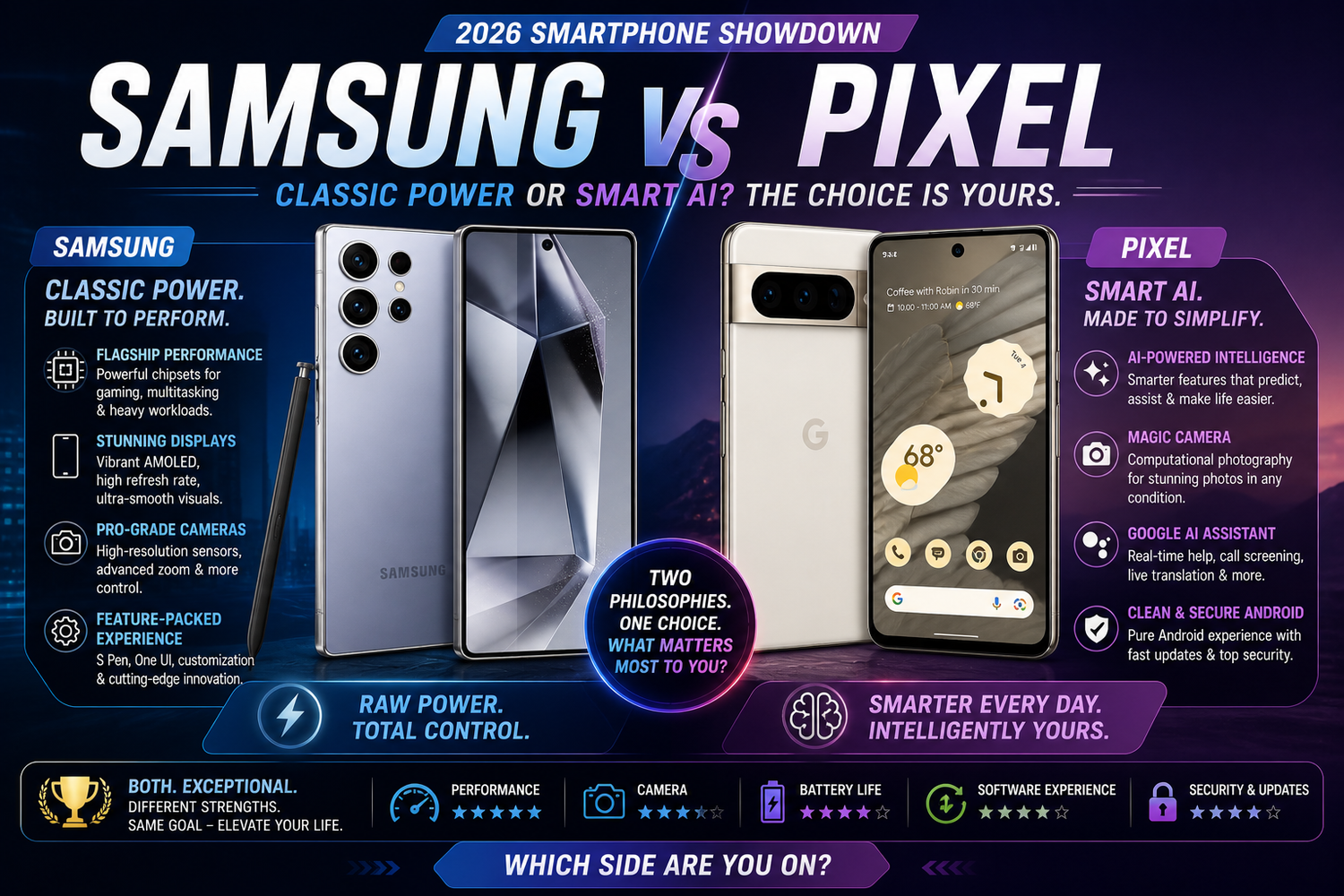
Samsung represents classic power smartphones, focusing on premium hardware, high-end displays, and feature-rich experiences. Pixel, on the other hand, is built around smart AI phones, prioritizing software intelligence, automation, and user-friendly simplicity.Samsung delivers a device that feels powerful in your hands. Pixel delivers a device that feels intelligent in your daily life.
Samsung: The Benchmark of Classic Power
Samsung has consistently dominated the Android ecosystem with its focus on hardware innovation and versatility. Its flagship devices are engineered to deliver top-tier performance across every category.Samsung smartphones are known for their industry-leading AMOLED displays, offering vibrant colors, deep contrasts, and high refresh rates. Performance is another strong point, with powerful chipsets that handle gaming, multitasking, and heavy applications effortlessly. The brand also offers features like the S Pen, foldable designs, and deep customization through One UI.Another advantage is camera hardware. Samsung focuses heavily on megapixel count and zoom capabilities, making it a strong contender for users who want flexibility in photography.From an SEO perspective, Samsung dominates searches related to best Android flagship phones, Samsung camera quality, and high-performance smartphones.In essence, Samsung is designed for users who value control, customization, and raw power.
Google Pixel: The Rise of Smart AI Smartphones
Google Pixel has carved out a unique position by focusing on AI-powered smartphones rather than competing purely on specifications. Its strength lies in how intelligently the software enhances the overall user experience.Pixel devices are known for delivering a clean Android interface, free from unnecessary apps and clutter. This results in smoother performance and a more intuitive user experience. What truly sets Pixel apart is its integration of artificial intelligence.Features like AI-enhanced photography, real-time voice typing, call screening, and live translation make the Pixel feel like a smart assistant rather than just a smartphone. The camera system, although not always leading in hardware, consistently delivers exceptional results through computational photography.Pixel also leads in software updates, often being the first to receive new Android versions and security patches. This makes it highly appealing for users searching for long-term software support and AI innovation in smartphones.Ultimately, Pixel is built for users who prefer simplicity, intelligence, and a seamless experience.
Camera Comparison: Hardware Versus Intelligence
The Samsung vs Pixel camera debate is one of the most discussed topics in the smartphone space.Samsung focuses on hardware superiority, offering high-resolution sensors and advanced zoom capabilities. Its images tend to be vibrant and visually striking, making them ideal for social media.Pixel, however, takes a different approach. It relies on AI to enhance images, delivering more natural colors, better skin tones, and consistent results across lighting conditions.Users who prefer control and zoom capabilities may lean toward Samsung. Those who want effortless, high-quality photography without manual adjustments often prefer Pixel.
Performance and Battery Experience
When it comes to performance, Samsung leads in terms of raw processing power. Its flagship devices are optimized for demanding tasks such as gaming and multitasking. Battery capacity and fast charging technologies are also strong points.Pixel devices, while not always leading in benchmarks, focus on optimization and efficiency. The integration of hardware and AI allows for smoother everyday usage and smarter battery management.This reflects a broader industry shift toward efficient performance rather than just high specifications.
Software Experience: Feature-Rich vs Minimal
Samsung’s One UI offers a highly customizable environment with a wide range of features. While this appeals to power users, it can feel complex for those who prefer simplicity.Pixel’s stock Android experience is clean, minimal, and fluid. It eliminates unnecessary elements and focuses on delivering a straightforward user journey.The choice between the two often comes down to personal preference. Users looking for flexibility and control may prefer Samsung, while those seeking simplicity often gravitate toward Pixel.
The Growing Importance of AI in Smartphones
A major trend shaping the future of smartphones is the rise of AI-first devices. Pixel has positioned itself at the forefront of this movement by deeply integrating AI into everyday functions.Samsung has also begun incorporating AI features into its ecosystem, but Pixel’s implementation feels more cohesive and natural. This is why many experts consider Pixel a leader in the smart AI smartphone category.As AI continues to evolve, the gap between hardware and software innovation will become even more significant.
Final Verdict: Which One Should You Choose?
Choosing between Samsung and Pixel ultimately depends on your priorities.If you value performance, display quality, and feature-rich hardware, Samsung remains the ideal choice. It represents the best of classic power smartphones.If you prioritize intelligent features, camera consistency, and a clean software experience, Pixel stands out as the best example of a smart AI phone.The decision is less about which phone is better and more about how you use your device in your daily life.