



































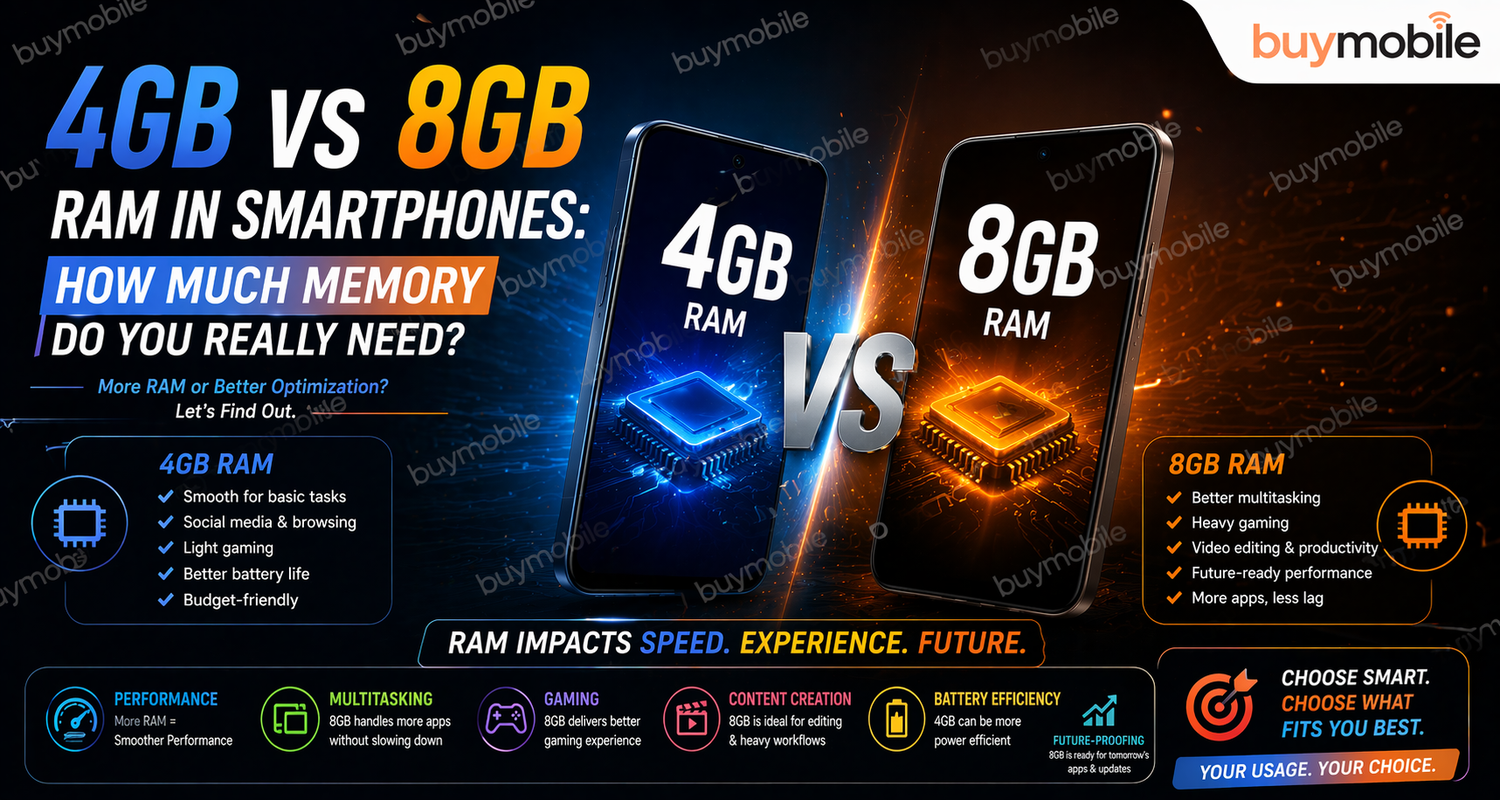
When buying a smartphone, one of the most common questions users face is how much RAM they actually need. Should you go with 4GB, 8GB, or even higher? While it may seem like just another specification, RAM plays a crucial role in how your phone performs on a daily basis.In 2026, this debate has become even more important. Apps are heavier, games are more demanding, and operating systems are more advanced than ever before. Choosing the right amount of RAM can directly impact how smooth your experience feels, both now and in the future.
Understanding How RAM Works in Smartphones
RAM, or Random Access Memory, is the space your phone uses to run apps and manage active tasks. It acts as a temporary workspace where your device stores information that needs to be accessed quickly.The more RAM your phone has, the more tasks it can handle at the same time without slowing down. This is especially important for multitasking, gaming, and running background apps.With limited RAM, your phone may need to close apps in the background to free up space. This leads to delays when switching between apps and can affect overall performance.
When 4GB RAM Is Still Enough
For many users, 4GB RAM can still provide a decent experience. If your usage is simple and focused on everyday activities, this amount of memory can handle most tasks without major issues.Using social media apps, watching videos, browsing the internet, and sending messages are all well within the capabilities of a 4GB device. These activities do not require large amounts of memory, so performance remains smooth in most cases.However, the limitations become noticeable when you start pushing the device further. Running multiple apps at the same time or switching between tasks frequently can cause apps to reload. This may not seem like a big issue at first, but over time it can become frustrating.4GB RAM is best suited for casual users who prioritize affordability and do not rely heavily on demanding applications.
Why 8GB RAM Makes a Big Difference
For users who expect more from their smartphones, 8GB RAM offers a noticeable improvement. It allows the device to handle multiple tasks simultaneously without slowing down.Switching between apps feels faster because they remain active in the background. This reduces loading times and creates a smoother overall experience.Heavier applications, such as video editing tools or advanced productivity apps, run more efficiently with additional memory. The phone can process more data at once, which improves responsiveness.Another advantage is longevity. As apps continue to grow in size and complexity, having extra RAM ensures that your device remains capable for several years. This makes 8GB a more future-proof option.
Gaming Performance and RAM
Gaming is one of the areas where RAM makes a clear difference. Modern mobile games are more complex than ever, with detailed graphics and large environments.A device with 4GB RAM can handle casual games and some moderately demanding titles. However, performance may drop in high-end games, especially if you try to run them at higher graphics settings.With 8GB RAM, the experience is much smoother. Games load faster, run more consistently, and are less likely to lag during intense moments. This is particularly important for competitive gaming, where performance can affect outcomes.The combination of higher RAM and modern processors creates a more stable gaming experience. This is why many gaming-focused smartphones now start with at least 8GB of RAM.
Multitasking in Everyday Use
Modern smartphone usage rarely involves just one app at a time. Users often switch between messaging apps, social media, music streaming, and web browsing throughout the day.With 4GB RAM, the system may close background apps more aggressively to manage memory. This leads to delays when reopening apps and can disrupt your workflow.8GB RAM provides a more seamless experience. Apps stay active in the background, allowing you to switch between them instantly. This improves productivity and makes the phone feel faster overall.For users who rely on their phones for both work and entertainment, this difference becomes very noticeable.
Future-Proofing Your Smartphone
One of the most important factors to consider is how your phone will perform over time. Technology evolves quickly, and apps continue to demand more resources with each update.A device with 4GB RAM may work well initially, but it can start to feel slower as new apps and features are introduced. This is especially true if you plan to keep your phone for several years.8GB RAM offers better long-term performance. It provides the extra capacity needed to handle future updates and more demanding applications. This makes it a safer choice for users who want their device to remain reliable over time.
Does More RAM Always Mean Better Performance
While RAM is important, it is not the only factor that determines performance. The processor, graphics unit, storage speed, and software optimization all play significant roles.A well-optimized phone with 4GB RAM can sometimes outperform a poorly optimized device with more memory. However, when all other factors are equal, having more RAM generally results in a smoother experience.RAM mainly affects how many tasks your phone can handle at once. It does not directly increase processing power, but it ensures that the system runs efficiently under load.
Frequently Asked Questions
Is 4GB RAM enough in 2026
It can be enough for basic usage such as social media, streaming, and messaging. However, it may feel limited for multitasking or gaming.
Do you need 8GB RAM for gaming
For casual games, 4GB may work, but for more demanding titles, 8GB provides a smoother and more stable experience.
Will more RAM make your phone faster
It does not increase processing speed, but it allows the phone to handle multiple tasks more efficiently.
Can 4GB RAM phones handle future apps
They can run basic apps, but may struggle with newer and more demanding applications over time.
Which option is better for long-term use
8GB RAM is better for longevity, as it can handle future updates and heavier workloads more effectively.