


































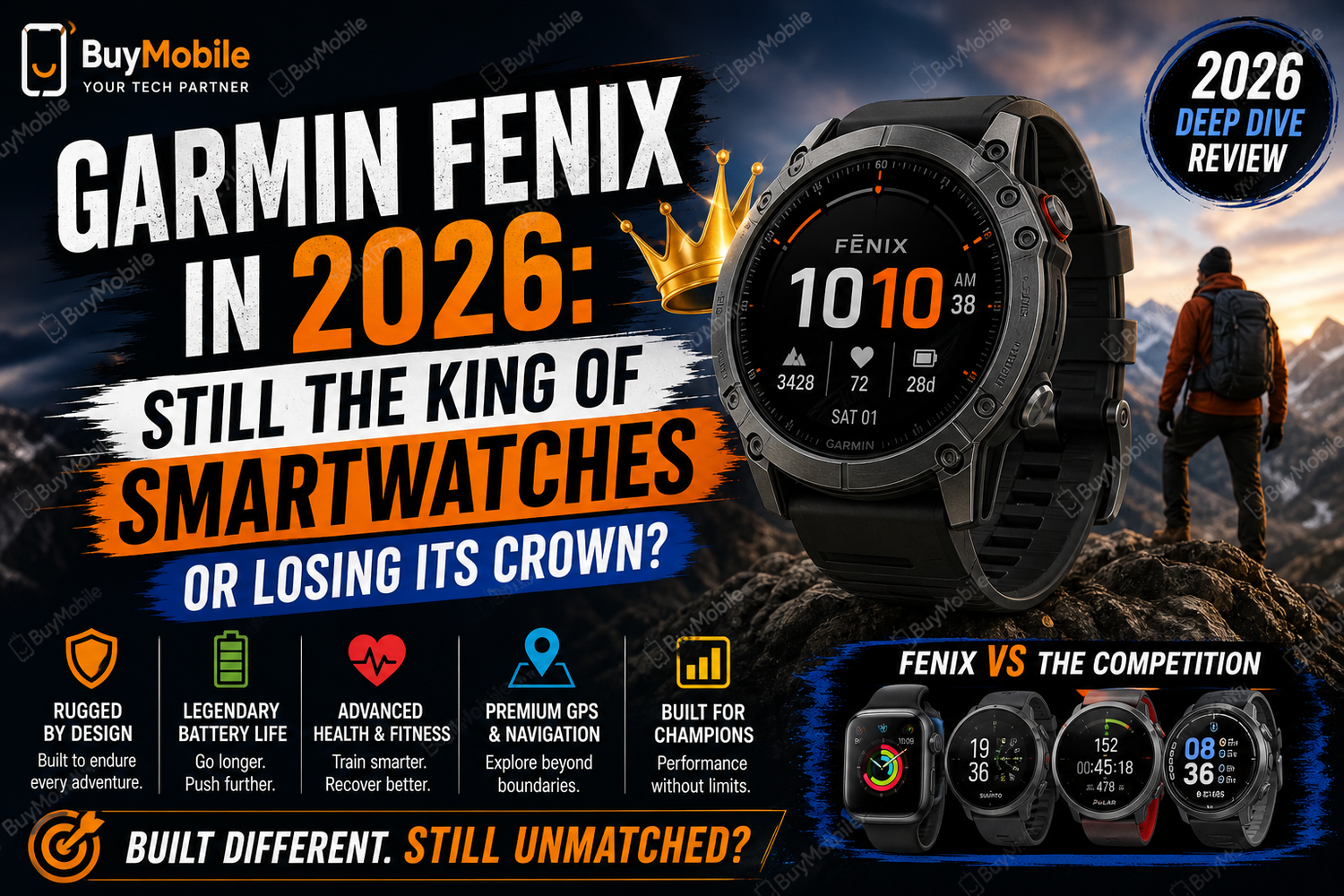
For years, the Garmin Fenix has been the undisputed heavyweight in the world of performance smartwatches. It was never just a watch. It was a statement. A tool built for athletes, adventurers, and anyone who demanded more from their wearable. But in 2026, the smartwatch landscape looks very different. Competition is sharper, features are smarter, and expectations are higher than ever.So the big question is unavoidable. Is the Garmin Fenix still the king, or is it finally starting to lose its crown?
The Legacy That Built the Crown
Before we talk about where the Fenix stands today, it is important to understand what made it dominant in the first place.Garmin built the Fenix around three core strengths. Durability, battery life, and data. While other smartwatches focused on notifications and apps, the Fenix focused on performance. It was built for people who tracked everything. Heart rate, recovery, altitude, training load, sleep, and more.It became the go to device for serious athletes and outdoor explorers. Whether you were running a marathon or hiking through mountains, the Fenix was designed to keep up.That reputation is still strong in 2026. But the market is no longer standing still.
The Rise of Smarter Competitors
One of the biggest challenges for the Fenix today is not hardware. It is competition.Brands like Apple, Samsung, and even newer fitness focused companies are pushing the boundaries of what smartwatches can do. They are introducing better displays, more intuitive interfaces, and smarter features powered by AI.These watches are not just fitness tools anymore. They are becoming lifestyle companions.This is where the Fenix starts to feel different. It is still focused on performance first, but some users are beginning to expect more from a smartwatch.
Design That Still Feels Premium
One area where the Fenix continues to dominate is design and build quality.The watch feels solid, rugged, and premium. Materials like titanium and sapphire glass give it a level of durability that most competitors cannot match. It is built for tough environments, and that has not changed.In a world where many smartwatches feel delicate, the Fenix still stands out as something you can trust in extreme conditions.But there is a trade off. It is bulkier than many modern smartwatches. While some users love that rugged feel, others are starting to prefer lighter and more comfortable designs.
Battery Life That Still Leads the Game
If there is one area where the Fenix continues to dominate, it is battery life.While many smartwatches still require daily charging, the Fenix can last for days or even weeks depending on usage. For outdoor enthusiasts and long distance athletes, this is a massive advantage.In 2026, battery life is still one of the biggest differentiators. And here, the Fenix remains ahead of the competition.Even as other brands improve, they have not fully closed this gap.
Fitness and Data: Still a Powerhouse
The Fenix continues to deliver some of the most advanced fitness tracking features available.It provides detailed insights into training, recovery, and performance. Metrics like VO2 max, training readiness, and advanced GPS tracking make it a powerful tool for athletes.For users who take fitness seriously, the Fenix still feels unmatched. It is not just tracking activity. It is helping you improve.This is where it still earns its crown.
Smart Features: The Growing Gap
While the Fenix excels in fitness and durability, it still lags behind in smart features.Competitors are offering smoother app ecosystems, better voice assistants, and more seamless integration with daily life. Features like messaging, payments, and app support feel more polished on other platforms.The Fenix does include basic smart features, but they are not its focus. And in 2026, that difference is becoming more noticeable.For users who want a smartwatch that blends fitness with everyday convenience, this could be a deciding factor.
The Changing Definition of a Smartwatch
The biggest challenge for the Fenix is not a single feature. It is a shift in how people define a smartwatch.In the past, users were willing to choose between fitness and smart features. Today, they want both.They want a watch that can track their workouts and manage their daily life. They want performance without sacrificing convenience.This is where the competition is catching up. And this is where the Fenix faces its biggest test.
Who Still Should Buy the Fenix
Despite the changing landscape, the Fenix is far from irrelevant.If you are an athlete, an outdoor enthusiast, or someone who values durability and battery life above everything else, the Fenix still makes a strong case.It is built for people who push limits. People who need a device that can keep up with extreme conditions and long training sessions.For this audience, the Fenix is still one of the best choices available.
Who Might Look Elsewhere
On the other hand, if you are looking for a more balanced smartwatch experience, you may want to explore other options.Users who prioritize design, smart features, and seamless integration with their digital life may find alternatives more appealing.The Fenix is powerful, but it is also specialized. And not everyone needs that level of specialization.
So Is It Still the King
The answer is not as simple as yes or no.The Garmin Fenix is still the king of performance smartwatches. It continues to dominate in areas like battery life, durability, and advanced fitness tracking.But the crown is no longer uncontested.In the broader smartwatch market, where users expect a blend of performance and smart features, the competition is stronger than ever.The Fenix is no longer the obvious choice for everyone. It is the right choice for a specific type of user.