


































Garmin has built a reputation for creating some of the most reliable and performance focused smartwatches in the world. But if you have ever tried choosing between the Forerunner and Fenix series, you already know how confusing it can get. Both are powerful. Both are premium. And both promise to elevate your fitness and lifestyle.So what is the real difference?The answer is not just about features. It is about purpose. The Forerunner is designed with runners in mind, while the Fenix aims to be an all in one adventure and performance tool.But in 2026, those lines are starting to blur. Let’s break it down and see which one truly deserves your wrist.
Design Philosophy: Lightweight vs Rugged
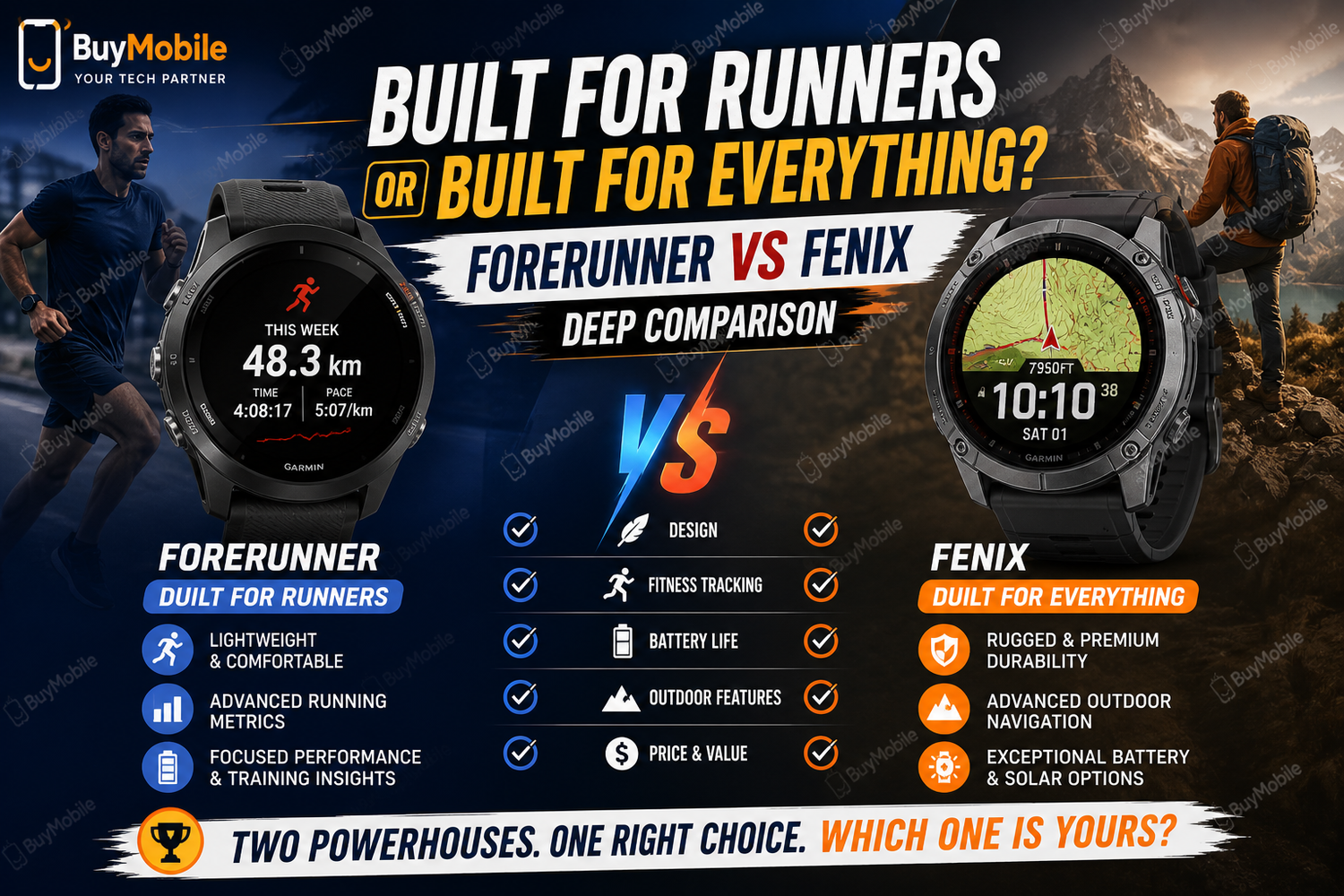
The first major difference shows up in the design.The Forerunner series is built to be lightweight and comfortable. It is designed for long runs, training sessions, and everyday wear without feeling bulky. If you are someone who prioritizes comfort during workouts, the Forerunner instantly feels like the better choice.On the other hand, the Fenix is built like a tank. It features premium materials like stainless steel or titanium and often comes with sapphire glass. It is heavier, more durable, and clearly designed for tough environments.The Fenix feels like a watch you can take hiking, climbing, or into extreme conditions without worrying about damage. The Forerunner feels like a watch you can wear all day without even noticing it.
Fitness Tracking: Focus vs Versatility
When it comes to fitness tracking, both watches are excellent. But their approach is different.The Forerunner is focused. It is built primarily for runners and athletes who want detailed metrics like pace, cadence, VO2 max, and training readiness. It provides insights that help improve performance over time.The Fenix does all of that and more. It supports a wider range of activities including hiking, skiing, swimming, strength training, and even diving on certain models. It is designed for people who do not stick to just one type of workout.If your routine revolves around running, the Forerunner feels tailored for you. If your lifestyle includes multiple sports and outdoor activities, the Fenix offers more flexibility.
Performance and Features: Similar Core, Different Depth
In terms of core performance, both watches share many similarities. They offer accurate heart rate tracking, advanced GPS capabilities, and detailed health insights.But the Fenix takes things further with additional features like advanced mapping, navigation tools, and outdoor specific metrics. It is built for exploration as much as it is for fitness.The Forerunner focuses on delivering the essentials in a more streamlined way. It avoids overwhelming users with too many features and instead prioritizes usability.This difference makes the Forerunner feel more approachable, while the Fenix feels more powerful but slightly more complex.
Battery Life: Strong vs Exceptional
Battery life is one area where Garmin consistently outperforms most competitors, and both series benefit from this.The Forerunner offers impressive battery life that can last several days even with regular GPS usage. It is reliable and more than enough for most users.The Fenix, however, pushes battery performance to another level. With extended modes and solar charging options on some models, it can last significantly longer, especially during outdoor adventures.For casual users and runners, the Forerunner is more than sufficient. For explorers and long distance athletes, the Fenix provides extra confidence.
Smart Features: Balanced vs Functional
Neither the Forerunner nor the Fenix is trying to compete directly with traditional smartwatches focused on apps and notifications. But they still offer useful smart features.Both include notifications, music storage, contactless payments, and basic connectivity features. The experience is smooth and practical.The Fenix may offer slightly more customization and additional tools, but the difference is not dramatic. In this area, both devices feel similar.The focus remains on fitness and performance rather than entertainment or social features.
Price and Value: Smart Choice vs Premium Investment
Price is one of the biggest deciding factors.The Forerunner series is generally more affordable. It offers excellent value for runners and fitness enthusiasts who want advanced tracking without paying for features they may never use.The Fenix sits firmly in the premium category. It costs significantly more, but it justifies that price with its durability, additional features, and versatility.Choosing between them often comes down to how much you are willing to spend and what you actually need.
Lifestyle Fit: Who Should Choose What
The real difference between the Forerunner and Fenix becomes clear when you look at lifestyle.If you are a dedicated runner, a gym enthusiast, or someone who wants a lightweight watch for everyday fitness, the Forerunner is the smarter choice. It delivers everything you need without unnecessary complexity.If you are an adventurer, an outdoor enthusiast, or someone who enjoys multiple sports and rugged environments, the Fenix is built for you. It offers tools and durability that go beyond standard fitness tracking.It is not about which one is better. It is about which one fits your lifestyle.
The Blurring Line in 2026
What makes this comparison interesting in 2026 is how close these two series have become. The Forerunner is getting more features, while the Fenix is becoming more refined and user friendly.The gap is shrinking, but the core identity remains.The Forerunner is still about performance and simplicity. The Fenix is still about versatility and endurance.