


































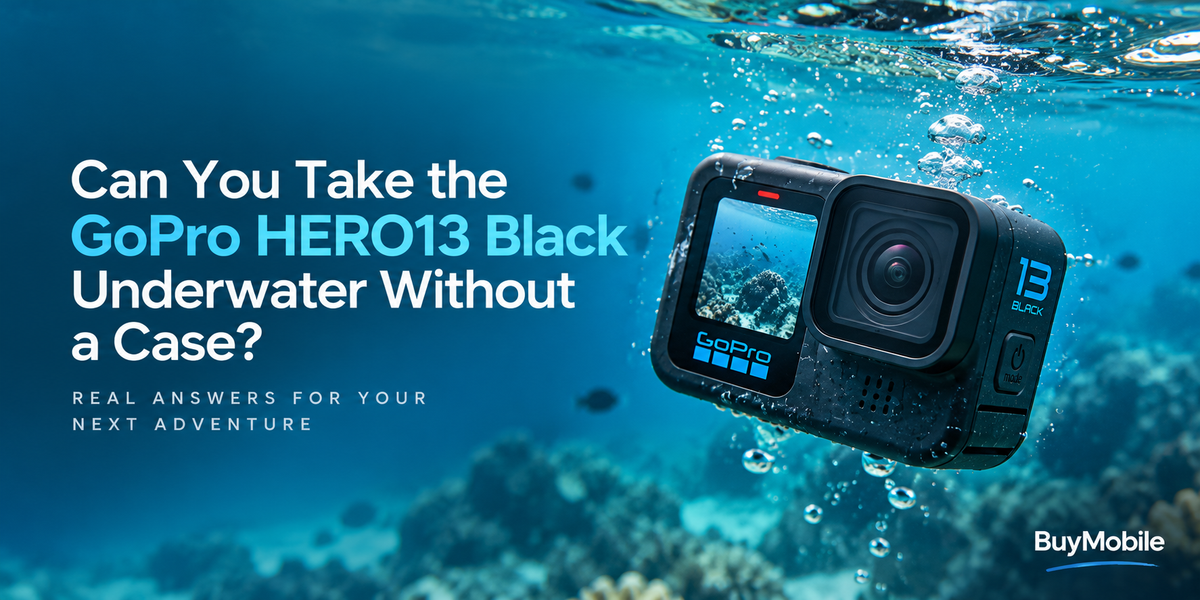
Action cameras are made for situations where ordinary cameras might struggle, and few environments test a camera more than water. Whether you are swimming in a pool, snorkelling on holiday, kayaking along the coast or diving beneath the surface, taking a camera underwater immediately raises one important question.Can you take the GoPro HERO13 Black underwater without putting it inside a waterproof case?The short answer is yes.The GoPro HERO13 Black is waterproof to 33 feet, or 10 metres, without an additional protective housing. That means you can use it for many everyday water activities straight out of the box, provided the camera is properly closed and its waterproof seal is in good condition.However, that does not mean you should take it to any depth without thinking about protection.
How Waterproof Is the GoPro HERO13 Black?
GoPro designed the HERO13 Black as a rugged action camera capable of dealing with water without requiring a bulky external case for normal use.Its official waterproof rating is 10 metres or 33 feet without Protective Housing.That depth is more than enough for many common activities.You can use the camera while swimming, playing in a pool, snorkelling near the surface, kayaking, paddleboarding or filming around waterfalls without needing to install a separate waterproof case simply because the camera may get wet.For travellers, this is particularly convenient.You can move from filming on the beach to recording underwater without completely rebuilding your camera setup.
You Need to Check the Battery Door
The waterproof rating depends on the camera being properly sealed.The HERO13 Black's battery door protects important areas including the battery compartment, USB-C port and microSD card slot. GoPro says the door forms the seal needed to maintain the camera's 33-foot waterproof rating.Before entering the water, check that the door is completely closed and securely latched.The seal should also be clean.GoPro specifically recommends making sure the seal is free from debris before closing the door. Dirt, sand or other material around the sealing area could interfere with the camera's ability to remain waterproof.This quick inspection can be especially important at the beach, where tiny grains of sand can easily find their way onto equipment.
Is It Safe for Swimming Pools?
A swimming pool is one of the easiest places to take advantage of the HERO13 Black's waterproof design.Normal swimming depths are generally well within the camera's 10-metre rating.You could record underwater swimming, children playing in the pool, creative transitions between above-water and underwater scenes or slow-motion action without installing Protective Housing solely for waterproofing.However, waterproof does not mean indestructible.Avoid unnecessarily hitting the camera against pool walls or hard surfaces, and inspect the camera if it has previously suffered significant physical damage.A damaged door or sealing surface should be addressed before you trust the camera underwater.
What About Snorkelling?
The HERO13 Black is particularly well suited to recreational snorkelling.GoPro itself says an additional dive housing is not necessary when you are snorkelling or playing in a pool within the camera's normal waterproof depth.That makes the camera convenient for capturing reefs, fish and other shallow-water scenes.There is another practical issue, though: your GoPro does not automatically float just because it is waterproof.GoPro recommends accessories such as Floaty for additional security around water.A floating grip or secure wrist attachment can be extremely useful because losing a waterproof camera at the bottom of the ocean is still losing a camera.
Can You Scuba Dive Without a Case?
This is where the answer changes.If your dive will take you beyond 10 metres, you should not rely on the HERO13 Black's bare-camera waterproof rating.For deeper underwater use, GoPro offers Protective Housing.The official housing extends waterproof capability to 196 feet, or 60 metres. GoPro specifically positions it for deep-water diving.That is a major increase from the camera's standard 10-metre rating.Therefore, someone casually snorkelling near the surface may not need a case, while a scuba diver planning to descend significantly deeper should consider Protective Housing essential.
Why Use Protective Housing Even in Shallow Water?
Depth is not the only reason to use a case.Protective Housing also adds physical protection.GoPro says its housing protects the camera against mud, dirt and flying debris in addition to increasing its underwater depth capability.That can matter around rocky shorelines, reefs or other environments where the camera could be knocked against a hard surface.Imagine snorkelling around rocks.You may only be two metres underwater, which is comfortably inside the HERO13 Black's waterproof rating. But accidentally striking the camera against a rock could potentially cause physical damage.A protective case provides an additional barrier between the camera and the environment.So while you may not technically need the housing for shallow water, there can still be situations where using it is sensible.
What Happens to the Touchscreen Underwater?
Touchscreens and water are not always ideal partners.Water can make touchscreen operation more difficult because capacitive displays are designed primarily to respond to fingers under normal conditions.The practical solution is to configure important settings before entering the water whenever possible.Think about what you intend to record.Choose your resolution, frame rate, field of view and other important settings while your hands and camera are dry. Once underwater, physical camera controls can be more convenient than trying to navigate complex touchscreen menus.This is particularly useful when snorkelling or swimming, where you want to concentrate on the activity rather than constantly changing camera settings.
Will Underwater Video Look Different?
Water dramatically changes how light behaves.Colours can become less vibrant as you descend, and red tones in particular become less visible with increasing depth.Water clarity also makes a major difference.A crystal-clear swimming pool can produce very different footage from a cloudy ocean or lake.Try to film where there is plenty of available light. Sunny daytime conditions generally make underwater footage easier to capture than dark environments.You should also pay attention to water droplets when moving between underwater and above-water filming.The HERO13 Black uses a water-repelling lens cover designed to help keep shots clear, which is useful when moving in and out of the water.
Should You Rinse the GoPro After Swimming in the Ocean?
Yes, cleaning the camera after saltwater use is a sensible habit.Salt and other residue can accumulate around equipment after ocean use.Before opening the battery door, make sure the camera is clean and dry. GoPro's HERO13 setup guidance specifically says the camera should be dry and clean before the door is opened.Rinsing the exterior with fresh water after saltwater use and allowing it to dry properly helps keep the camera clean.Do not immediately leave the ocean and open the battery compartment while the camera is still wet.Drying first reduces the chance of water entering areas that are normally protected when the door is closed.
Check the Camera Before Every Underwater Trip
Waterproofing should never be something you simply assume forever.Before using your HERO13 Black underwater, inspect it.Check that the battery door is properly installed. Look for visible damage. Make sure there is no dirt around the seal. Confirm that the latch closes securely.If the camera has suffered a significant drop or the door is damaged, replacing the affected component before underwater use may be necessary.GoPro sells a replacement battery door designed to restore the camera's original waterproof seal when the original door is damaged or lost.A few seconds of inspection before entering the water can prevent a much bigger problem later.
When Should You Definitely Use a Case?
There are several situations where Protective Housing makes sense.The clearest is diving beyond 10 metres. GoPro's housing increases the rating to 60 metres.You may also want housing when filming around rocks, reefs or other environments where additional impact protection is valuable.For casual swimming, shallow snorkelling and typical beach activities, the HERO13 Black's built-in waterproofing is one of its biggest advantages.For serious underwater adventures, additional protection becomes much more important.