


































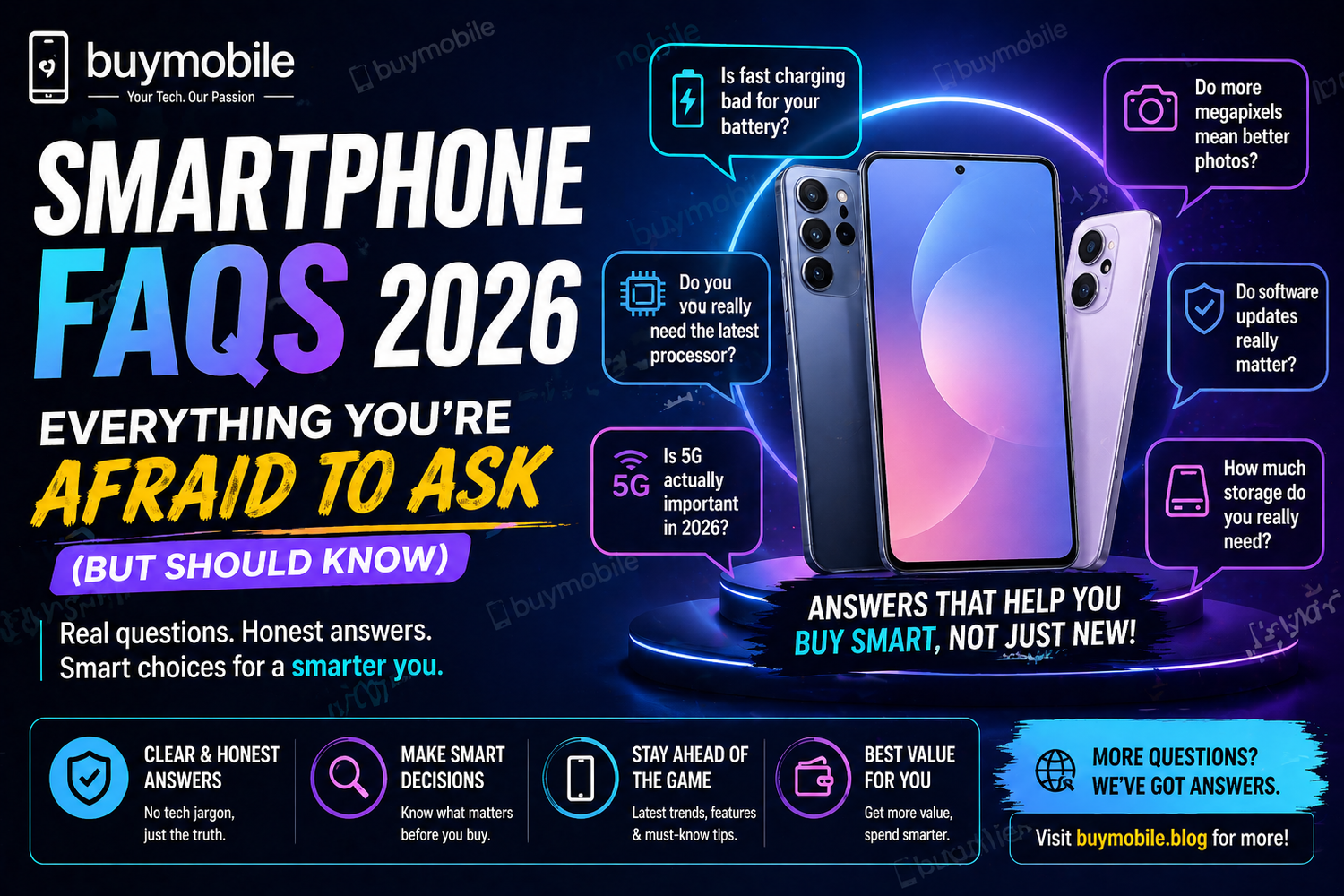
Buying a smartphone in 2026 feels exciting but also a little overwhelming. Every device promises better cameras, faster performance, and smarter features. But behind all that hype, there are questions most people don’t ask out loud.Questions like Do I really need this upgrade? Am I overpaying? Does any of this actually matter?If you’ve ever felt confused while choosing a phone, you’re not alone.Let’s answer the questions you’ve probably been thinking about but didn’t know how to ask.
Do you really need to upgrade your phone every year?
Short answer no.
Smartphones today are built to last longer than ever. Unless your phone is slowing down, losing battery quickly, or missing essential updates, upgrading every year isn’t necessary.
Most users can comfortably use a phone for two to four years without major issues.
Upgrading should be about need, not habit.
Are expensive phones actually better?
Not always.Premium phones offer top-tier performance, advanced cameras, and premium design. But for everyday use social media, browsing, streaming mid-range phones often deliver a very similar experience.You’re not just paying for performance you’re paying for extra features, brand value, and design.For many users, the difference isn’t as big as it seems.
Do more megapixels mean better photos?
This is one of the biggest myths.More megapixels don’t automatically mean better photos. Image processing, sensor quality, and software optimization matter much more.A well-optimized camera with fewer megapixels can outperform a high-megapixel camera with poor processing.It’s not about numbers it’s about results.
Is fast charging bad for your battery?
Not exactly.Modern smartphones are designed to handle fast charging safely. They include systems to manage heat and protect battery health.However, constant fast charging can slightly affect long-term battery life over time.Using it when needed is fine but you don’t always have to rely on it.
Do you really need the latest processor?
For most users, no.The latest processors are powerful, but everyday tasks like messaging, browsing, and streaming don’t require extreme performance.Unless you’re gaming heavily or using demanding apps, you won’t notice a big difference.Smooth performance matters more than raw power.
Is 5G actually important in 2026?
It depends on where you live.In some areas, 5G offers faster speeds and better connectivity. In others, the difference compared to 4G is minimal.If you plan to keep your phone for several years, having 5G is useful for future-proofing.But it’s not a deal-breaker for everyone.
How much storage do you really need?
This depends on your usage.If you take lots of photos, videos, or download large apps, more storage is important. If you rely on cloud services, you can manage with less.
A safe choice for most users is to go for more storage than you think you need.
Running out of space is far more frustrating than having extra.
Are budget phones actually worth it now?
Yes more than ever.Budget and mid-range phones have improved significantly. They now offer good performance, decent cameras, and reliable battery life.While they may lack premium features, they cover the essentials very well.For many users, they’re the smartest choice.
Do software updates really matter?
Absolutely.Software updates keep your phone secure, improve performance, and add new features. Phones with longer update support stay useful for a longer time.
When choosing a phone, it’s worth considering how long it will receive updates.
Because a good phone should last not just at launch, but over time.
Is battery life more important than performance?
For most users, yes.A powerful phone isn’t helpful if it runs out of battery halfway through the day. Reliable battery life has a bigger impact on daily experience than extreme performance.The best phones balance both but battery life often matters more in real life.
Are foldable phones worth it?
Foldables are exciting, but they’re not for everyone.They offer unique designs and multitasking features, but they’re usually more expensive and still evolving in durability.If you love new technology, they’re worth exploring. If you prefer reliability, traditional phones are still the safer choice.
Should you switch brands when upgrading?
Switching brands can give you a fresh experience but it comes with adjustments.Different brands offer different software, ecosystems, and features. If you’re comfortable with your current setup, staying within the same brand is easier.If you’re curious and open to change, switching can be exciting.
Are smartphone cameras replacing real cameras?
For everyday use yes.Smartphone cameras are now powerful enough for social media, travel, and casual photography. They’re convenient and easy to use.However, for professional photography, dedicated cameras still have the advantage.It depends on your needs.
How much should you really spend on a phone?
There’s no one-size-fits-all answer.Your budget should match your usage. Spending more doesn’t always mean a better experience. Many mid-range phones now offer excellent value.The goal is to find the right balance between features and price.Not the most expensive option.