


































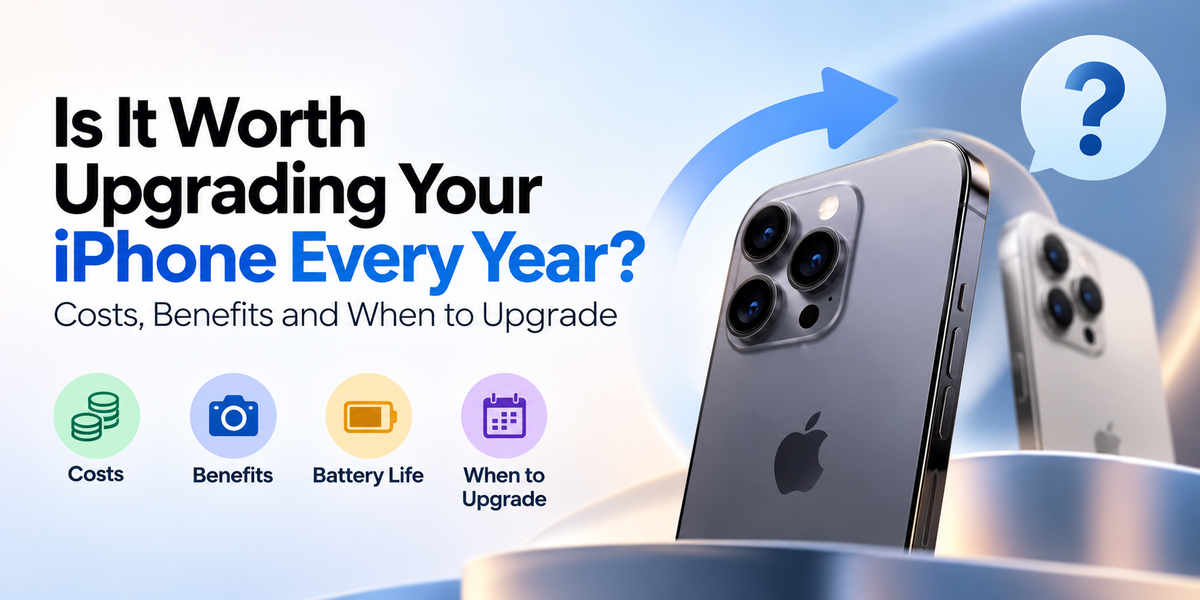
Apple introduces new iPhone models regularly, bringing improvements to cameras, processors, battery efficiency and software features. For many Australian users, every new release raises the same question: Is it worth upgrading your iPhone every year?While the latest iPhone may offer exciting technology, upgrading annually can become expensive. Modern smartphones are designed to remain useful for several years, and the improvements between consecutive generations are not always significant for everyday users.This guide explores the costs, benefits and disadvantages of annual iPhone upgrades, helping you decide when replacing your current device makes financial and practical sense.
Why Do People Upgrade Their iPhones Every Year?
There are several reasons people purchase a new iPhone annually.Some users want the latest camera technology, improved performance or new software capabilities. Others upgrade through mobile carrier plans or trade-in programmes that reduce the upfront purchase cost.Technology enthusiasts and content creators may also benefit from accessing newer hardware immediately.However, owning the newest model does not necessarily mean enjoying a dramatically better smartphone experience.For activities such as messaging, browsing, streaming and social media, a two-year-old iPhone may perform almost identically to a newer device.
1. The Cost of Upgrading Your iPhone Every Year
Cost is one of the biggest disadvantages of annual upgrades.Premium iPhones can require a substantial investment, especially when choosing higher storage capacities.Although selling or trading in your existing phone can reduce the purchase price, you still need to pay the difference.Upgrading at a similar cost every year could mean spending approximately A$3,000 over three years.Keeping your existing iPhone longer may allow you to spend that money on other priorities.
2. Camera Improvements: Are They Worth Upgrading For?
Camera technology is one of Apple's major areas of development.Newer iPhones may introduce improved sensors, optical zoom capabilities, low-light processing and advanced video recording options.These improvements can be valuable for photographers, vloggers and social media creators.However, camera upgrades are not equally important to everyone.If you mainly photograph family gatherings, pets, food and holidays, your existing iPhone may already deliver excellent results.Before upgrading, compare real-world camera samples rather than focusing exclusively on megapixels or marketing claims.When upgrading makes sense: Your current camera struggles with specific situations that a newer model demonstrably handles better.
3. Performance: Do You Really Need a Faster Processor?
Apple regularly improves its smartphone processors, offering better processing power and energy efficiency.Newer chips can improve demanding tasks such as gaming, video editing and AI processing.However, most everyday applications do not require the maximum performance available from a flagship processor.If your current iPhone opens applications quickly and handles multitasking smoothly, a processor upgrade may provide little noticeable benefit.For users experiencing frequent slowdowns, upgrading can make a meaningful difference, particularly when moving from a much older device.
4. Battery Life: Upgrade or Replace the Battery?
Battery performance often influences smartphone replacement decisions.Lithium-ion batteries gradually lose capacity through regular charging and use.As battery health declines, users may experience shorter operating times between charges.However, poor battery life does not automatically mean you need a new iPhone.Apple offers battery replacement services for eligible devices, potentially extending their useful lifespan.You can check battery information through your iPhone's Settings menu. The available details vary by model and iOS version.If your phone performs well apart from battery endurance, replacing the battery may be considerably cheaper than purchasing a new device.Recommendation: Investigate battery replacement before upgrading solely because your iPhone no longer lasts all day.
5. Software Updates and Long-Term Support
One reason to keep an iPhone longer is Apple's history of providing software updates across multiple generations.Supported devices receive new iOS features, security improvements and bug fixes.This helps older iPhones remain useful even after newer models become available.However, not every feature works on every supported device.Some advanced AI tools and computational photography capabilities require newer processors or specific hardware.If your current iPhone still receives important security updates and supports your essential applications, there may be little reason to replace it immediately.
6. Trade-In Value and Resale Benefits
Upgrading annually can have one financial advantage: newer iPhones may retain stronger resale value than older devices.Selling your existing phone while it remains relatively new can reduce the cost of the next purchase.However, depreciation, device condition, storage capacity and market demand all affect resale prices.Trade-in offers may also differ significantly between retailers and carriers.Before upgrading, compare the trade-in value with the price you could receive through a private sale.Remember that a higher resale value does not necessarily make annual upgrading cheaper overall.
7. Environmental Benefits of Keeping Your iPhone Longer
Smartphone manufacturing requires raw materials, energy, packaging and transportation.Replacing a working phone every year increases demand for new devices.Keeping your iPhone for an additional year or two can help reduce the environmental impact associated with frequent replacement.Protective cases, software updates, careful charging habits and timely repairs can all extend a device's lifespan.For environmentally conscious buyers, maintaining an existing iPhone is often a practical choice.
8. When Should You Upgrade Your iPhone?
There is no perfect replacement schedule for everyone.However, the following situations may justify purchasing a newer model:
-
Your iPhone no longer receives essential security updates. This can create security and compatibility concerns.
-
Battery life remains poor despite considering replacement options. A newer device may provide better endurance.
-
Performance affects everyday tasks. Persistent slowdowns can reduce usability.
-
You need a specific camera or connectivity feature. New hardware may offer a meaningful improvement.
-
Repair costs are approaching replacement costs. Buying a newer device may offer better long-term value.
If none of these problems applies, continuing to use your existing iPhone is usually reasonable.
9. Is Upgrading Every Two or Three Years Better?
For many Australian consumers, upgrading every two to four years offers a better balance between cost and technology.Waiting several generations often provides more noticeable improvements in camera performance, battery efficiency and processing power.It also spreads the purchase cost over a longer period.For example, keeping an A$1,800 iPhone for three years produces a simple purchase-cost average of A$600 per year.Replacing it after one year means the full purchase price is spread across a much shorter ownership period, although resale value can offset part of that cost.The ideal upgrade cycle depends on your usage habits, budget and device condition.
10. How to Make Your Current iPhone Last Longer
A few simple habits can help extend your iPhone's useful life.Keep iOS updated, manage storage regularly and avoid exposing your phone to excessive heat.Use a protective case and screen protector to reduce accidental damage.Review battery health periodically and consider professional servicing when necessary.Removing unnecessary applications and maintaining sufficient free storage can also help preserve everyday usability.These steps may delay the need for an expensive replacement.