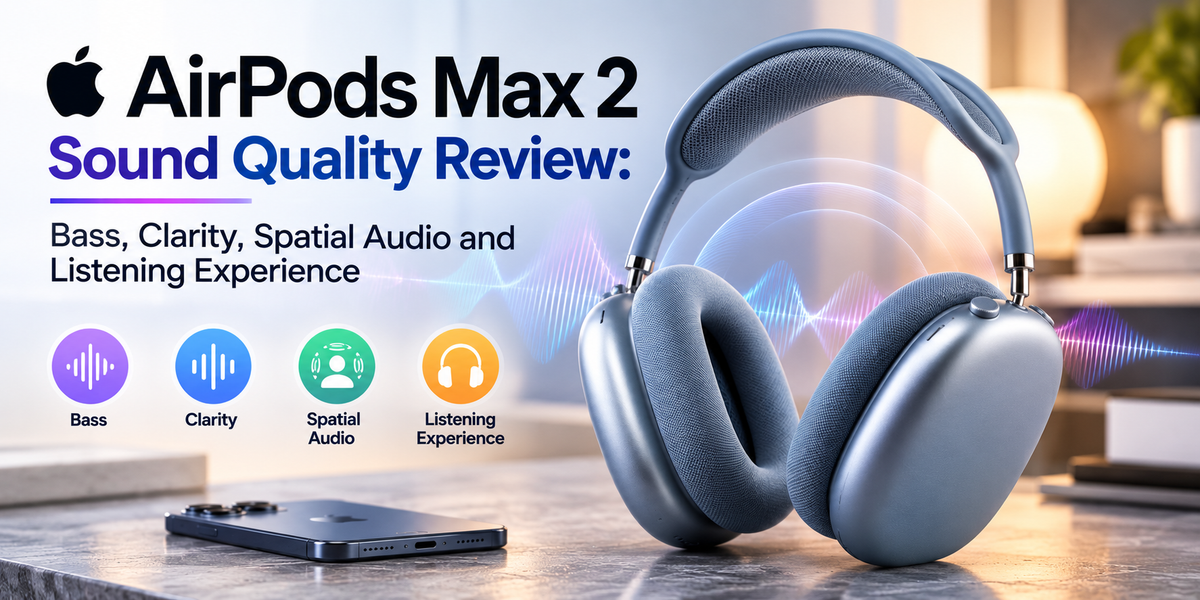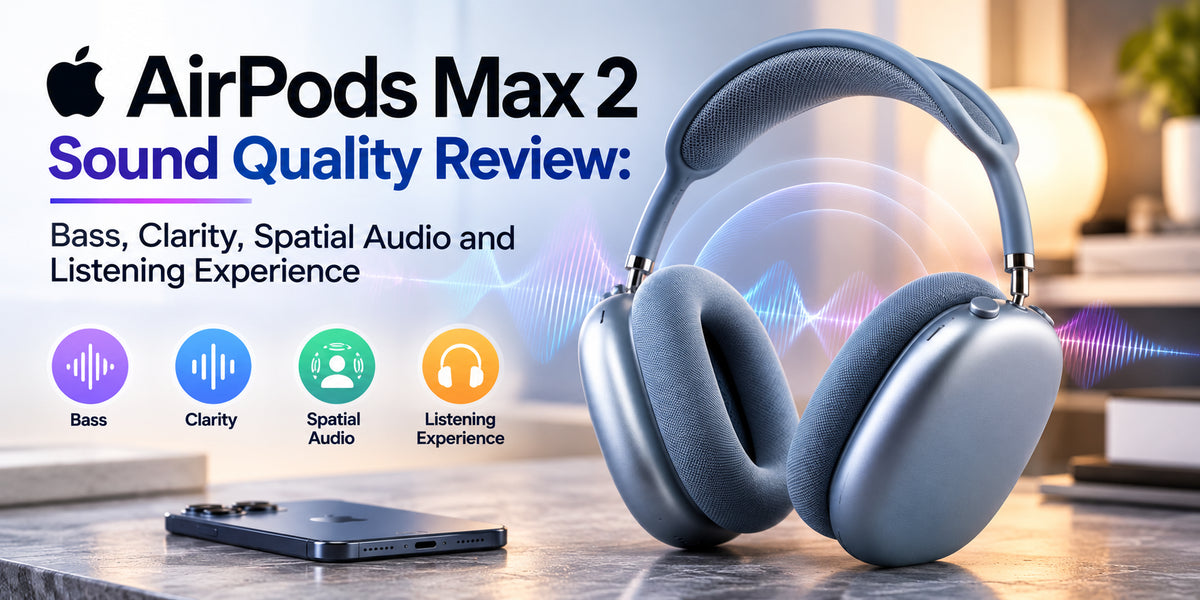
The Apple AirPods Max 2 bring significant audio improvements to Apple's premium over-ear headphones. With the upgraded H2 chip, enhanced Active Noise Cancellation, improved sound processing and Personalised Spatial Audio, these headphones aim to deliver a more immersive listening experience.But how good is the Apple AirPods Max 2 sound quality? Do they offer deeper bass, clearer vocals and better audio separation than the previous generation?In this review, we explore the AirPods Max 2's sound signature, bass performance, vocal clarity, Spatial Audio and everyday listening experience to help Australian buyers decide whether they're worth considering.
1. Apple AirPods Max 2 Sound Quality: What's New?
The AirPods Max 2 retain Apple's custom dynamic driver technology while introducing an upgraded high dynamic range amplifier and H2 headphone chips.These improvements are designed to produce cleaner sound, improved instrument separation and more consistent audio performance.Apple has also refined its computational audio processing to improve the balance between bass, midrange frequencies and treble.The result is a sound signature intended to deliver greater detail without sacrificing the character of the original AirPods Max.Professional reviewers have also reported improvements in bass definition, clarity and sound separation compared with the previous generation.
2. Bass Performance: Deep, Powerful and Controlled
Bass performance is one of the most important factors when evaluating premium headphones.The AirPods Max 2 aim to deliver rich, controlled bass without overpowering vocals or instruments.Low-frequency sounds, including bass guitars, electronic beats and kick drums, benefit from improved definition.Rather than focusing exclusively on powerful bass, Apple prioritises balance across different frequencies.This approach makes the headphones suitable for various music genres, including pop, hip-hop, electronic, rock and classical music.Listeners who prefer extremely exaggerated bass may find the tuning relatively restrained.However, those who appreciate detailed, well-controlled low frequencies should find the sound appealing.Bass verdict: The AirPods Max 2 offer strong bass performance with improved definition and a balanced presentation.
3. Vocal Clarity and Midrange Performance
The midrange frequencies are responsible for much of the detail heard in vocals, guitars, pianos and other instruments.Apple has improved the AirPods Max 2's audio processing to deliver more natural-sounding mids.This helps vocals remain distinct even when multiple instruments are playing simultaneously.Acoustic recordings, podcasts and vocal-focused music particularly benefit from clear midrange reproduction.The upgraded amplifier also helps preserve detail across different listening volumes.For listeners who frequently enjoy podcasts, audiobooks or dialogue-heavy content, clarity is especially important.Clarity verdict: The AirPods Max 2 deliver detailed midrange reproduction that suits music, spoken content and everyday entertainment.
4. Treble Performance: Detail Without Excessive Sharpness
Treble frequencies contribute to the clarity of cymbals, strings and subtle background details.The AirPods Max 2 aim to reproduce these higher frequencies accurately while maintaining a comfortable listening experience.Improved audio processing helps distinguish individual instruments within complex recordings.For example, listeners may find it easier to identify cymbal patterns or background instruments in well-produced music.However, perceived treble quality depends on recording quality, listening volume and personal hearing preferences.Bright recordings may still sound sharper than warmer mixes.Treble verdict: The headphones offer a detailed high-frequency presentation designed to complement their balanced overall sound.
5. Personalised Spatial Audio: A More Immersive Experience
One of the standout features of the AirPods Max 2 is Personalised Spatial Audio with dynamic head tracking.Spatial Audio creates a wider, more immersive sound experience when playing compatible content.Instead of hearing audio only from the left and right earcups, supported recordings can create the impression of sound originating from different positions around the listener.Dynamic head tracking adjusts the perceived sound positioning as you move your head.This can make movies, concerts and supported Dolby Atmos music feel more engaging.Personalisation uses a compatible iPhone's TrueDepth camera to create an audio profile tailored to the listener.However, not every song or application supports Spatial Audio, and the effect varies depending on the content.Spatial Audio verdict: An impressive feature for compatible music, films and immersive entertainment.
6. Active Noise Cancellation and Sound Quality
External noise can significantly affect the listening experience, especially in busy environments.Apple claims the AirPods Max 2 provide up to 1.5 times more effective Active Noise Cancellation than the previous generation.This improvement is powered by the H2 chip and updated computational audio algorithms.Noise cancellation helps reduce distractions from aircraft engines, public transport and background conversations.By reducing surrounding noise, listeners may hear quieter musical details without increasing the volume excessively.However, ANC performance varies depending on the frequency and intensity of environmental sounds.The headphones also include Transparency mode, allowing users to hear their surroundings when necessary.ANC verdict: Improved noise cancellation makes the AirPods Max 2 particularly appealing for commuting, travelling and focused listening.
7. Adaptive Audio and Everyday Listening
The AirPods Max 2 introduce Adaptive Audio, which automatically adjusts noise cancellation and Transparency levels according to the environment.This reduces the need to switch manually between listening modes.Conversation Awareness can lower media volume when the wearer starts speaking, making brief conversations more convenient.Personalised Volume also learns listening preferences and adjusts audio levels over time.These features are designed to create a smoother experience when moving between quiet rooms, offices and busy outdoor environments.For everyday users, these intelligent adjustments can be as valuable as improvements in raw sound quality.
8. Lossless Audio: Does USB-C Improve Sound Quality?
The AirPods Max 2 support 24-bit, 48kHz lossless audio through a compatible wired USB-C connection.Lossless audio preserves more of the original recording information than compressed audio formats.This can be useful for listeners who prioritise high-quality music playback.It also benefits music creators working with compatible production software.However, lossless playback requires supported content, compatible devices and a wired connection.Standard Bluetooth listening does not provide the same lossless audio capability.The audible difference between compressed and lossless music also depends on the recording, listening conditions and individual hearing.Lossless verdict: A valuable feature for audio enthusiasts, although wireless listening remains more convenient for everyday use.
9. Comfort and Long Listening Sessions
Sound quality matters, but comfort also affects the overall experience.The AirPods Max 2 feature an over-ear design with breathable mesh cushioning and a stainless-steel frame.The headphones weigh approximately 386g, making them heavier than several competing wireless models.Some listeners may appreciate their secure fit, while others could experience discomfort during extended sessions.Battery life reaches up to 20 hours with Active Noise Cancellation enabled, according to Apple.A five-minute charge can also provide approximately 1.5 hours of listening time.For long flights, workdays and travel, these features support extended listening without frequent charging.
10. Are Apple AirPods Max 2 Worth Buying?
The AirPods Max 2 are particularly appealing to listeners who value detailed audio, effective noise cancellation and integration with Apple devices.Their improved amplifier, H2 processing and Personalised Spatial Audio provide meaningful upgrades to the listening experience.They are well suited to music enthusiasts, frequent travellers, movie lovers and users who regularly switch between Apple devices.However, their relatively heavy design and premium positioning may not suit everyone.Android users should also consider that some advanced features require compatible Apple hardware.